
US and Iran trade strikes for second night in a row after Trump declares ceasefire ‘over’
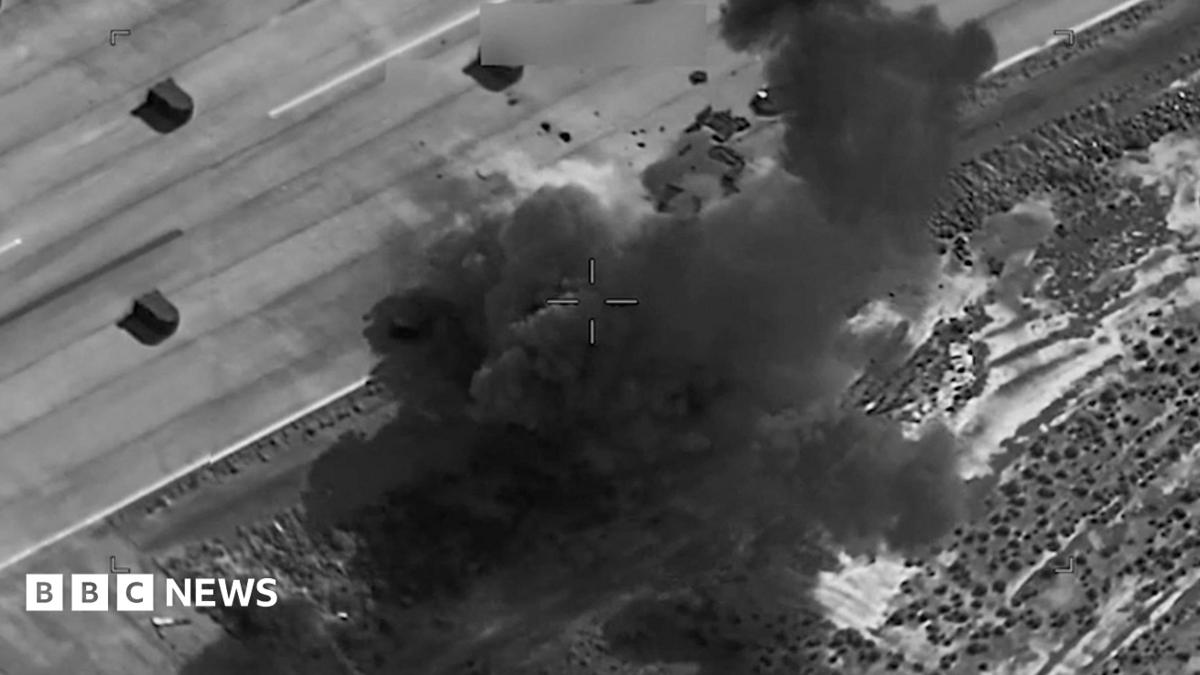
The volatile dance of escalation between Washington and Tehran has intensified dramatically, marking a second consecutive night of US Iran strikes following President Trump’s stark declaration that the recently brokered ceasefire is unequivocally “over.” This alarming development casts a long shadow over the Strait of Hormuz, where maritime traffic has plummeted to unprecedented lows amidst the renewed hostilities.
A Volley of Retaliation and Renewed US Iran Strikes
In a rapid succession of attacks, the US military confirmed hitting approximately 90 military targets, many strategically positioned near the critical Strait of Hormuz. These offensive actions, according to US Central Command (Centcom), aim to “further degrade Iran’s ability to attack commercial shipping and innocent civilian mariners” within the vital waterway. However, the cost has been steep; Iranian authorities report that 14 lives have been lost over the past two days, with 78 individuals injured across five provinces.
Not to be outdone, Iran quickly unleashed its own barrage. Explosions rocked several coastal regions within its borders, while Tehran asserted it had targeted American assets situated in Kuwait, Bahrain, and Qatar. The Islamic Revolutionary Guard Corps (IRGC) proudly claimed responsibility for these retaliatory strikes on US military bases, labeling them the “first phase of the punitive response against the American treaty-breakers.”
The rhetoric from both sides remains chillingly unyielding. Iran’s foreign ministry vehemently condemned the American assaults as a “gross war crime,” alleging that crucial civilian infrastructure, including vital railway bridges connecting Tehran to the city of Mashhad, had been struck. Mashhad is the planned burial site for the late Supreme Leader Ali Khamenei, adding a layer of sensitivity to the situation. Meanwhile, Iranian parliamentary speaker Mohammad Bagher Ghalibaf, chief negotiator with the US, took to X (formerly Twitter) with a blunt warning: “Let me put it plainly: if you strike, you’ll get hit.” He ominously added that the Strait of Hormuz would operate solely under Iranian dictates, not “American threats.”
Economic Fallout and a Ceasefire’s Demise
The immediate fallout on global shipping concerns has been stark. Phil Belcher, marine director at Intertanko, an international organization representing independent tanker owners, reported a dramatic decline in shipping activity through the Strait of Hormuz. Where once approximately 130 vessels traversed the passage daily before the conflict began earlier this year, and still 70 just a week prior, the number now hovers in “single figures” for the crucial southern route. “This cycle of violence, this cycle of up-and-down, positive-negative news, it’s having an enormous impact both on business and on the seafarers themselves,” Belcher lamented. Observers note a palpable shift from the “exuberance of optimism” that followed last month’s memorandum of understanding between the two nations.
President Trump, speaking from Air Force One, solidified the grim reality, declaring the June 17 ceasefire agreement “over.” His words were unambiguous: “I don’t want to deal with them anymore, they’re scum. They’re sick people.” Iran’s Foreign Minister Abbas Araghchi retorted on X, stating, “We do not answer vulgarity with vulgarity, but with action: fearlessly and with great valour.” This unraveling follows several previous exchanges of US Iran strikes despite the MoU’s intended 60-day negotiation window, a period Trump now considers “a waste of time.”
The initial agreement included points for a ceasefire, continued negotiations, safe passage through the Strait, and the lifting of US sanctions. Yet, the recent events underscore the fragility of such diplomatic endeavors when faced with escalating military actions. The world watches with bated breath, hoping for a de-escalation that seems increasingly distant.