
Assembly Elections 2026: When And Where To Check Results On May 4
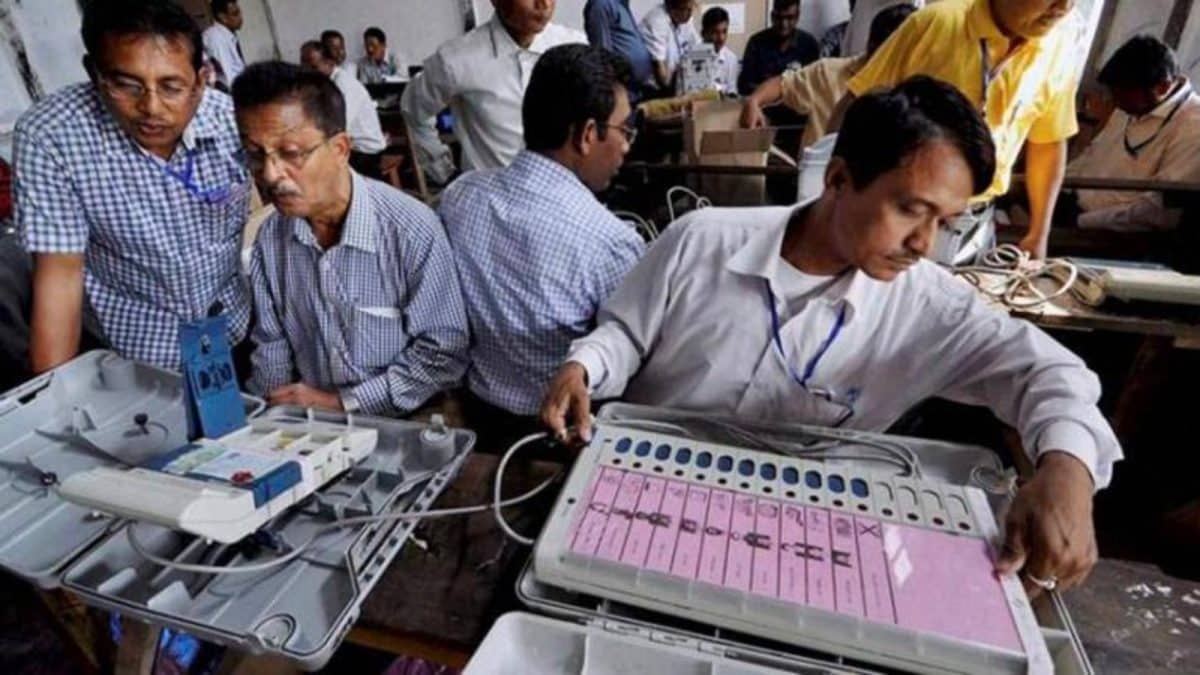
The moment of truth is almost upon us. On May 4, the highly anticipated Assembly Elections 2026 results for five crucial Indian states and one Union Territory will be unveiled, bringing to a close weeks of intense campaigning and voter speculation. West Bengal, Tamil Nadu, Kerala, Assam, and Puducherry stand poised on the brink of significant political shifts, with vote counting set to commence bright and early at 8 a.m. This pivotal day will determine the fate of 824 legislative seats, irrevocably shaping the political landscape for years to come.
The Counting Begins: What to Expect on May 4
Election officials are gearing up for a meticulous count. Across all constituencies, the tabulation process will unfold simultaneously, promising a flurry of activity from dawn till dusk. Early trends, often a tantalizing glimpse into the eventual outcome, are expected to emerge within a mere one to two hours of counting initiation. However, political pundits and anxious candidates alike anticipate that definitive final results will likely solidify only by late evening, following rigorous verification protocols.
The methodology for counting is robust and systematic. First, postal ballots are carefully tallied, setting the initial tone. Subsequently, the focus shifts to the Electronic Voting Machines (EVMs), with each constituency undergoing multiple rounds of tabulation. Updates are diligently released after every completed round, ensuring transparency. Strict security measures are paramount; strong rooms housing the EVMs remain under constant guard, with access severely restricted to authorized personnel only. Despite the efficiency of EVMs in rapid tabulation, the comprehensive verification process, coupled with round-wise counting, means the full declaration of the Assembly Elections 2026 results will be a day-long affair.
Tracking Assembly Elections 2026 Results Live
For those eager to follow every twist and turn, multiple platforms will offer real-time updates. Viewers can tune into CNN News18 for extensive live television coverage, beginning at an early 6 a.m. The News18 website and its dedicated mobile application will also serve as comprehensive hubs for up-to-the-minute information. Additionally, the official social media channels of CNN News18 on X (formerly Twitter), Instagram, and YouTube will provide continuous dispatches. Voters are also strongly encouraged to track official updates directly on the official electoral body website for verified information as the day progresses.
The run-up to this counting day saw polling conducted in phases throughout April. Assam, Kerala, and Puducherry cast their votes on April 9. Tamil Nadu followed on April 23, while West Bengal’s elections spanned two phases: April 23 and April 29. Turnout numbers were remarkably high, with West Bengal leading the pack at over 92 percent. Assam registered 85.38 percent, Tamil Nadu 84.69 percent, Kerala 79.63 percent, and Puducherry an impressive 89.87 percent.
State-by-State: A Glance at Exit Poll Projections
West Bengal
The battle for West Bengal appears to be a veritable cliffhanger. Exit polls have painted a picture of a tight contest between the Trinamool Congress and the BJP. A composite “poll of polls” suggests both major parties are hovering tantalizingly close to the halfway mark in the 294-member Assembly, sparking whispers of a potential hung house. While some forecasts, like P-MARQ, give the BJP a slight advantage (150–175 seats), others, including Matrize, indicate a far narrower margin, with both contenders very much within striking distance of a majority.
Tamil Nadu
In Tamil Nadu, the scenario seems equally intriguing. Many exit polls suggest the DMK-led alliance, under the leadership of M.K. Stalin, is well-positioned to comfortably retain its hold on power. However, the recent entry of the Vijay-led Tamilaga Vettri Kazhagam (TVK) has undeniably introduced an unforeseen dynamic. One projection from Axis My India even placed TVK in the 98–120 seat range, remarkably putting Vijay ahead in chief ministerial preference in that specific survey. Other analyses, while acknowledging TVK’s impact, project a more modest seat tally for the new entrant.
Assam
The electoral landscape in Assam largely points towards a comfortable victory for the BJP. The majority of projections situate the ruling party firmly within the range of 85 to 100 seats in the 126-member Assembly. The Congress, in contrast, is widely anticipated to lag significantly, with estimates generally placing them between 25 and 35 seats.
Kerala
Kerala is bracing for what is expected to be an exceptionally close contest. A “poll of polls” calculation offers a marginal edge to the Congress-led United Democratic Front (UDF), predicting they might secure around 70–75 seats. The incumbent Left Democratic Front (LDF) is projected to secure approximately 60–65 seats. Yet, the variance observed across various surveys underscores a palpable uncertainty, with some even hinting at a narrow LDF triumph.
Puducherry
For the Union Territory of Puducherry, exit poll results suggest a somewhat clearer picture. The BJP-led NDA is anticipated to emerge victorious, projected to win between 16 and 20 seats in the 30-member Assembly. The Congress-DMK alliance is expected to trail behind, with forecasts placing them in the 6–8 seat range, while smaller parties are likely to secure a handful of remaining seats. As the clock ticks towards May 4, all eyes will be on these critical Assembly Elections 2026 results, eager to witness whether predictions hold true or if the electorate delivers yet another political surprise.