
US and French nationals test positive for hantavirus after leaving ship
The global health community faces a fresh challenge following confirmation that both American and French nationals, recently disembarked from the ill-fated MV Hondius cruise ship, have tested positive for hantavirus after returning to their respective home countries. This latest development amplifies concerns surrounding the mysterious Hantavirus outbreak linked to the vessel, which has already claimed three lives.
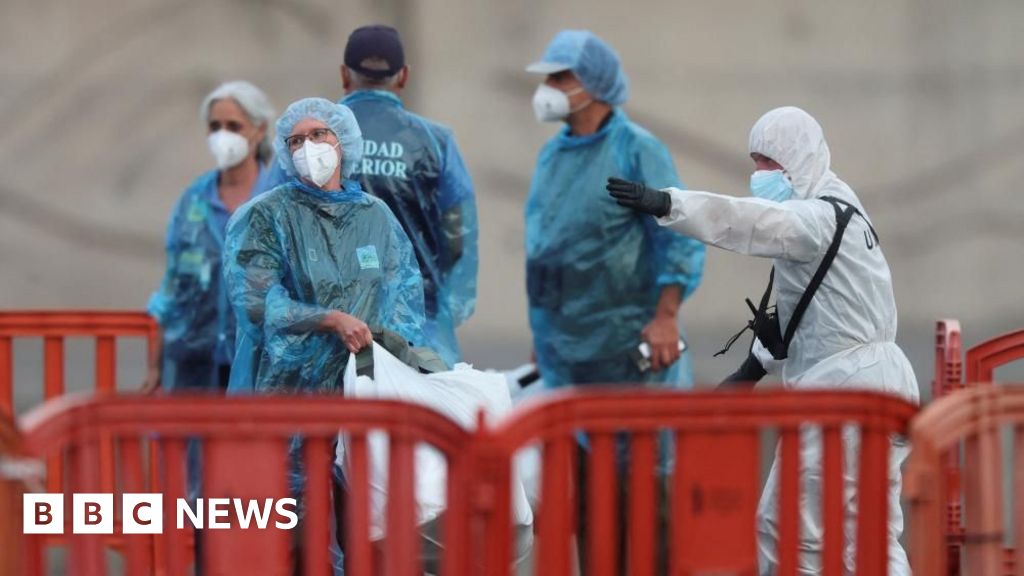
Authorities across continents are scrambling to manage the unfolding situation. In the United States, a second American national on a repatriation flight also exhibited mild symptoms, prompting the cautious transport of both individuals in specialized “biocontainment units.” Meanwhile, French Health Minister Stéphanie Rist confirmed a woman in Paris is now isolating, her condition reportedly worsening, with 22 contact cases rigorously traced by public health officials.
Understanding the Hantavirus Outbreak & Global Response
More than 90 passengers from the MV Hondius, currently docked in Spain’s Canary Islands, are undergoing complex repatriation processes. Tragically, three passengers – a Dutch couple and a German woman – have already succumbed after their voyage; two of these deaths are definitively linked to the virus. Hantaviruses are typically carried by rodents, though the Andes strain, believed to have infected some passengers in South America, does permit human-to-human transmission. Symptoms can be severe, encompassing fever, debilitating fatigue, muscle aches, stomach pain, vomiting, diarrhea, and alarming shortness of breath. Despite these concerning developments, officials steadfastly maintain that the overall risk of a widespread Hantavirus outbreak remains exceedingly low.
The international health community finds itself at a crossroads regarding containment protocols. The World Health Organization (WHO) staunchly advocated for a stringent 42-day isolation period for all individuals departing the MV Hondius. However, Dr. Jay Bhattacharya, acting head of the US Centers for Disease Control (CDC), adopted a more tempered stance, urging against public panic. He underscored the rarity of human-to-human transmission, emphasizing that this situation should not be conflated with the pervasive threat of the Covid virus. This divergence in recommendations highlights the complexities of managing emerging infectious diseases.
The repatriation saga has seen numerous nations rally to their citizens’ aid. Seventeen US citizens arriving on a dedicated flight are undergoing clinical assessment at a medical facility in Nebraska, while seven others already back in the US are under active monitoring. A British national, residing in the US, was also part of this American evacuation. Separately, 20 British nationals arrived in the UK via a chartered flight, heading straight to Arrowe Park Hospital in Wirral for a 72-hour isolation period, fortunately reporting no symptoms. However, two other British citizens with confirmed cases are receiving treatment in the Netherlands and South Africa.
In Spain, fourteen citizens flown to Madrid face mandatory quarantine at a military hospital. Further evacuation flights are planned. A total of 26 passengers and crew, including eight Dutch nationals, have already reached the Netherlands. Australia awaits six of its citizens, with an additional 18 passengers from various countries also destined for the Netherlands. Intriguingly, Ukraine confirmed four of its citizens would remain onboard the MV Hondius as crew, ensuring the ship’s transfer, with quarantine awaiting them upon arrival in the Netherlands. Currently, no illness has been reported among the Ukrainian contingent.
The tragic timeline of the Hantavirus outbreak began on April 11, when an elderly Dutch man became the first passenger to die at sea. While he exhibited symptoms, his case remains probable due to a lack of testing. His wife, aged 69, disembarked in St Helena on April 24, flying to South Africa, only to die two days later in Johannesburg—a confirmed case. A German woman also perished on board on May 2, her case confirmed. These somber events cast a long shadow over the MV Hondius, which embarked from Ushuaia, Argentina, on April 1 and now rests in Tenerife.
For more information on how such diseases are spread, consult reliable sources on global health challenges.