
From LoP To CM: Suvendu Adhikari Signals Administrative Reset, Assures ‘Fear-Free’ Governance
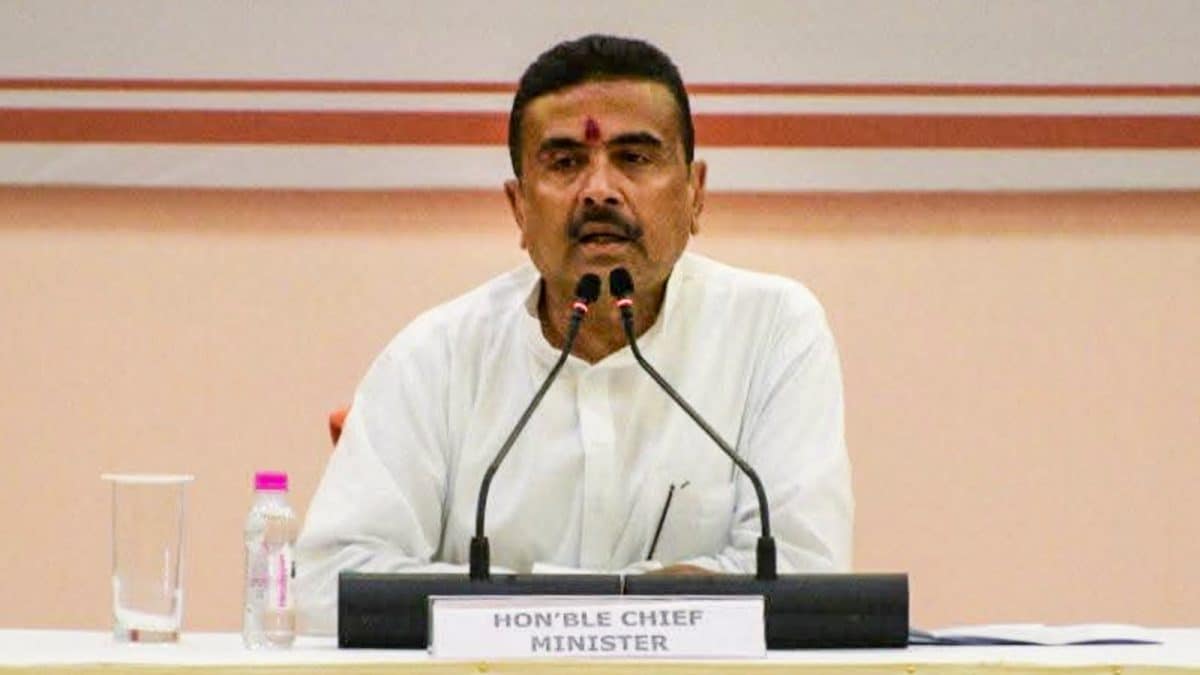
West Bengal has entered a pivotal new phase with Suvendu Adhikari at the helm. In his inaugural Cabinet meeting as Chief Minister, Adhikari swiftly positioned himself not just as a political leader, but as the quintessential administrator, signaling a comprehensive reboot of institutional functioning and a concerted effort to rebuild bureaucratic confidence. This assertive start underscores his vision for Suvendu Adhikari governance, a tenure he promises will be marked by integrity and efficiency.
Emerging from the high-stakes gathering, Adhikari addressed the press, unequivocally declaring himself the “Chief Minister of all parties and all people.” A stark departure from confrontational rhetoric, he vowed to eschew “unwanted comments,” emphasizing instead an environment where every individual within the system could operate with absolute autonomy, strictly adhering to the dictates of law and established procedure. His five-member Cabinet stood alongside him as he outlined a governance philosophy anchored in “good governance, security, and double-engine governance,” drawing inspiration from the foundational ideals of B.R. Ambedkar and the Indian Constitution itself.
Setting the Tone: A New Approach to Suvendu Adhikari Governance
The maiden Cabinet assembly proved exceptionally productive, witnessing the approval of six critical decisions poised to reshape West Bengal’s administrative landscape. Among these were the swift initiation of land transfer to the Border Security Force for enhancing border security, the long-awaited implementation of several crucial Central welfare schemes across the state, and the crucial deputation of bureaucrats for Central training programs. Furthermore, the Cabinet moved to formulate rules under the Bharatiya Nyaya Sanhita (BNS) and sanctioned vital support measures for the families of BJP workers who tragically lost their lives.
West Bengal, from this Monday forward, officially embraces an array of significant Central schemes. These encompass the widely impactful Ayushman Bharat, Pradhan Mantri Jan Arogya Yojana, Pradhan Mantri Fasal Bima Yojana, Pradhan Mantri Vishwakarma Yojana, and the Ujjwala Yojana. Adhikari lamented that the preceding administration had allegedly withheld over 8.65 lakh Vishwakarma applications and nearly a crore Ujjwala applications meant for women. Additionally, the new government will now frame rules under the BNS, a task the previous regime purportedly failed to undertake. A critical decision also included a five-year age relaxation for recruitment applicants, acknowledging a dearth of significant state recruitments since 2015. Moreover, work on the Census-related circular from June 2025 is set to commence immediately.
In a separate, pointed interaction with departmental secretaries, the appointment of Manoj Aggarwal as Chief Secretary was formally announced. Here, Adhikari delivered a potent message: bureaucrats should execute their duties “without fear,” strictly within legal parameters. He underscored the sanctity of administrative hierarchy, asserting that governance would operate through a proper chain of command. Critiquing past practices, he lamented the public belittling of officers, insisting that every administrative issue possesses an established process. This emphasis on empowering officials is central to Suvendu Adhikari governance.
To the newly elected MLAs, the Chief Minister issued directives to accelerate pending urban and rural projects. District Magistrates will soon convene with MLAs and local bodies to review these initiatives. On a grave note, Adhikari unequivocally stated that only legal coal mining would be tolerated, warning of severe repercussions for illegal coal and sand operations. His administration aims to formalize mining, ensuring fair wages for laborers and proper revenue for the state. He declared “zero tolerance” for cut money, syndicate operations, and extortion. MLAs, too, received guidance: avoid remarks that could offend public sentiment and refrain from unparliamentary language. The police administration received equally firm instructions to minimize public inconvenience during the CM’s movements, avoid excessive use of hooters, and take stringent, non-bailable action against instigators of communal violence. Furthermore, prayers on public roads are now prohibited, save for exceptionally special occasions.
Perhaps one of the most significant directives from the new administration concerns the 2021 post-poll violence. The Chief Minister ordered that all complaints related to these incidents, many of which were controversially logged merely as General Diary entries, be reopened for thorough, impartial investigation. Senior bureaucrats present universally interpreted the Chief Minister’s multifaceted message as a resolute commitment to restoring genuine institutional functionality and imbuing officers with the courage to operate independently within the established legal framework, thereby reinforcing the backbone of transparent public administration. This clear vision for Suvendu Adhikari governance underscores a shift towards accountability and rule of law. You can learn more about Indian governance systems on the official portal of the Government of India.