
Trump’s Greenland envoy faces uphill battle on mission to make ‘friends’
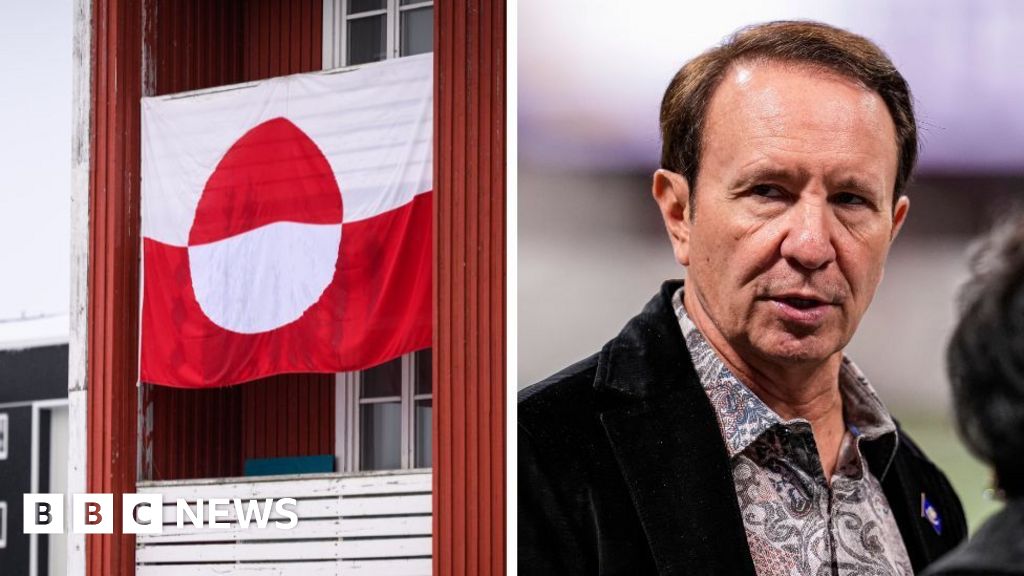
President Donald Trump’s special Greenland envoy, Jeff Landry, recently embarked on his inaugural visit to the vast Arctic island, ostensibly to forge new bonds and cultivate “friends.” Landing in Nuuk, Greenland’s capital, Landry declared his purpose was “simply to build relationships, to look, to listen and to learn.” Yet, beneath this veneer of goodwill, a palpable tension lingered, as the territory—a self-governing part of Denmark—reiterated its staunch refusal to be acquired, echoing Prime Minister Jens-Frederik Nielsen’s resolute declaration: “not for sale.”
The Diplomatic Dance of the Greenland Envoy
Landry’s arrival comes hot on the heels of a diplomatic firestorm ignited by President Trump’s earlier, audacious threat to simply seize Greenland. Now, with the Louisiana Governor in tow, the strategy appears to have shifted from coercion to charm. He attended a business summit and is poised to inaugurate a new US consulate. Curiously, a volunteering American doctor accompanied the entourage, aiming to “assess medical needs,” a move Greenland’s Health Minister Anna Wangenheim denounced as “deeply problematic.” This recalls Trump’s prior, rejected offer of a US hospital ship.
Despite Landry’s insistence on a “goodwill mission,” Greenlandic officials remain wary. Prime Minister Nielsen, after meeting Landry and US Ambassador Ken Howery, firmly stated: “We clearly reiterated that the people of Greenland are not for sale and that Greenlanders have the right to self-determination.” Foreign Minister Mute Egede further underscored the unchanging American ambition: “We have our red line. The Americans’ starting point has not changed either.”
This Greenland envoy‘s visit, occurring without an official invitation, runs concurrently with delicate high-stakes discussions involving the US, Denmark, and Greenland. The underlying issue? Washington’s persistent desire to control the strategically vital Arctic territory for national security. While an official “working group” has eased immediate tensions, a comprehensive agreement remains elusive, with reports suggesting the US still seeks broader strategic goals.
Landry, appointed in December 2025, champions the Trump administration’s newfound attention on Greenland, asserting, “Before Donald Trump, the United States was ignoring Greenland.” He provocatively asked, “When was the last time that any high-level diplomats came to Greenland?” A pointed rhetorical query, certainly. However, for many of the island’s 57,000 residents, the US pressure feels recent and unwelcome. Maliina Abelsen, a Greenlandic businesswoman, highlighted the raw wounds: “It’s only four months ago that we felt very threatened by the US, so the timing is not appropriate.” Aqqaluk Lynge, a respected author and former president of the Inuit Circumpolar Council, lamented the “so much distrust now,” despite historically positive ties with indigenous US communities.
The culminating event of the visit will be the opening of a new US consulate building, a modern high-rise that locals have wryly dubbed “Trump towers.” Naaja H. Nathanielsen, a Greenlandic MP, plans to boycott the event, succinctly stating that the Greenland envoy “is tasked to help the president acquire Greenland. That is a reason why he’s here to ‘listen’ and visit, and that in itself is, I think, still very serious.” The path to “making friends” in Greenland appears paved with skepticism and a deep-seated resolve for self-determination.