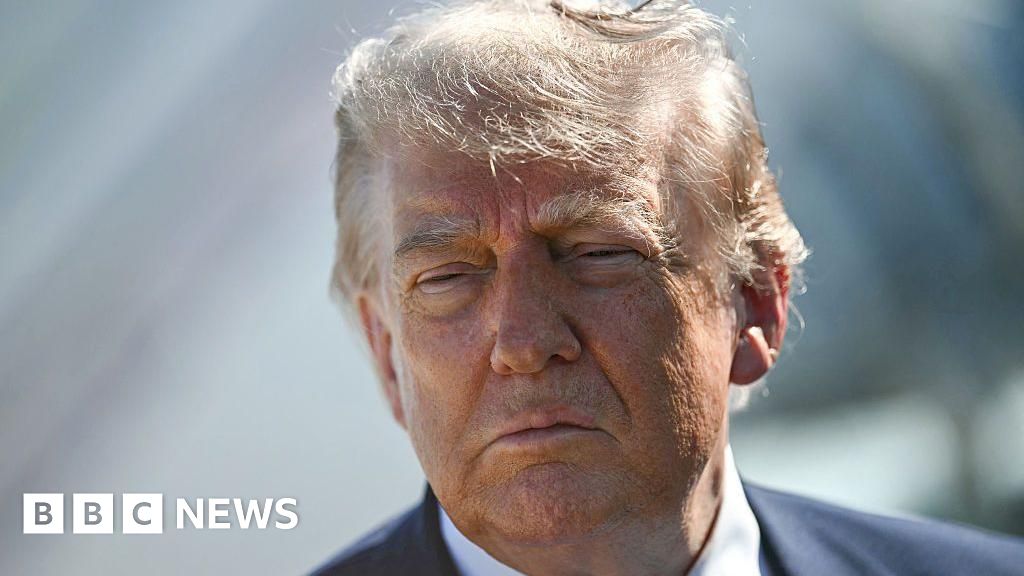
Washington D.C. – President Donald Trump has thrown a wrench into the rapid-fire speculation surrounding a potential agreement with Iran, instructing U.S. negotiators to proceed with caution. This directive, delivered just days after he himself suggested an accord was “largely negotiated,” signals a deliberate slowdown in the high-stakes Iran deal negotiations that have captivated global attention.
The proposed agreement, a provisional framework rather than a definitive resolution, reportedly encompasses a 60-day ceasefire extension. Crucially, it aims to facilitate the reopening of the strategically vital Strait of Hormuz, a critical chokepoint for global oil and liquefied natural gas shipments. Furthermore, the understanding lays the groundwork for subsequent, more intensive discussions concerning Iran’s contentious nuclear ambitions.
In a social media post, Trump acknowledged “constructive” talks were underway. However, he emphasized a crucial need: “both sides must take their time and get it right.” This statement injects a dose of realism into a diplomatic dance previously characterized by alternating optimism and stark warnings.
Unpacking the Iran Deal Negotiations
Iranian officials echoed a similar sentiment over the weekend, with foreign ministry spokesperson Esmail Baghaei describing their position as “very close and very far” from a definitive resolution. This contradictory phrasing perfectly encapsulates the intricate, often frustrating, nature of these Iran deal negotiations. Key contentious issues, including the precise scope and timeline of Iranian sanctions relief, the release of frozen Iranian assets, and Washington’s unwavering demands for a substantial curbing of Tehran’s nuclear program, remain largely unresolved.
US Secretary of State Marco Rubio, speaking to journalists in Delhi, offered a glimmer of hope. He indicated a “pretty solid thing on the table” regarding the reopening of the Strait of Hormuz and the initiation of “a very real, significant, time-limited negotiation on the nuclear matter.” Yet, the very notion of this potential accord has ignited fierce debate among Republicans. Some, like Senator Ted Cruz, vehemently oppose it, branding it a “disastrous mistake.” Roger Wicker, who chairs the Senate Armed Services Committee, warned that a 60-day ceasefire could negate “everything accomplished by Operation Epic Fury.”
Conversely, Representative Mike Lawler, a member of the House Foreign Affairs Committee, views the administration’s approach as a success, asserting they have “force[d] the remnants of this regime into a negotiation, a real negotiation.” The context for these urgent talks stems from intense conflict earlier this year. The US and Israel launched extensive strikes on Iran on February 28, triggering widespread instability across the Middle East. Iran retaliated, targeting Israel and US-allied states, and effectively closing the Strait of Hormuz, a move that sent oil prices skyrocketing worldwide. Following a ceasefire in early April, the US imposed a blockade on Iranian ports, which Trump insists will remain active “until an agreement is reached, certified, and signed.”
The President reiterated his firm stance in a Sunday social media update, stressing that Iran “must understand” it cannot develop a nuclear weapon. Tehran, for its part, consistently maintains its nuclear program serves purely peaceful purposes. Nonetheless, reports in US media suggest the current Iran deal negotiations could involve Iran eventually surrendering its highly-enriched uranium. At the conflict’s outset, Iran was believed to possess approximately 440kg (970 lbs) of uranium enriched to 60% purity—a mere step away from weapons-grade 90%, theoretically enabling the creation of a nuclear bomb. Iranian President Masoud Pezeshkian assured state TV that Iran is prepared “to assure the world that we are not after a nuclear weapon.”
Rubio’s comments hint at “significant” but “not final” progress. He even alluded to advancements in the past 48 hours that could lead to a “completely open strait… without tolls.” Meanwhile, both Iranian foreign ministry spokesperson Baghaei and President Trump have referred to the ongoing efforts as the finalization of a “memorandum of understanding,” paving the way for further talks towards a “final agreement.” Pakistan’s Deputy Prime Minister Ishaq Dar, a key mediator in these delicate discussions, expressed “optimism” that a positive outcome is “within reach.” The delicate dance of diplomacy continues, with the global community keenly observing the evolution of these complex global diplomatic efforts.
About the Author