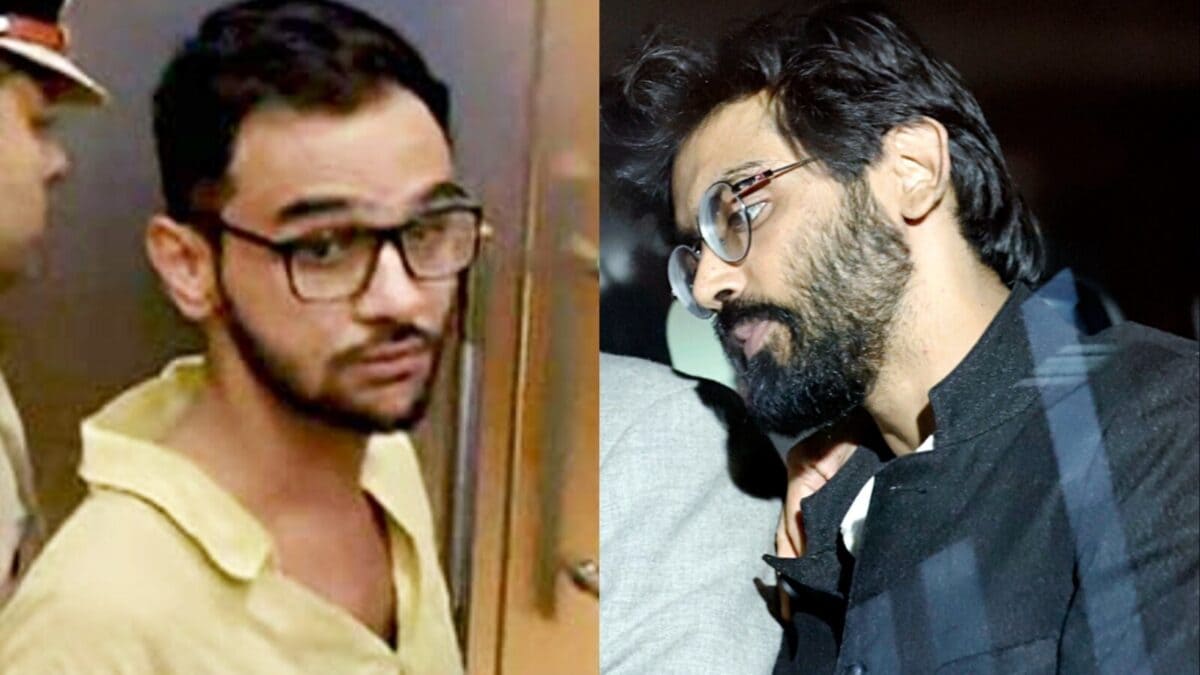
A fresh legal battle has ignited in the capital, with activists Umar Khalid and Sharjeel Imam filing new Delhi Riots bail applications. These pleas, lodged before a Delhi court, challenge their prolonged incarceration in the intricate 2020 northeast Delhi riots conspiracy case. The duo cites an alarming lack of substantive progress in trial proceedings, a critical factor driving their renewed bid for freedom.
Stagnant Justice: The Core of the Delhi Riots Bail Arguments
Approaching the Karkardooma Courts, Khalid and Imam argue that their continued detention without trial, stretching for years, is a blatant infringement upon their fundamental right to personal liberty. Vacation Judge Dr. Sumedh Kumar Sethi has taken serious note, issuing a formal notice to the Delhi Police and demanding a comprehensive response. A detailed hearing is slated for July 4.
This development unfolds roughly six months after the Supreme Court, on January 5, notably rejected their earlier bail pleas. Yet, in their current submissions, the activists forcefully contend that despite the apex court’s prior ruling, the trial languishes at its preliminary stage, with arguments on charges yet to conclude. Such an enduring impasse, they assert, cannot be reconciled with principles of fair judicial proceedings.
Sharjeel Imam, in his individual application, underscores his nearly six-year confinement in judicial custody. His legal representatives highlight the absence of any meaningful advancements in the case since the turn of the year. This relentless delay, the plea argues, translates into indefinite detention without a definitive trial, thereby bolstering his constitutional entitlement to Delhi Riots bail.
Umar Khalid’s petition echoes the concerns over trial stagnation but innovates by introducing a “change in circumstances.” He points to recent judicial pronouncements from coordinate benches of the Supreme Court, which emphatically reaffirmed the enduring legal axiom that “bail is the rule,” even under the stringent provisions of anti-terror legislation such as the Unlawful Activities (Prevention) Act (UAPA). The defense passionately argues that egregious delays and protracted pendency of trials must become central to the court’s consideration when balancing grave state allegations against an individual’s intrinsic right to liberty.
The entire legal saga stems from FIR 59/2020, registered by the Delhi Police Special Cell. Prosecutors allege Khalid, Imam, and others were the primary orchestrators of a calculated conspiracy, which ultimately ignited the brutal communal violence that ravaged northeast Delhi in February 2020. Those clashes, occurring amidst heated public demonstrations against the Citizenship (Amendment) Act (CAA) and the National Register of Citizens (NRC), tragically claimed 53 lives and left over 700 injured.
While the Supreme Court previously found a prima facie case against both Khalid and Imam under the UAPA—observing their higher “hierarchy of participation” compared to some others—it is crucial to recall that five co-accused were granted bail in January. As the Delhi Police meticulously prepares its formal reply for the upcoming July hearing, the trial court faces the formidable task of determining whether this persistent delay in finalizing charge-framing arguments necessitates a re-evaluation of the activists’ prolonged incarceration and their fresh pleas for Delhi Riots bail.
About the Author