The fragile promise of peace in the Middle East shattered once more as a newly brokered ceasefire between Israel and Hezbollah crumbled, leading to a deadly surge in violence across southern Lebanon. Less than 24 hours after the agreement, Israeli airstrikes reportedly claimed the lives of about two dozen individuals, plunging the region deeper into the devastating Lebanon-Israel conflict.
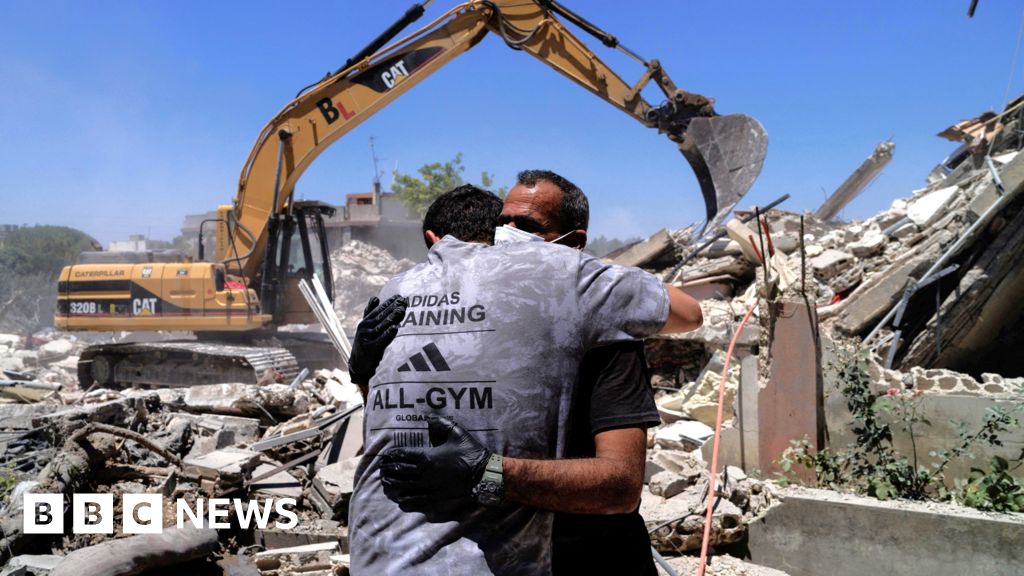
Reports from local officials paint a grim picture: sixteen people perished in the Nabatieh district, with another seven killed in neighboring Saida. Tragically, a family of four—a father, a mother, and their two young children—was reportedly wiped out in the southern Lebanese town of Barish. These devastating attacks were carried out by Israeli warplanes, drones, and artillery, targeting multiple areas.
In response, the Israeli military confirmed it had struck “dozens” of Hezbollah targets. They asserted these actions followed the group’s launch of over 50 projectiles at Israeli forces. The Israel Defense Forces (IDF) declared these retaliatory strikes were a necessary response to “repeated and ongoing violations of the ceasefire agreement” by Hezbollah.
The Enduring Lebanon-Israel Conflict: A Cycle of Retaliation
The latest conflagration arrives on the heels of strenuous diplomatic efforts. The U.S. government, deeply concerned, has openly criticized Israel’s ongoing military operations in Lebanon. Washington fears these continued tensions could irrevocably undermine the broader U.S. peace deal with Iran, a crucial agreement meant to halt fighting on all fronts. U.S. envoy Steve Witkoff is reportedly en route to Switzerland for initial discussions with Iran, hoping to fortify the delicate accord.
Yet, a Hezbollah official, speaking to the BBC, emphatically stated that his group does not recognize the ceasefire announced by U.S. officials. He asserted Hezbollah’s inherent right to respond to Israeli aggression, unequivocally rejecting any Israeli objective to operate freely within Lebanon. Senior Hezbollah official Hassan Fadlallah underscored his group’s demand: “What concerns us is that the enemy fully and comprehensively respects the ceasefire, and doesn’t attempt to attack our country and villages or seek to occupy any new position.” This was reported by Lebanon’s state-run National News Agency (NNA).
The current spiral of violence echoes a troubling pattern. Previous ceasefires between the warring factions have consistently failed to hold, often dissolving into near-daily cross-border exchanges, with both sides predictably accusing the other of breaches. Before Friday’s announcement, Israel had maintained its intention to keep forces in Lebanon, insisting its confrontation with Hezbollah remained separate from the wider conflict with Iran. The human cost is staggering; earlier last week, Lebanon’s health ministry reported 47 fatalities and 97 injuries from Israeli air strikes alone, while four Israeli soldiers were also killed.
On the ground, the humanitarian crisis deepens. Red Cross first responder Ali, stationed in Nabatieh, described a recent night as “the most intense” he could recall. Hospitals across southern Lebanon are stretched beyond their limits. Exhausted doctors tirelessly treat the wounded, while emergency personnel find themselves increasingly on grim recovery missions, not rescues. At Najdi Hospital in Nabatieh, ambulances bypass the emergency room entirely, heading straight for the morgue. “There is no more room inside,” Ali lamented, bodies in white bags tragically visible through the doorway.
Many residents, having returned to their ravaged villages after prior truces, believed the worst was over. Their hopes, however, were dashed. “The problem is that we got used to it,” Ali reflected, a somber testament to a population enduring decades of conflict. The fragile diplomatic endeavors for a lasting peace remain elusive as the cycle of violence continues its destructive course in the Lebanon-Israel conflict.
About the Author