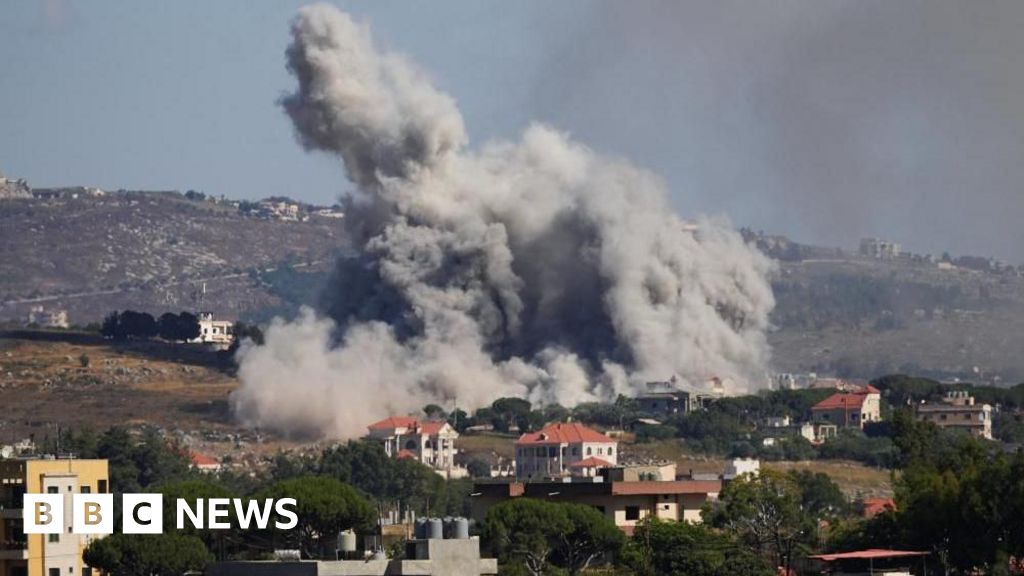
A United States official has announced a fragile Lebanon ceasefire between Israel and Hezbollah, an unexpected development following a brutal surge in hostilities across southern Lebanon. This purported agreement emerges in the wake of devastating Israeli air strikes, which claimed the lives of 47 individuals, including women and children, while Hezbollah simultaneously reported killing four Israeli soldiers. Yet, as the ink dries on diplomatic statements, the brutal reality on the ground continues to tell a starkly different, unsettling tale.
The Israeli military, while acknowledging that a halt to the fighting was indeed in effect, swiftly added a caveat: forces would “continue to remove immediate threats.” This nuanced stance immediately injected an element of doubt into the declared truce. Meanwhile, Hezbollah, the powerful Iran-backed group, has yet to formally confirm the cessation of hostilities. Its secretary general, Sheikh Naim Qassem, defiantly proclaimed, “The project to eliminate Hezbollah has failed.” Indeed, rescue officials in Nabatieh reported at least a dozen air strikes after the ceasefire’s supposed commencement at 16:00 local time, painting a grim picture of the agreement’s immediate efficacy.
Challenges to the Lebanon Ceasefire’s Durability
This latest escalation underscores significant vulnerabilities within the broader US-Iran peace initiative. The initial memorandum, meant to secure a widespread ceasefire across Lebanon and between the US and Iran, has demonstrably failed to manifest on the battlefield. Tehran has not hesitated to accuse the US, and specifically President Trump, of failing to constrain Israel. Adding fuel to an already volatile fire, Trump himself has voiced unprecedented accusations against Israeli Prime Minister Benjamin Netanyahu, alleging the senseless killing of civilians in the relentless conflict against Hezbollah.
Hardline voices on both sides threaten to unravel any semblance of peace. Israel’s far-right National Security Minister, Itamar Ben Gvir, shockingly retorted to Israeli casualties by declaring, “Lebanon must burn… For every tear shed by an Israeli mother, 1,000 Lebanese mothers must weep.” Such inflammatory rhetoric immediately drew the ire of Iranian Foreign Minister Abbas Araghchi, who accused Israel of desiring “permanent war” and warned that any breach of commitments would be “attributed to the US.” The delicate balance of the US deal hinges on both factions reining in their extremists and demonstrating restraint – a quality conspicuously absent in recent days.
The human toll from this protracted struggle is staggering. Lebanon’s health ministry reports over 3,900 fatalities and more than 11,600 wounded since the conflict’s inception. Nearly a million people remain displaced, their homes and communities in the south obliterated. This deep-seated skepticism about the efficacy of a Lebanon ceasefire is palpable among those who have lost everything. “The agreement is good, and we all want an agreement, but the Israelis don’t abide by it,” one displaced man told Reuters, articulating a sentiment of profound mistrust. He questioned, “How many times have they made agreements? More than once, they don’t commit.”
Despite the immediate challenges, the US State Department has announced that direct talks between the Lebanese government and Israel are slated to resume in Washington next week. These crucial discussions aim to forge a “lasting peace.” Lebanese President Joseph Aoun emphasized to US Secretary of State Marco Rubio the absolute necessity of a “comprehensive ceasefire,” demanding an end to “Israeli attacks on Lebanese territory” as a prerequisite for any meaningful progress. The path to genuine stability, one that transcends mere declarations, remains fraught with peril, demanding unwavering commitment to global conflict resolution efforts from all parties involved.
About the Author