ACCRA, Ghana – In a landmark decision reverberating across continents, leaders and representatives from African and Caribbean nations convened in Accra, Ghana, to formally adopt a global framework for reparatory justice. This crucial development marks a significant stride in the ongoing effort to address the enduring legacies of the transatlantic slave trade, colonialism, and related historical injustices. The overwhelming call for formal apologies from countries that profited immensely from these heinous acts formed a cornerstone of the newly ratified 19-point roadmap.
The historic three-day conference culminated on Friday with an unequivocal approval of a comprehensive strategy. This gathering, hosted in Ghana’s vibrant capital, stands as the first major international assembly since the pivotal United Nations resolution classified the trafficking of enslaved Africans as the gravest crime against humanity. Participants, including heads of state and government, civil society figures, and legal luminaries from over 80 nations, asserted that the time for dialogue alone had passed; now, action is paramount.
Establishing Pillars for Global Reparatory Justice
The newly adopted framework is nothing short of revolutionary in its scope. It mandates all state and non-state institutions that have yet to do so to “offer full, formal and unconditional apologies as a foundational step towards reconciliation, trust-building and reparatory justice.” Beyond mere acknowledgment, the document stresses the imperative for fair and adequate compensation for Africans and people of African descent. This includes a resolute commitment to expediting the repatriation of stolen cultural property, human remains, vital archives, and invaluable heritage to their rightful countries of origin. Furthermore, the framework champions multilateral efforts, such as debt relief, to mitigate the lingering socioeconomic scars inflicted by centuries of enslavement and exploitation.
Ruth Ogbewekon, the project lead on reparatory Justice at the Pan African Lawyers Union, underscored the inclusive nature of the drafting process. She explained that extensive consultations involved representatives from across Africa, the African diaspora, and non-African allies over several weeks. “Ultimately, it was a process where people wanted to be heard and to see that they were heard, and the events in Accra provided that,” Ogbewekon noted, highlighting the profound need for global collaboration on this issue.
Ghana’s president, John Dramani Mahama, a vocal champion for reparations and the African Union’s advocate on the matter, unveiled the establishment of three new global panels. These include an advisory panel on reparatory justice, an expert panel focused on the restitution of cultural artefacts, and a legal panel dedicated to furthering reparatory justice. These panels, as Mahama articulated, are designed to bolster existing governmental and institutional efforts by offering “intellectual, technical and policy support as the international community advances from recognition to implementation.”
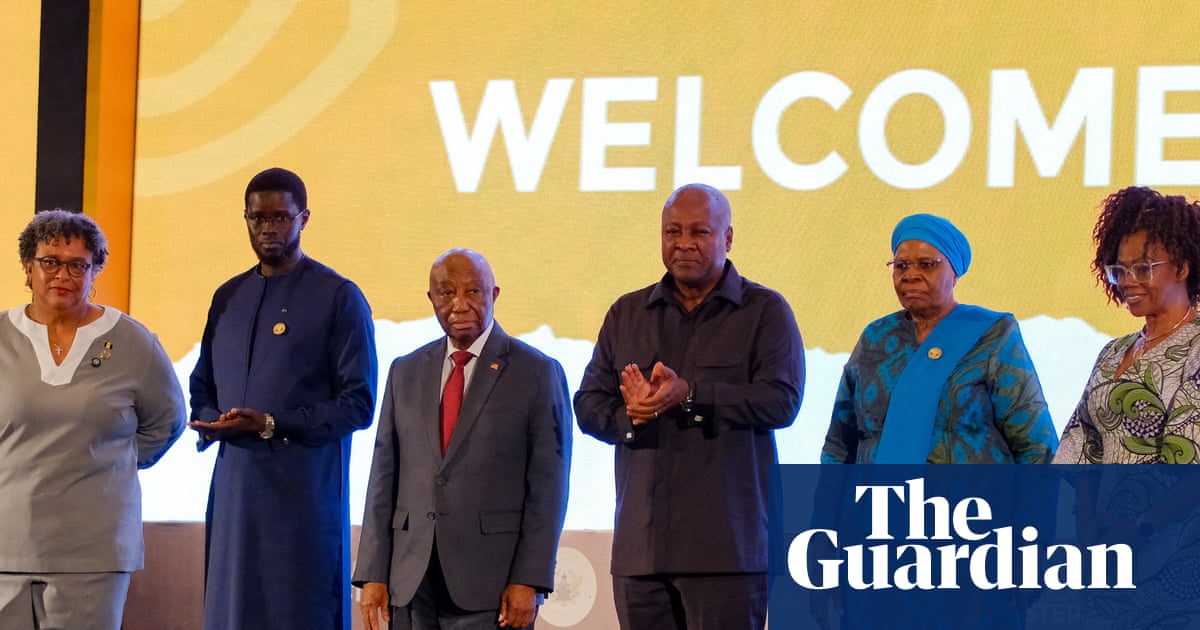
Among the distinguished leaders joining President Mahama on stage were Prime Minister Mia Mottley of Barbados, and Presidents Joseph Boakai Sr (Liberia), Netumbo Nandi-Ndaitwah (Namibia), and Bassirou Diomaye Faye (Senegal), underscoring the broad regional commitment. French President Emmanuel Macron, speaking virtually, acknowledged the horrific dehumanization endured by enslaved people, emphasizing that reparations should not be viewed as a final payment to close a chapter, but rather as an ongoing commitment to historical redress.
This conference follows closely on the heels of the UN General Assembly’s vote just three months prior, adopting Ghana’s proposal to classify the trafficking and racialized chattel enslavement of Africans as humanity’s gravest crime. This resolution was a watershed moment, demanding “inclusive, good-faith dialogue” and “prompt and unhindered” restitution of cultural properties. As nations look forward, the Caribbean Community’s (Caricom’s) 10-point reparation plan is poised to serve as a pivotal blueprint for the newly formed panels. Mia Mottley further elaborated on Caricom’s commitment, announcing a revised plan to specifically address the disproportionate impact of slavery on women and girls, urging a unified global push. She powerfully declared, “For in all that we do in the rest of our lives, where damage is perpetrated, repair is always, always required.”
The momentum for accountability and the historical debate surrounding restitution is undeniable. As Dr. Julius Garvey, son of the esteemed Black nationalist Marcus Garvey, eloquently stated during a Juneteenth commemoration at the historic Osu Castle, “Let us… leave Accra united in purpose and committed to ensuring that the greatest crime against humanity is met with one of humanity’s greatest responses: a determined global effort to restore dignity, repair historical wrongs and build a future founded on equality, shared prosperity, and our common humanity.”
About the Author