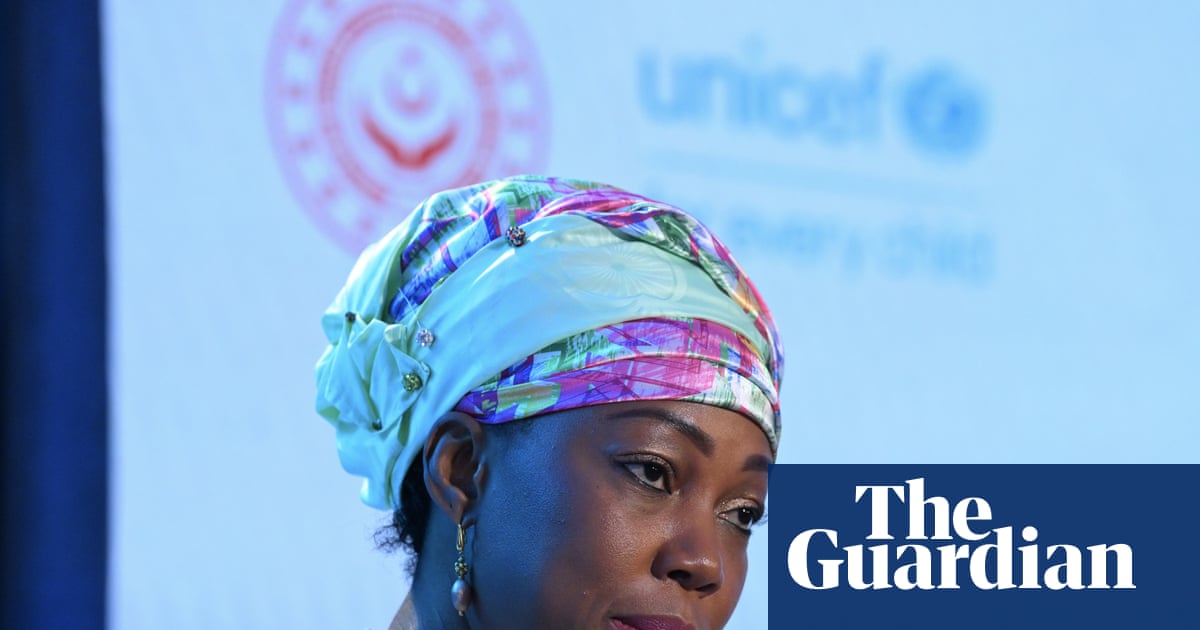
Shockwaves reverberated across global human rights circles following recent statements from Sierra Leone’s First Lady, Fatima Maada Bio. She has explicitly stated her reluctance to openly condemn female genital mutilation (FGM) without “reliable data” proving its harm, a declaration that has ignited intense debate regarding Sierra Leone FGM practices. Her position, while denying outright support for the deeply contentious ritual, has drawn sharp criticism from a broad coalition of health professionals, survivors, activists, and politicians.
This escalating controversy prompted a significant open letter, dispatched on June 10th to the Organisation of African First Ladies for Development (Oaflad). Over two dozen influential signatories, including former Gender and Children’s Affairs Minister Amy Smythe and UN human rights lawyer Isha Dyfan, have urgently sought clarification. Their collective concern: that any perceived endorsement, whether direct or indirect, risks dismantling years of dedicated advocacy and creating a perilous disconnect with established national, regional, and international commitments to women’s safety.
Maada Bio, a 45-year-old former film producer, despite leading her own “Hands off our girls” campaign against child marriage in Sierra Leone, has steadfastly declined to unequivocally condemn FGM since her husband’s 2018 election. She maintains her recent remarks were misinterpreted, aiming to foster dialogue and reassure marginalized women. “I am not in favour of any form of circumcision that is forced upon an individual,” she asserted to the Guardian, further stating that as a circumcised woman herself, she simply seeks robust data on the harms of Sierra Leone FGM.
Understanding the FGM Landscape in Sierra Leone
Female genital mutilation, encompassing the partial or total removal of external female genitalia, carries devastating long-term health consequences, including infertility and chronic pain. Globally recognized as a grave violation of human rights, it was the subject of a global resolution for its ban by the UN General Assembly in 2012. Worryingly, Sierra Leone exhibits one of the highest FGM rates globally, with recent surveys indicating 83% of women are affected, 71% before their fifteenth birthday.
In Sierra Leone, no specific law criminalizes FGM. It often serves as a rite of passage into womanhood, meticulously performed by powerful women known as sowei within the secretive Bondo and Sande societies. Tragedies, including severe health complications and fatalities, regrettably occur annually from these rituals. Ranya Kargbo, an FGM survivor and UN professional, voiced profound alarm over a recent video showing Maada Bio seemingly supportive of sowei practitioners. “When you are in a leadership position, your words matter,” Kargbo declared, interpreting the First Lady’s statements to the cutters as an implicit green light: “It is an absolute slap in the face for all of us.”
Further escalating the debate, Maada Bio recently shared an article titled “Harms of the current global anti-FGM campaign” on her widely followed Facebook page. She also publicly labeled prominent anti-FGM activists as “scammers” and dismissed their contributions. Meanwhile, the Economic Community of West African States (Ecowas) court of justice, in a landmark ruling last year, unequivocally condemned FGM as “one of the worst forms of violence against women,” tantamount to torture. It mandated Sierra Leone to legislate against the practice. Yet, President Julius Maada Bio, despite chairing Ecowas at the time, has publicly remained silent on the ruling. Furthermore, the Child Rights Act 2025, which he signed into law last October, conspicuously omitted any provisions addressing Sierra Leone FGM.
About the Author