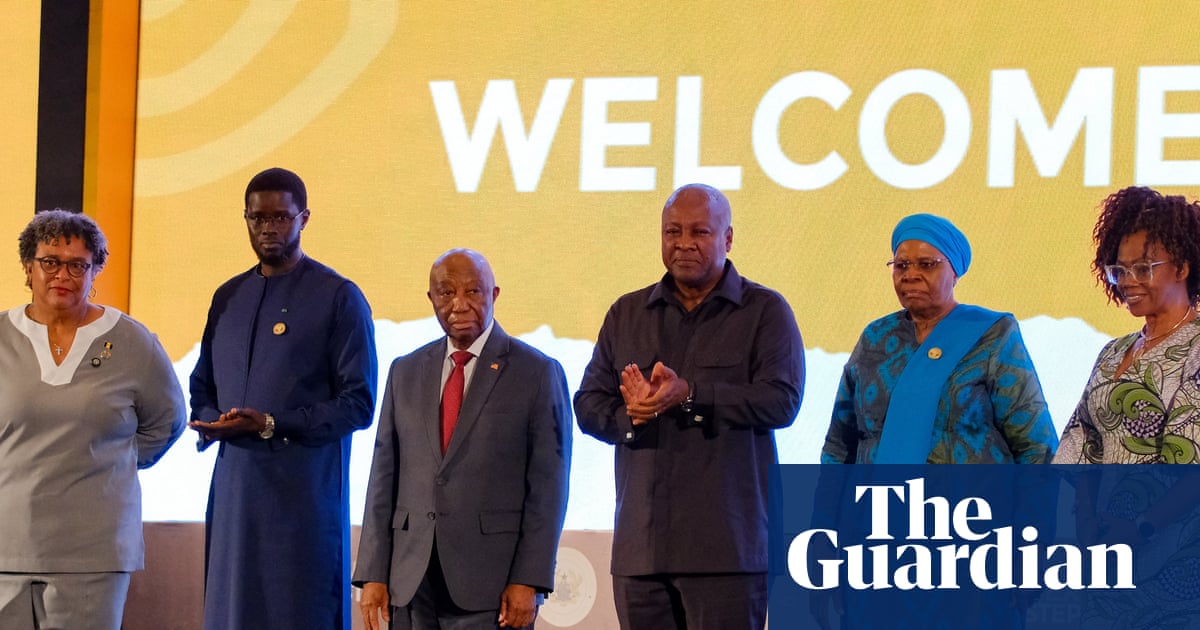
ACCRA, Ghana – In a pivotal moment for international accountability, Ghana has become the epicentre for a monumental stride towards Reparatory Justice. A global framework, painstakingly developed over generations, received formal adoption at a historic conference in Accra, drawing world leaders and fervent advocates. Among those gracing the stage were Ghana’s own John Dramani Mahama, Barbados Prime Minister Mia Mottley, Liberian President Joseph Boakai Sr, Namibian Vice-President Netumbo Nandi-Ndaitwah, and Senegalese President Bassirou Diomaye Faye, all united by a profound sense of purpose.
The three-day gathering, culminating in Friday’s momentous approval, marks the first major assembly since the United Nations unequivocally declared the trafficking of enslaved Africans as humanity’s gravest crime. This newly endorsed 19-point document isn’t merely symbolic; it’s a strategic roadmap. It resolutely commits to ensuring fair and adequate compensation for Africans and people of African descent, those scarred by the lingering legacies of enslavement, colonialism, genocide, and apartheid. Furthermore, it mandates the swift return of invaluable cultural property, human remains, archives, and heritage to their rightful countries of origin. The framework also boldly tackles the daunting issue of sovereign debt burdens, advocating for multilateral debt relief measures to mitigate the enduring socioeconomic impacts of these historical injustices. To understand the deeper implications of these historical demands, consider exploring the complex reasoning behind these calls for slavery reparations.
Charting a Course for Global Reparatory Justice
“We recognize and honor the extensive efforts undertaken over generations by several governments, intergovernmental organizations, our forebearers, individuals, and civil society partners across Africa, the Caribbean, the Americas, as well as in Europe and Asia in shaping the global reparations agenda,” the participants declared in the document. They pledged, “We adopt this document as a basis for global collaboration and commit to engaging in transparent, constructive, and good faith dialogue in advancing reparations and Reparatory Justice among all state and non-state actors.” Ruth Ogbewekon, Project Lead on Reparatory Justice at the Pan African Lawyers Union, highlighted the inclusive nature of the drafting process, emphasizing the widespread consultations with representatives from Africa, the diaspora, and non-African allies.
The conference, aptly named “Next Steps,” didn’t just conclude with an adopted framework. It also heralded the establishment of three crucial global panels dedicated to reparatory justice and restitution. On Thursday, Ghanaian President John Mahama unveiled these “pillars of the next phase” – an advisory panel, an expert panel on cultural artifact restitution, and a legal panel. “These panels are not intended to replace the work of governments, regional organizations, or international institutions,” Mahama clarified to hundreds of attendees. “Rather, they are intended to strengthen that work by providing intellectual, technical, and policy support as the international community advances from recognition to implementation.”
Mahama, also the African Union Champion on Reparations, underscored the UN resolution’s role in providing a “more meaningful” foundation for engagement. He passionately urged a global partnership, asserting that the Caribbean Community’s (Caricom) 10-point reparation plan would serve as a vital starting point. Eminent Nigerian playwright and Nobel laureate, Wole Soyinka, among other distinguished speakers, powerfully articulated the transcontinental nature of the historical crime and, consequently, the imperative for a transcontinental search for Reparatory Justice. Mia Mottley, Prime Minister of Barbados, announced a significant revision to Caricom’s 10-point plan, integrating the disproportionate impact of slavery on girls and women, further stressing the need for collective action. “Let us not embark on separate journeys, but let us today reflect the unity of purpose,” she urged. “Repair is always, always required.”
The collective resolve, as articulated by Liberian President Boakai Sr, will dictate whether this opened door leads to “meaningful justice, reconciliation, and healing.” He implored participants not to let this be “another conference or another resolution that stirs consciences briefly before fading into history.” Instead, the call from Accra is for a united, determined global effort to restore dignity, rectify historical wrongs, and forge a future founded on equality, shared prosperity, and common humanity. The historical gravity of the moment was further amplified by the attendees’ plan to celebrate Juneteenth at Osu Castle, a former transatlantic slave trade hub, on Friday, marking the enduring quest for freedom and repair.
About the Author