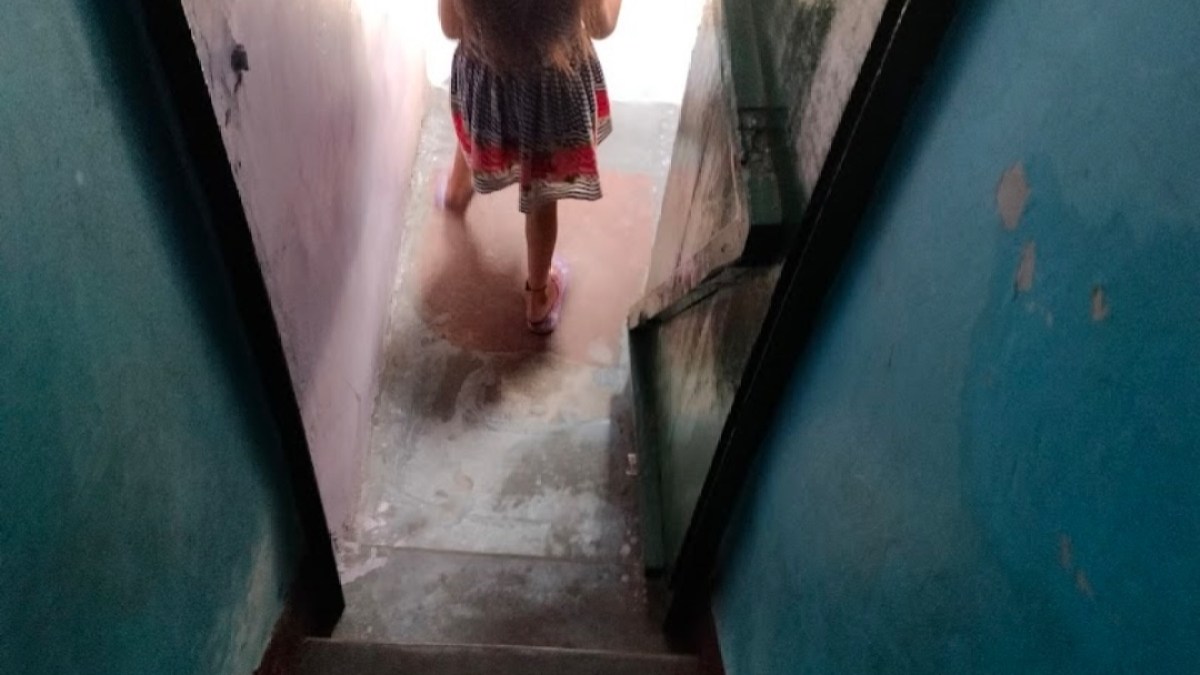
Pia, a vibrant eight-year-old in Delhi, playfully bats away her father’s teasing, oblivious to the harrowing secret her parents guard. Her world is crayon pencils, upcoming birthdays, and innocent chatter. Yet, beneath this fragile normalcy, a family endures an agonizing eight-year quest for justice after their infant daughter was brutally raped. In a stark illustration of systemic justice delays, Pia’s family navigates a labyrinth of legal proceedings, societal pressures, and the constant, crushing burden of shielding their child from a truth that shattered their lives.
Inside an Eight-by-Eight Room
Our paths first crossed eight years ago, when an editor dispatched me to a nondescript gully in northwest Delhi. A chilling report: an eight-month-old baby, raped just weeks prior. I found Madhav and Rakhi, Pia’s parents, in their cramped 8×8-foot room, a single bed their world’s anchor, surrounded by well-meaning but transient visitors. The crowd thinned; I stayed. What began as a journalistic assignment morphed into a deep, years-long comradeship, forged over shared chai, crayon-strewn floors, and countless court visits. Rakhi’s voice, often the more impassioned, echoes a universal plea: How long? How long can this endure? Pia, then a mere eight months old, living with her toddler sister, her mother cleaning homes, her father toiling at construction sites. That Sunday in January 2018, Madhav’s extended family, with whom they shared the home, was entrusted with the children. Rakhi returned to relentless screams. A pool of blood. Excrement. Her infant, violated. Suraj, Madhav’s 28-year-old nephew, was confronted. He averted his gaze, muttered excuses. A quick clinic visit, then the police. “Everyone else knew before I could articulate the words,” Rakhi recounted, her voice still raw with the memory, “that my baby had been raped.” A First Information Report (FIR) was promptly filed under the Protection of Children from Sexual Offences (POCSO) Act. Pia was rushed to Kalavati Saran Children’s Hospital. Later, Suraj would blame liquor. “I don’t blame the alcohol, Didi,” Madhav interjected, quieter but no less resolute. “Everyone drinks. But how do you do such an abominable thing?”
The Weight of Justice Delays
India grapples with a grim reality: child rape cases nearly doubled between 2016 and 2023, from 19,765 to 40,434. Staggeringly, 97% of perpetrators are known to the victim. While nearly 40,000 cases of child rape and penetrative sexual assaults are registered annually, a mere 3% result in conviction, as per the National Crime Records Bureau. Pia’s case, occurring just six years after the infamous 2012 Delhi gang-rape that spurred the Criminal Law (Amendment) Act, ignited immediate, seismic outrage. Rallies engulfed the capital, the Delhi Commission for Women launched its “Rape Roko” campaign, and international media amplified Pia’s horrific plight. Suraj confessed and was taken into custody on the very day the FIR was filed. Supreme Court directives ensured Pia received advanced medical care, including multiple surgeries for a devastating perineal tear, and interim compensation for the family. Yet, as the initial public furore subsided, the rallies faded, and the world moved on. Rakhi, Madhav, Pia, and Muskan remained. Trapped in their one-room home, a chilling microcosm of the crime they cannot escape. The enduring justice delays amplify their trauma, stretching the ordeal beyond human comprehension.
Courts, YouTube, and Broken Time
“This is the app, Didi,” Madhav declared one Sunday, presenting his smartphone. The eCourts Services app, a digital lifeline for a family once lost in legal jargon. No longer bewildered by a dizzying flood of medical and legal information, they now track their case online. The early days were arduous; Rakhi, steadfast, would pack her toddlers into her arms and brave the bus journeys to Rohini District Court, determined to be present. This commitment, public prosecutor Raj Kataria once observed, was the driving force behind the case’s initial momentum. “Every mother should be like that woman,” he’d said, praising Rakhi’s unyielding spirit against family pressure to recant. Such pressure, insidious and overt, has always lurked. Arguments over shared spaces escalating into demands to “take back” allegations, whispers that Rakhi should have been home, not working. Consequently, she hasn’t left for work since 2018. When asked if she missed it, her answer is always the same: How can she, with young children who might be left alone? This internalised shame fuels other forms of resistance. Rakhi even attempted to launch a YouTube channel, hoping to spread social messages, only for it to be shut down due to livestreaming violations concerning minors. The platform’s stringent rules against solo appearances for children posed an unforeseen hurdle in their quest for advocacy.
Imperfect Survivors in an Inadequate System
Rakhi and Madhav’s persistent calls to “figures of authority” betray their desperation. ASI Parvati, the initial investigating officer, became a confidante, a familiar face at children’s birthday parties, until her transfer. Though no longer involved, she remains confident in eventual justice. Suraj’s trial, an excruciatingly slow process, continues, with hearings every three months. He has been in judicial custody for eight years without conviction, a stark reminder of the prolonged justice delays. While the POCSO Act mandates special courts to complete trials within one year, Pia’s case drags on interminably. Ashish Kumar, director of Legal Interventions at HAQ, the NGO assisting the family, points to “heavy pendency” and “judicial insensitivity” as root causes. “If we run them like regular criminal courts, then they have failed their purpose,” he asserts, highlighting the systemic failures. Meanwhile, familial tensions fester. Arguments with downstairs neighbours, who champion Suraj’s innocence and decry the “taint” on the family name, are ceaseless. CCTV cameras, court-mandated, now monitor their home entrance, blurring the lines between private and public, turning their television into a surveillance screen. Social workers have offered new housing, but Rakhi and Madhav remain rooted.
No Way Home
April 2025 brought a fresh wave of terror: Suraj was granted six hours of bail to attend his sister’s wedding. Paralysed by fear, Madhav and Rakhi locked themselves in their room, eyes glued to the CCTV feed. Police protection was secured, but the psychological toll was immense. The question, asked repeatedly by me and their confidantes for years, resurfaces: Do you want to move? Madhav, at times, concedes, acknowledging Pia’s growing awareness. “The children are growing older, and they might figure things out,” he admits, as Pia is seen attempting to eavesdrop. But Rakhi’s resolve remains unshaken: “This is our home too – how can we just leave? How can we leave before we see justice served, from the very spot where our lives were first taken from us?” They are caught in a perpetual seesaw, between the hope of a new beginning and the anchors of their past. As time marches on for Pia and Muskan, it remains tragically frozen for Rakhi and Madhav, stuck in January 2018. And for telling Pia what happened? “Not right now,” they simply say, preserving her innocent world, for a little while longer. For a deeper understanding of child protection laws in India, one might explore the comprehensive POCSO Act.
About the Author