
Huge crowds in Mashhad as Iran’s late supreme leader is buried
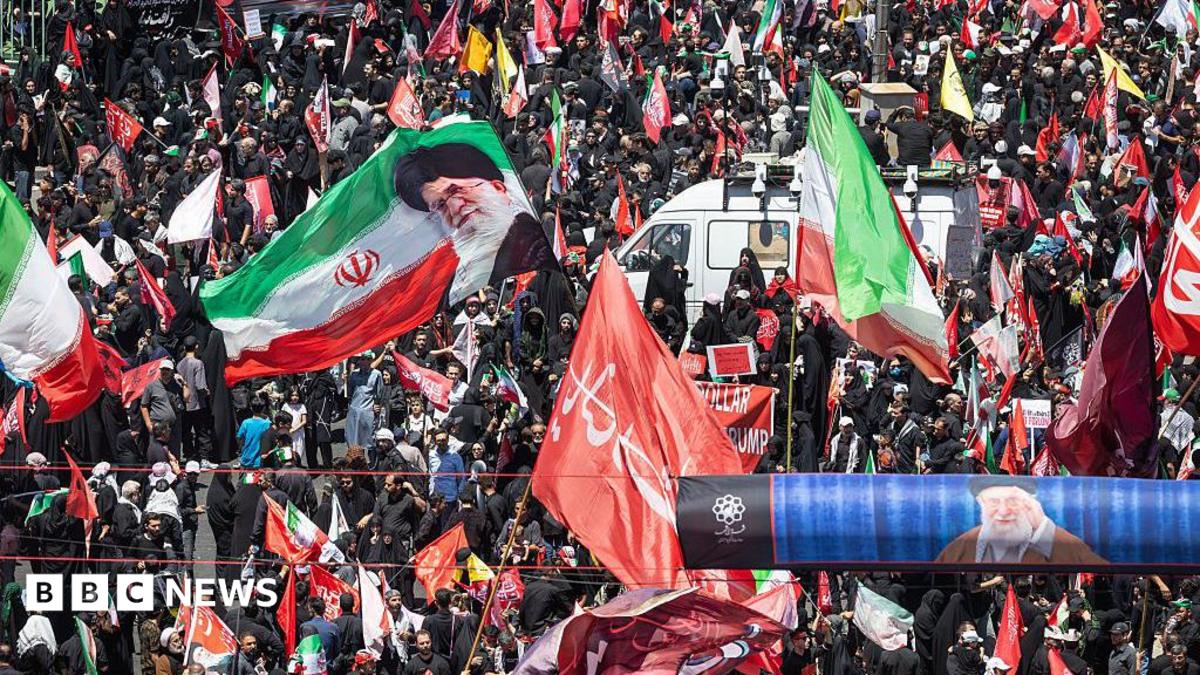
In a profound display of national mourning, hundreds of thousands converged upon the holy city of Mashhad, northeastern Iran, this week for the solemn Mashhad burial of the nation’s late Supreme Leader, Ayatollah Ali Khamenei. The poignant ceremony marked the culmination of six days of public remembrance, a period underscored by escalating regional tensions.
The streets leading to the revered gold-domed Imam Reza shrine, Iran’s holiest Shia Muslim site, were choked with mourners. A sea of black-clad figures flowed through the city’s main boulevards, many waving national flags and banners crimson with symbols of retribution. The atmosphere was charged, reflecting both deep sorrow and simmering anger.
This monumental final rite, widely reported by state media, unfolded amidst a perilous backdrop: a recent, worrying exchange of strikes between Iran and the United States. This escalating hostility threatens to unravel a nascent peace deal, potentially reigniting a war that claimed the life of the Supreme Leader himself.
Iran’s Revolutionary Guards swiftly accused US forces of overnight bombings targeting two railway bridges connecting Tehran to Mashhad. Their claim? A calculated effort to ‘overshadow’ the funeral proceedings.
Ayatollah Ali Khamenei, along with several family members, perished in an Israeli strike on his Tehran residence back on February 28th, the very inception of the conflict involving Iran, the US, and Israel. His son, Mojtaba, named as successor, has been conspicuously absent from public view since reportedly sustaining severe injuries in that same attack; he did not attend the funeral rites in Tehran or Qom, nor was there any indication of his presence at the Mashhad burial.
A Nation Grieves: The Significance of the Mashhad Burial
Early Thursday, a flight from Iraq delivered the coffins of the Supreme Leader, his granddaughter, son-in-law, daughter, and Mojtaba’s wife to Mashhad. Massive crowds in Iraqi cities like Najaf and Karbala had already participated in profound processions at their Shia shrines. Back in Mashhad, images broadcast on Iranian television depicted a vast procession, with mourners carrying portraits of the deceased leader and placards. Some defiantly called for the demise of figures like US President Donald Trump and Israeli Prime Minister Benjamin Netanyahu, whom they hold responsible for the joint attack four months prior.
Hoda, a 35-year-old local housewife, conveyed the profound grief to AFP news agency. ‘The loss of the leader is heavier than losing our parents,’ she lamented, her voice tinged with sorrow. ‘Only the death of Trump and Netanyahu will soothe our pain.’ The day culminated as a lorry, moving at a glacial pace through the throng, delivered Khamenei’s coffin to the Imam Reza shrine as dusk descended upon the city. This sacred complex, dating to the 9th century, is the resting place of Imam Reza, the eighth Shia Imam, and annually draws millions of devoted pilgrims.
The late Supreme Leader, a native of Mashhad, honed his theological studies in the city’s seminaries before relocating to Qom, the nerve center of Iran’s Shia clerical establishment. Ascending to the highest office in 1989 following the death of Ayatollah Ruhollah Khomeini, he governed for 37 tumultuous years. His tenure was marked by an unyielding grip on Iran’s political landscape and its formidable armed forces, often suppressing internal dissent with a heavy hand. On the international stage, he consistently championed hard-line policies, especially concerning Iran’s fraught relationship with the US and Israel.
The elaborate, carefully orchestrated funeral ceremonies for Ayatollah Ali Khamenei were intended by Iran’s leadership to project an image of unwavering unity and formidable strength. This comes after a devastating war, claiming thousands of lives, and subsequent mass protests in January, which saw security forces brutally suppress dissent, leading to countless more fatalities. However, the period of public mourning, including the grand Mashhad burial, has been undeniably overshadowed by renewed hostilities with the United States. President Trump, following a second night of strikes on Thursday, issued a stark warning that US attacks could ‘get much worse,’ stating their objective was to cripple Iran’s capacity to target commercial shipping in the critical shipping lanes. In swift retaliation, the Revolutionary Guards declared Iranian forces had targeted US military installations and infrastructure across Kuwait, Bahrain, and Qatar. Just weeks prior, a memorandum of understanding (MoU) had been signed between the US and Iran, aiming for an end to all hostilities and the reopening of the Strait of Hormuz. This agreement had set a two-month timeframe for a comprehensive deal encompassing Iran’s nuclear program, US sanctions, and a permanent truce. Mediator Qatar reported progress in recent indirect talks in Doha, with another meeting planned after the conclusion of Khamenei’s ceremonies. Yet, President Trump, speaking to reporters on Wednesday, unequivocally stated his belief that the MoU was now ‘over.’