
Come with me into the strange world of music-based conspiracy theories
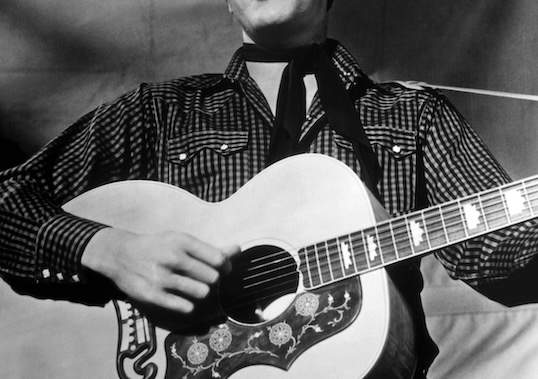
In a world brimming with uncertainty, the human mind often seeks comfort in explanations, no matter how outlandish. It’s a compelling desire to find order amidst perceived chaos, to connect seemingly disparate dots into a coherent, if sinister, narrative. This innate drive has given rise to countless legends, none more captivating than the strange and often unbelievable realm of music conspiracy theories.
From rock icons faking their own deaths to hidden messages embedded in classic tracks, these tales offer a seductive alternative to mundane reality. They posit a universe where powerful, shadowy figures manipulate events, where truth is suppressed, and where only the ‘enlightened’ can see the real picture. The internet, far from dispelling these notions, has become a fertile ground, allowing fringe ideas to blossom and consolidate among like-minded believers. It’s an intellectual echo chamber, reinforcing beliefs that challenge conventional wisdom.
Unveiling Music Conspiracy Theories
Why do these fantastical narratives hold such sway? Perhaps it’s a longing for control in an indifferent universe, a yearning to feel unique and superior by possessing ‘secret knowledge’. Or maybe, just maybe, some part of us delights in the sheer drama of it all. To truly grasp the allure, one might delve into the fascinating psychology behind such narratives, understanding the cognitive biases that fuel their propagation.
Banksy: Artist or Electronica Alumnus?
The world’s most enigmatic street artist, Banksy, appears, leaves an indelible mark, and vanishes without a trace. Millions change hands for his work. So, who is this phantom provocateur? A leading theory posits he’s Robert “3D” Del Naja, a member of the British electronica powerhouse Massive Attack. There’s compelling circumstantial evidence: Del Naja’s own graffiti roots in Bristol, the consistent appearance of Banksy’s art aligning with Massive Attack’s tour schedule across global cities like London, Toronto, and even Ukraine. Del Naja himself, while acknowledging Banksy, remains artfully vague when pressed. It’s an unsolved mystery, brimming with intriguing coincidences but lacking definitive proof.
Jim Morrison: From Lizard King to Talk Show Host?
Prepare for a truly mind-bending suggestion: What if Jim Morrison didn’t perish in that Parisian bathtub in 1971? What if the Doors frontman merely faked his death to escape the relentless glare of rock stardom and his personal demons? Believers point to the lack of an autopsy and a closed-casket funeral as ‘proof’. They claim he reappeared a decade later, adopting a new identity as none other than conservative talk show host Rush Limbaugh. The ‘evidence’? A mole on both men’s faces in ‘roughly’ the same spot, and a vague ‘similar facial structure’. Flimsy? Absolutely. Yet, for some, the notion that the Lizard King became a controversial radio personality is a truth too tantalizing to dismiss.
Elvis Lives! And Serves the Lord
Despite numerous witnesses, police reports, an autopsy, a coroner’s investigation, and an open-casket funeral, the legend persists: Elvis Presley faked his death in 1977. The stories are legendary: spotted boarding a flight to Argentina the day after his supposed demise (never mind the lack of direct flights from Memphis). Impersonators, TV specials, and an infamous 1987 sighting at a Burger King in Kalamazoo, Michigan, all fueled the fire. The latest incarnation? He’s apparently Bob Joyce, a preacher with a passing resemblance to The King. The internet, of course, insists DNA tests confirm this, painting a picture of a vast government cover-up. What’s being covered up? That, my friend, is for you to uncover.
Decoding Music’s Darkest Secrets
The 1980s Satanic Panic was a crucible for music conspiracy theories, particularly those involving ‘backmasking’. Led Zeppelin, among others, was accused of embedding subliminal messages in their songs, audible only when played backward. Robert Plant’s supposed backward incantations like “Here’s to my sweet Satan” sent shivers down spines, with theorists claiming these subtle exhortations lured listeners to the dark side. Yet, another layer of mystery shrouds ‘Stairway to Heaven’. Following Jimmy Page’s iconic solo, four notes remarkably echo the ‘Dies Irae’—a Gregorian chant from the 13th century, long associated with Judgement Day and death. Its presence in everything from Mozart to film scores is undeniable. Page’s known interest in the occult and Aleister Crowley adds another tantalizing piece to this enigmatic puzzle. Was its inclusion a sinister nod, a deliberate signal, or merely a musical coincidence? The ‘evidence’ remains incomplete, but the implications are deliciously ominous.
The Great Headphone Jack Conspiracy
Finally, a more contemporary, and perhaps more plausible, entry into the world of technological music conspiracy theories. In 2016, Apple made headlines by boldly eliminating the headphone jack from the iPhone, dubbing it a courageous leap forward for user convenience. Other manufacturers swiftly followed suit, heralding a new era of wireless audio. Yet, the venerable 3.5mm headphone jack, a standard since 1877, worked flawlessly for 139 years without requiring power or fiddly pairing. Its removal forced a mass migration to Bluetooth, a standard with inherent audio compression and bandwidth limitations, hardly an ‘upgrade’ for discerning audiophiles.
The true motive? Just three months after Apple’s ‘courageous’ announcement, AirPods debuted, selling for at least $100 more than their wired predecessors. This innovation quickly became a US$15 billion-a-year business. Coupled with licensing deals for Lightning or USB-C connectable headphones, the financial incentives became glaringly clear. Even Samsung, initially mocking Apple, quietly removed the jack from its phones by 2019. The result: an explosion in the wireless headphone market, reaping billions in new revenue streams. Was it convenience, or a carefully orchestrated corporate maneuver? Many believe the latter. So, wake up, sheeple. Grab your dongle, embrace wired headphones, and hear the difference — before ‘they’ take that choice away too.