
First patients enrolled in record-breaking Ebola treatment trial in DRC
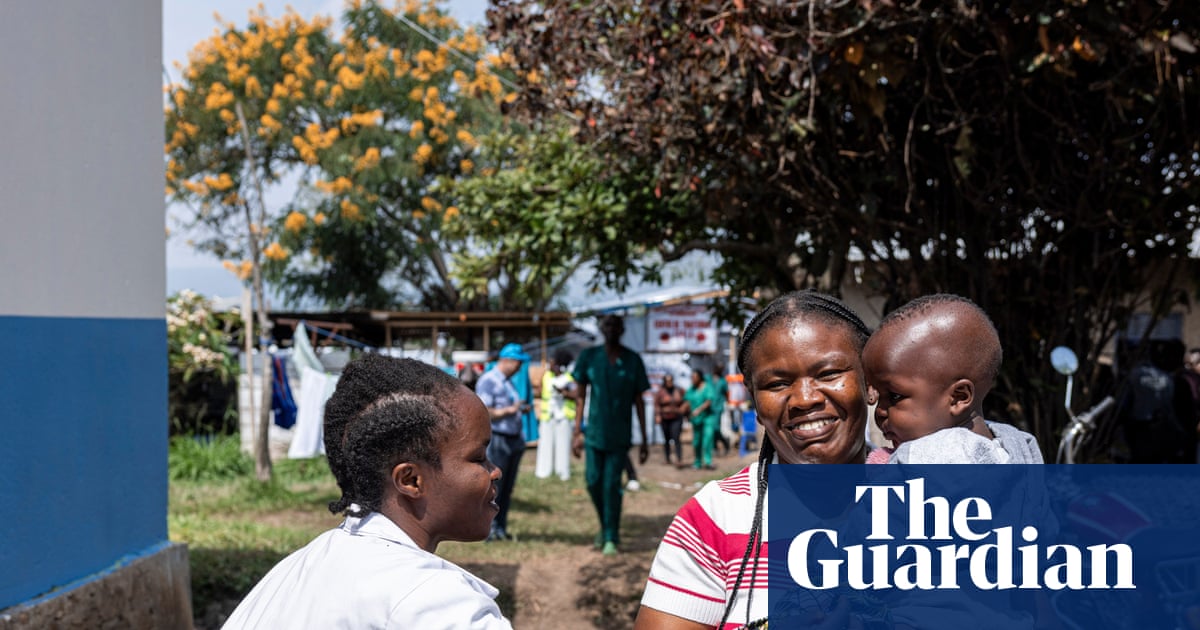
A desperate fight is unfolding in the Democratic Republic of Congo, where a relentless Ebola outbreak continues its deadly sweep. Yet, amidst the despair, a powerful beacon of hope has emerged: the rapid launch of an **Ebola treatment trial** that is enrolling patients at an unprecedented speed.
Scientists have mobilized with astonishing swiftness, initiating human trials for two experimental drugs just six weeks after the virulent Bundibugyo strain was declared a global health emergency by the World Health Organization on May 17. This ambitious endeavor aims to drastically reduce the terrifying mortality rates currently plaguing communities across the Ituri region.
In Bunia, the capital of Ituri province, where the virus rages, impatience simmers. “I hope these drug trials proceed quickly,” implored Neema Haba, a mother of three and banana seller. “Financially, we are being driven to the brink by this outbreak, and nothing is going right. We are struggling to provide for our children.” As of July 9, the Bundibugyo strain had infected 1,792 individuals and claimed 625 lives, with no approved vaccine or treatment in sight.
The current response relies heavily on foundational public health measures: identifying cases, isolating the sick, and meticulously tracing contacts. However, these efforts face formidable hurdles. Approximately 75% of known contacts are being tracked, but deep-seated community mistrust and a highly mobile population constantly challenge the responders. Adding to the crisis, some frontline workers recently downed tools in protest over unpaid wages.
Ovide Maliabo, a driver for a burial team in Rwampara, described the harrowing dangers. “At one point, we narrowly escaped being lynched,” he recounted. “It’s a shame that we aren’t being financially supported.” Bahati John, his team leader, even lost a tooth in an attack. “Honestly, since we started working on 15 May, with all the insults we’ve had to put up with, we haven’t seen a single penny,” he stated, highlighting the profound personal cost borne by those on the front lines.
The Promise of the Ebola Treatment Trial
Now, the weight of hope rests squarely on the shoulders of scientists racing to find effective medicines. The ‘Partners’ **Ebola treatment trial** has commenced, featuring two promising candidates: remdesivir and MBP134. Patients are randomly assigned to receive one of these drugs, a combination, or standard supportive care.
Remdesivir, an antiviral from Gilead Sciences, and MBP134, a monoclonal antibody by Mapp Biopharmaceutical, both demonstrated significant efficacy against the Bundibugyo virus in animal models. “They showed great efficacy, but now we need to test it in humans,” explained Prof. Laurens Liesenborghs of the Institute of Tropical Medicine, Antwerp, a key figure in the Ituri trial. “Basically, what we want to see is if they indeed can lower mortality.”
While Bundibugyo typically carries a lower death rate than the more infamous Zaire strain, it still tragically claims one in three of those infected. Researchers are meticulously observing differences in death rates between treatment groups and the standard care group. Any significant improvement would be a monumental victory.
Initial data from similar trials involving monoclonal antibodies against the Zaire strain saw death rates fall from 50% to 35%. Researchers are optimistic about achieving a comparable impact here. The trial is designed to accommodate additional treatments as they become available and will require between 700 and 1,000 enrolled patients for statistically significant results, a process expected to take several months, contingent on the outbreak’s trajectory.
Gilead and the US government have generously donated enough remdesivir and MBP134 to treat 1,200 patients. The WHO is actively negotiating future supplies should the drugs prove both safe and effective. Notably, the trial is inclusive, welcoming patients of all ages, including pregnant and breastfeeding women—a group often excluded from critical medical research. “Here the benefit is potentially very high because you offer a potentially life-saving treatment to someone who has a very high chance of dying,” Prof. Liesenborghs affirmed, adding that animal studies show no risk to pregnancies from the drugs.
Prof. Amanda Rojek, international principal investigator for Partners from the University of Oxford, lauded the swift commencement. “It’s just fantastic we’ve managed to get started so quickly,” she remarked, attributing much of this success to the DRC’s robust scientific leadership, honed through prior trials of Ebola and other diseases.
Prof. Yap Boum, head of emergency response for Africa CDC, cautioned that the danger persists but emphasized the trial’s critical role. “What limits an outbreak is our capacity to provide care, our surveillance capacity and our ability to isolate people,” he stated. “These trials will enable us to access treatment, and when we treat people, it also sends a message to the community.” A separate trial, investigating the prophylactic use of obeldesivir in Bundibugyo contacts, is also slated to begin shortly, pending crucial funding.