
How the failed 2016 coup reshaped Turkiye’s civil-military relations
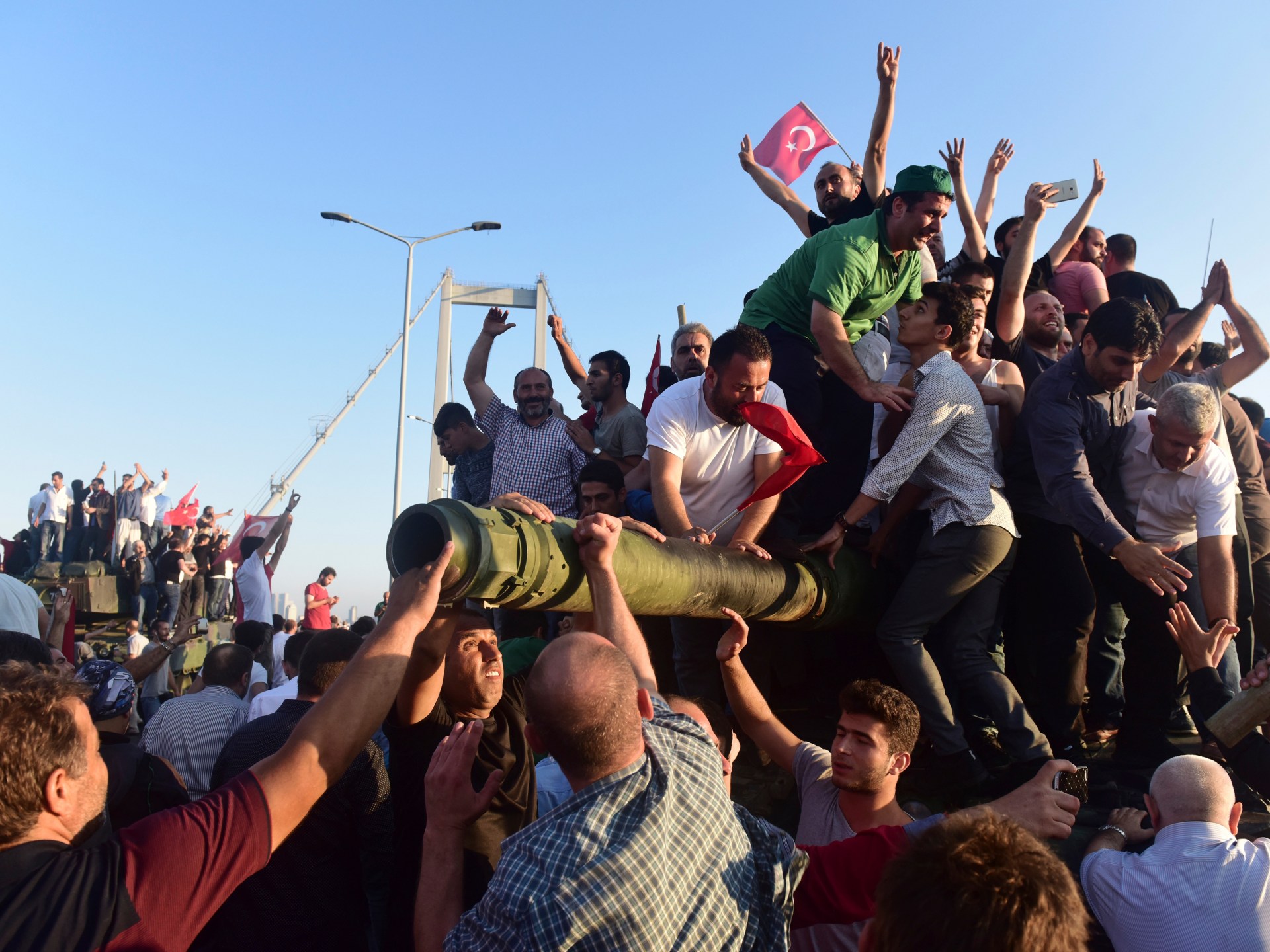
On a balmy July evening in 2016, a rogue faction within the Turkish military launched a brazen, coordinated bid to seize control, but the audacious Turkey coup attempt quickly faltered. Within mere hours, this violent uprising, involving tanks and fighter jets, was crushed as thousands of ordinary citizens, loyalist forces, and police poured into the streets, united against the putschists. This failed takeover, the bloodiest in modern Turkish history, fundamentally reshaped the nation’s civil-military dynamic forever.
A Decade Since the Failed Turkey Coup: A Transformed Landscape
Military interventions had long cast an imposing shadow over Turkish politics. Remember 1960? And 1980? Even a “post-modern coup” in 1997. For decades, the armed forces proudly considered themselves the ultimate guardians of the republic’s founding tenets, repeatedly stepping in when they felt the state veered off course. Yet, the nation’s very founders, military men themselves like Mustafa Kemal Ataturk, had actually envisioned a military strictly detached from political machinations. “If the military had remained involved in politics,” noted political scientist Ali Carkoglu, “it would most likely have been exploited by various groups in the uncertain and weak conditions of those early years of the republic. They made the most accurate diagnosis and said that the military should stay out of politics.” This separation was deemed a core principle.
Fast forward ten years, and the consensus among experts is striking: another conventional military takeover is now seen as highly improbable. “You never say never,” concedes Howard Eissenstat, a Turkiye specialist from St. Lawrence University, “But to bet on a military coup in Turkiye is to lose money.” The ruling Justice and Development Party (AK Party) had, since 2002, steadily pursued an agenda to expand civilian oversight. The failed Turkey coup simply accelerated this process dramatically. Understanding this shift requires appreciating the intricate relationship between military and state.
Ankara swiftly accused the network of U.S.-based Muslim scholar Fethullah Gulen, designated as a terrorist organization (FETO), of orchestrating the plot. The aftermath was swift and sweeping. Tens of thousands of military personnel, judges, police, teachers, and civil servants faced dismissal or arrest. Military academies were dismantled and reformed into the National Defence University, command structures were overhauled, and civilian authority over the armed forces expanded significantly. Retired Colonel Unal Atabay highlighted how these changes profoundly reconfigured the nexus between the military, the state, and society. He stresses the military’s enhanced internal oversight, a critical measure to prevent future infiltrations.
However, the broader implications of this post-coup transformation spark considerable debate. While increased civilian control over the military is undeniably a success, political scientist Ali Carkoglu cautions that it doesn’t automatically equate to democratic consolidation. “If that comes at the expense of democracy,” he warns, “then it is, at the very least, an unfortunate outcome for Turkish politics.” He argues that institutional legitimacy hinges on public trust, which in turn demands competitive politics and unfettered free expression.
Indeed, critics point to recent arrests of opposition mayors and investigations into other political figures, arguing that judicial processes are increasingly weaponized against rivals. The government, for its part, vehemently denies these accusations, asserting that investigations are independent and based solely on evidence of criminal wrongdoing. This intense debate unfolds against a backdrop of remarkable political continuity, with the AK Party consistently winning parliamentary elections.
Rights groups offer a different perspective on the legacy of the Turkey coup. Human Rights Watch, for instance, argues that emergency powers introduced post-2016 have morphed into broader restrictions on civil liberties, affecting many beyond those directly involved in the attempted overthrow, leaving careers and lives shattered even after acquittals. The government, conversely, maintains that these measures were essential to dismantle clandestine networks and prevent any recurrence of such threats. This ongoing vigilance was evident just days before the anniversary, as authorities launched operations across all 81 provinces, targeting nearly a thousand suspects linked to FETO. For Ankara, the events of July 2016 remain very much an active national security concern, not a closed chapter.