
US and Iran trade fire after two US soldiers killed in Jordan
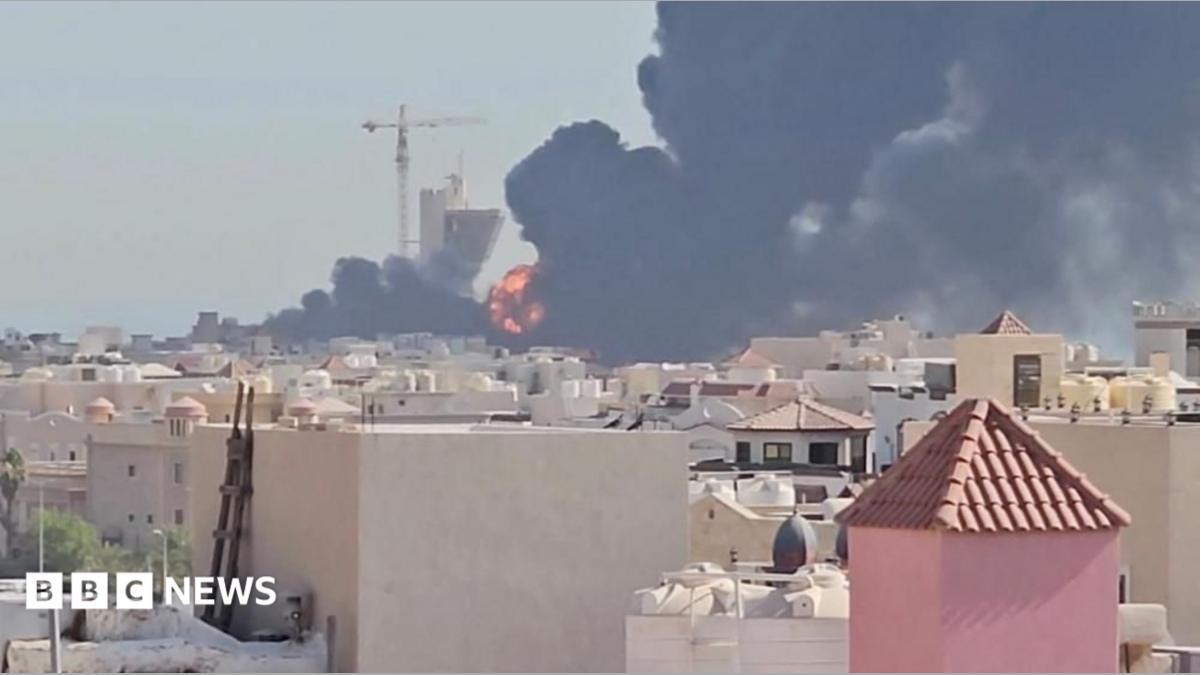
A perilous escalation in the US Iran conflict has plunged the Middle East into an eighth consecutive day of tit-for-tat military strikes, following a deadly Iranian attack on a base in Jordan that claimed the lives of two American soldiers and left another missing. Tensions, already running critically high, have now reached a fever pitch as both nations accuse one another of targeting vital civilian and military infrastructure.
The latest barrage of attacks, occurring just hours ago on July 19, 2026, saw Iranian state media report strikes on an under-construction nuclear power plant in Darkhoveyn and Qeshm Island. Simultaneously, in Kuwait, an electricity and water plant was reportedly hit for a second time. Jordan’s military, meanwhile, intercepted three Iranian missiles on Sunday, with a fourth falling harmlessly in a remote area, an immediate response to a prior US warning concerning potential targeting of the Jordanian port of Aqaba.
Escalating US Iran Conflict: Infrastructure Under Siege
This escalating pattern of aggression marks a stark deterioration in regional stability. Washington, for its part, has reimposed a stringent blockade on Iranian ports. Tehran, in a defiant countermeasure, has declared the vital Strait of Hormuz – a critical artery for global oil shipping – officially closed. This dramatic turn comes less than a month after a preliminary ceasefire, heralded as a hopeful de-escalation, tragically unraveled.
Sunday brought further alarming developments in the Strait of Hormuz. Iran’s Islamic Revolutionary Guard Corps (IRGC) asserted that two vessels, having disregarded explicit Iranian warnings against transit, were subsequently involved in an “accident.” The IRGC issued a stern, unequivocal warning: any vessel “influenced” by the United States and traversing “unsafe routes” will “certainly face accidents.” The US military, confirming its eighth consecutive night of strikes against Iranian targets, stated these operations were designed to “further degrade Iran’s ability to threaten commercial shipping” and to “swiftly punish” those responsible for the recent attacks on American service members in Jordan.
Verified footage emanating from the Jordanian facility paints a stark picture, showing at least two distinct impacts and a resultant explosion. Defence Secretary Pete Hegseth, in a poignant statement addressing the fallen US soldiers, affirmed: “Godspeed, heroes. Their sacrifice only stiffens our resolve.” The US death toll in this renewed US Iran conflict has tragically climbed to sixteen, following the declaration of an American Navy pilot, missing earlier this month, as deceased. Conversely, Iran’s Health Ministry reports a grim tally of at least 50 fatalities and over 500 injured from US strikes across the past three weeks alone.
Concerns over the targeting of civilian assets loom large. The Gulf Cooperation Council, an influential alliance comprising Bahrain, Kuwait, Oman, Qatar, Saudi Arabia, and the United Arab Emirates, unequivocally accused Tehran of striking non-military infrastructure after the initial hit on a Kuwaiti power and water distillation plant. Kuwait subsequently confirmed a second strike on the same plant, igniting a significant fire. Iran, in turn, also reported targeting a US air base and depot in Kuwait.
The United States maintains it has “carried out strikes exclusively on military targets, including military logistics infrastructure,” despite Iranian claims of damage to bridges and a railway station. Under the complex framework of international humanitarian law, while attacks on civilians are strictly prohibited, certain civilian objects may lose their protected status if demonstrably utilized to support an enemy’s war effort. This legal ambiguity only compounds the peril of the current situation.
The short-lived preliminary deal, struck in June between Washington and Tehran to halt the conflict, crumbled dramatically within weeks. President Donald Trump, on July 8, explicitly declared the agreement “over.” Iran’s Supreme Leader Mojtaba Khamenei, in a late Saturday statement, sharply criticized America’s “repeated breaches,” declaring that the US President’s signature was “utterly worthless and devoid of credibility.” The path forward remains shrouded in uncertainty, shadowed by an ever-present risk of further escalation.