
Yemen faces a new challenge amid prospects of confrontation
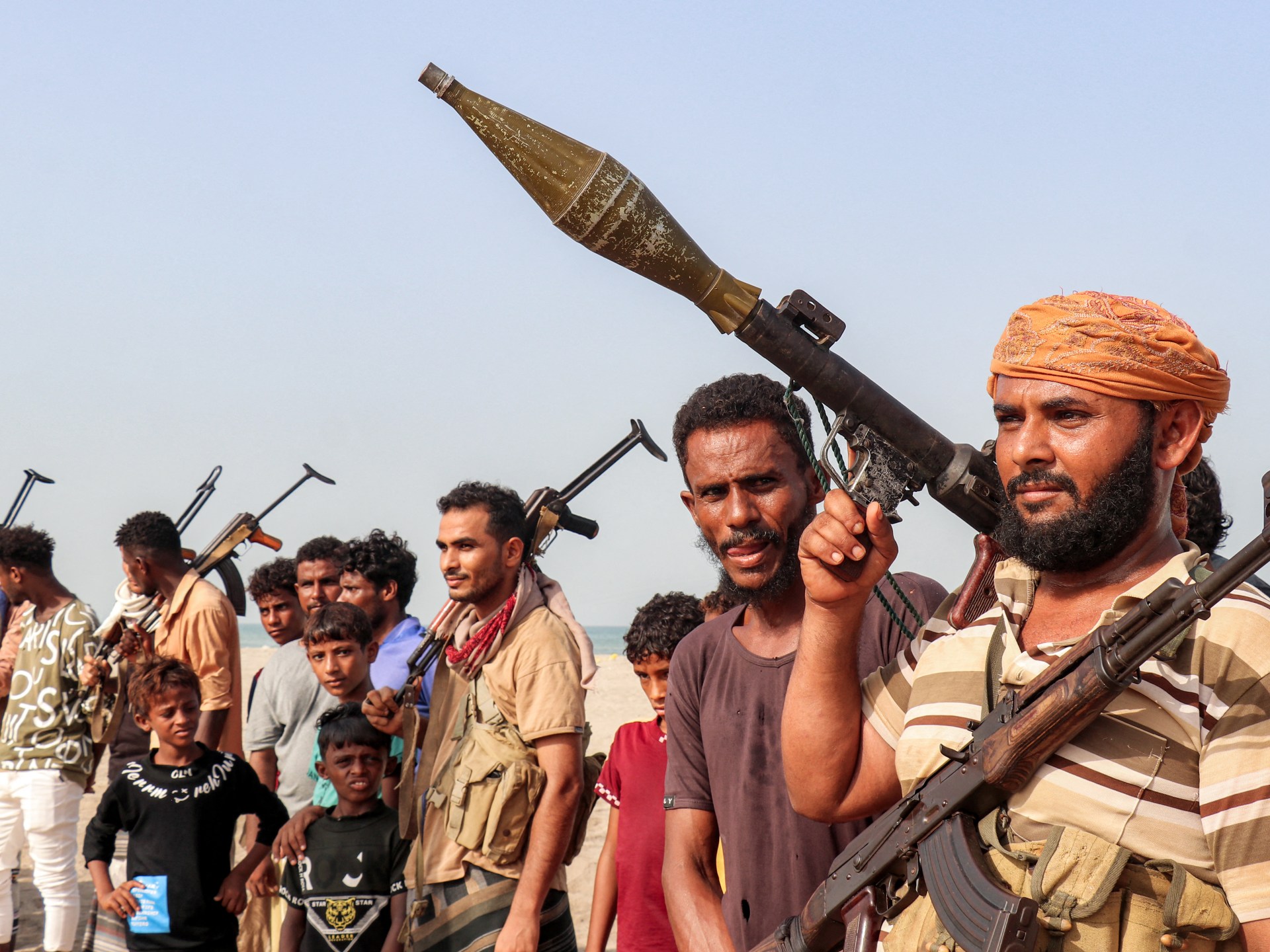
A seismic shift has just rocked the long-simmering Yemen conflict. The Houthi group, a formidable force in the war-torn nation, has declared an audacious maritime siege targeting all shipping bound for Saudi Arabia. This bold move, coming on the heels of repeated assaults on Saudi tankers in the Red Sea, instantly thrusts the critical Bab al-Mandeb Strait into the volatile epicenter of regional power struggles, exerting immense pressure on vital global trade routes. It’s a development that cannot be dismissed lightly, a clear escalation that redraws battle lines and demands immediate attention.
Escalation and the Yemen Conflict’s New Chapter
This latest gambit by Ansar Allah, as the Houthi rebels are also known, is inextricably linked to the broader, deeply unsettling confrontation between the United States and Iran, which dramatically flared on February 28. Having seized the Yemeni capital, Sanaa, back in 2014, the Iranian-backed Houthis now threaten to choke off a lifeline for much of Europe’s energy supply and a crucial passage for Saudi imports. The stakes, already immeasurable, have just been ratcheted up considerably.
On a tense Monday, Yemen’s internationally recognised government claimed an air strike on Sanaa airport, asserting it prevented an Iranian plane from landing in the Houthi-controlled capital. Predictably, the Houthis pinned the blame squarely on Saudi Arabia. Their response? A volley of missiles launched into the kingdom, a staunch ally of the Aden-based Yemeni government. This was merely a precursor to their dramatic announcement of a naval blockade. Such maneuvers signify a profound escalation in Yemen’s brutal civil war. Saudi Arabia, for years adept at sidestepping a renewed conflict on its southern flank, now faces an entirely different calculus: the threat has migrated from land to sea, directly imperiling its crucial oil export routes. This begs an urgent question: will these new aggressions escalate the already volatile Yemen conflict into a fresh, direct confrontation between the Yemeni government and the Houthis?
The possibility of widespread conflict, whispered about for years, now seems alarmingly probable, intertwined as it is with local grievances, regional ambitions, and the re-ignited US-Iran hostilities. Crucially, the Yemeni government has recently streamlined its military command structure. Whispers from regional intelligence suggest that the option of a decisive military intervention, once seemingly off the table, is very much back in play.
Government Forces: A Complex Mosaic
Today, the anti-Houthi coalition is a varied entity. It includes the National Army, functioning under the official Ministry of Defence, alongside newer, independently commanded formations such as the formidable Giants Brigades and the Guardians of the Republic forces, strategically positioned in al-Makha (Mocha) in the west. These disparate groups coalesced over years, a direct consequence of a weakened central government, the rise of powerful individual figures, and robust backing from various regional nations.
Estimates from the Defence Ministry place National Army personnel in the field at around 400,000. Their structure officially spans Yemen’s seven military regions, yet troop concentrations are overwhelmingly found in Marib, Taiz, and the country’s southern and eastern governorates, due to extensive Houthi control over much of the northwest, including Sanaa itself. Additional support comes from the Emergency Forces, numbering 30,000-40,000 personnel, and the Homeland Shield Forces, established in 2022 with a similar headcount, tasked with securing southern camps following the defeat of separatist elements in late 2025.
The 75,000-strong separatist Southern Transitional Council (STC) experienced a significant setback last year, following a decisive Saudi intervention favoring the government and the UAE’s subsequent withdrawal from Yemen. While the STC’s organizational cohesion was undeniably impacted, its fighters remain largely disarmed and present across numerous southern locations, some even nominally integrated into government structures. Furthermore, the Tariq Saleh-led Guardians of the Republic, once UAE-backed, boast approximately 20,000 heavily armed fighters primarily stationed along the Red Sea coast. The Giants Brigades, another prominent anti-Houthi combat formation, also command around 20,000 fighters, deployed along the Red Sea coast, in Aden, and other southern territories. In sum, the government-aligned anti-Houthi forces could exceed 500,000 personnel, though training, discipline, and institutional integration vary considerably across this vast cohort.
Regarding equipment, while weapon types are broadly similar to the conventional arms inherited from the pre-war Yemeni army, operational effectiveness differs widely. The Saudi-backed Homeland Shield Forces stand out with relatively modern tactical and light armored vehicles and advanced communication systems, ideal for rapid deployment. The Emergency Forces, focused on urban operations, combine security and combat capabilities. The Giants Brigades are noted for their medium and heavy armament, capable of robust offensive ground operations. Increasingly, government forces have also developed their drone capabilities for reconnaissance and limited tactical support.
Houthi Resilience and Asymmetric Advantage
Conversely, official military records in Sanaa suggest Houthi-affiliated army units comprise over 200,000 fighters, capable of swiftly mobilizing tens of thousands more from their volunteer Popular Committees for rapid intervention. These figures, like those on the government side, might not perfectly mirror actual combat strength, given the inclusion of reserve or inactive personnel. Yet, despite possessing fewer overall boots on the ground, the Houthis present a formidable challenge. They have weathered substantial damage from US and Israeli strikes over recent years. Their strength lies in a far more centralized command structure and unparalleled expertise in asymmetric warfare. Moreover, their proven missile, drone, and maritime capabilities, demonstrated with devastating effect in the Red Sea and the Bab al-Mandeb Strait, are a game-changer. The true balance of power in the ongoing Yemen conflict appears to hinge less on sheer numbers or conventional weaponry, and more on organizational cohesion and superior war management.
Saudi Strategy and the Path Ahead
While government forces appear capable of defensive actions, holding ground, or conducting extensive security operations, launching a large-scale offensive remains fraught with significant obstacles. Historically, a fragmented military decision-making process hindered their effectiveness – a situation Saudi Arabia has sought to rectify following the UAE’s withdrawal. Varying training levels, discipline issues, and coordinating multiple factions compound these difficulties. Geographically, the Houthis benefit from their control over the rugged, mountainous northwest, offering natural defensive advantages, while government forces are spread thin across numerous fronts, diluting their ability to concentrate power at a decisive point.
As of now, no international power, including the United States, has publicly endorsed a plan for a major military push to retake Sanaa. While Houthi aggression in the Red Sea has undeniably heightened global interest in the Yemeni file, international strategy has largely focused on degrading Houthi maritime and smuggling capabilities, rather than a full-scale ground offensive. Nevertheless, whispers from within the Yemeni state indicate discussions around a possible US-backed war against the Houthis. A successful advance on Sanaa would demand complex preconditions: a fully unified government military command, broad domestic and regional political support, and a concrete plan for post-capture governance. Intriguingly, some of these prerequisites may already be falling into place. For an insightful look into the broader international policy analyses, one might consult various reports.
The Yemeni government’s military trajectory is intrinsically linked to Saudi political and financial backing. Any significant move against the Houthis requires Riyadh’s imprimatur. Previously, Saudi strategy prioritized managing the conflict over outright resolution, a blend of limited military pressure, diplomatic overtures, and de-escalation tactics aimed at minimizing economic and security costs. However, recent international and regional developments, particularly regarding Red Sea navigation security, may have altered Riyadh’s calculus. The kingdom could very well be re-evaluating its options concerning the Yemeni file, and a military solution, once a last resort, now seems a distinct possibility on the table.