
Iran’s government spars with state TV as mediators push talks with US
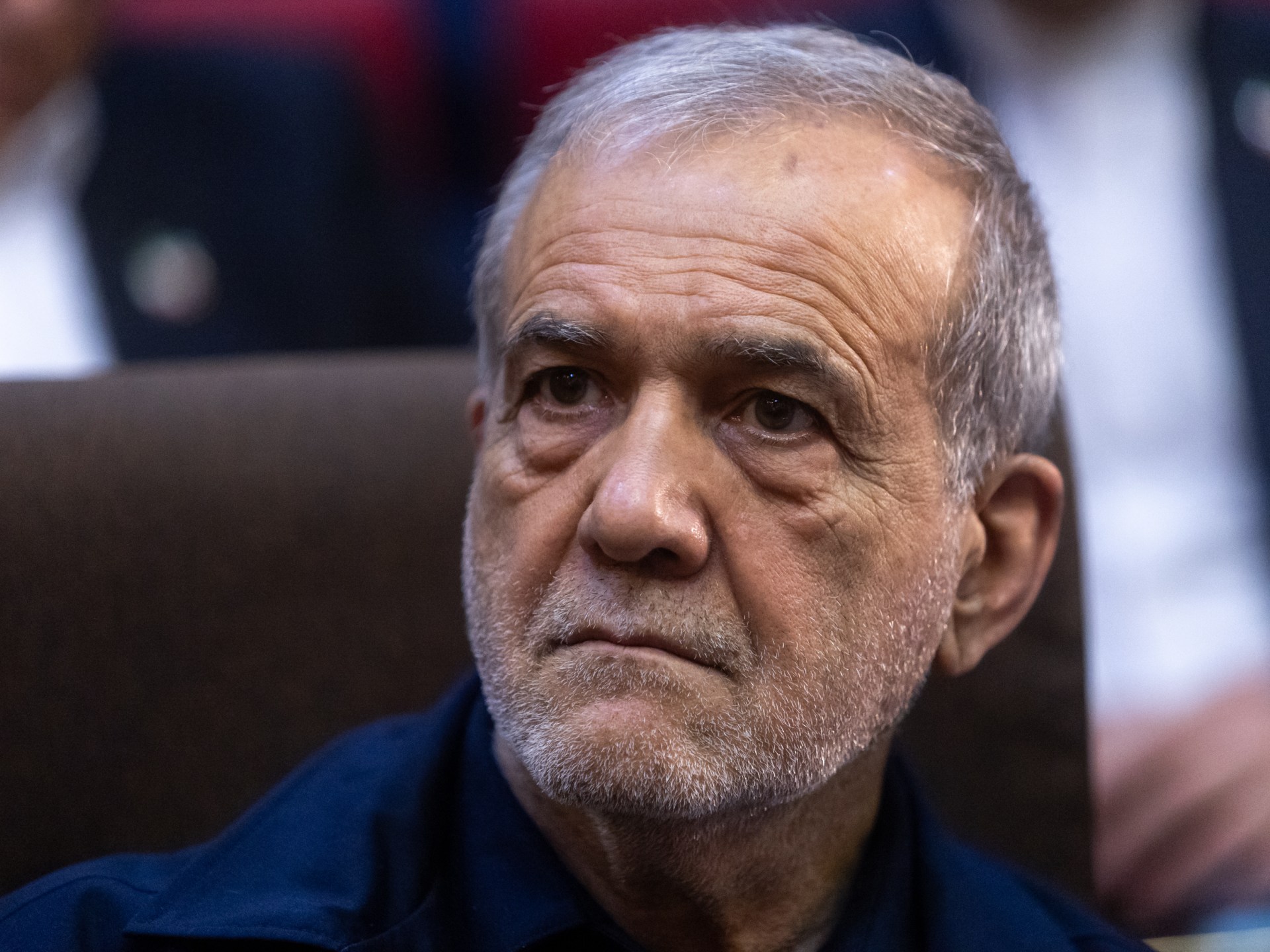
A simmering internal dispute has erupted publicly in Tehran, revealing a profound divergence between Iran’s government and its state-controlled television over the narrative surrounding ongoing Iran US talks. This unexpected friction emerges precisely as international mediators intensify their efforts to shepherd both nations towards a fragile diplomatic resolution.
The Government Information Council, in a sharp rebuke issued Friday, leveled accusations of “censorship” against the state broadcaster, IRIB. The alleged offense? Crucial segments of President Masoud Pezeshkian’s recent speech were conspicuously absent from public view. IRIB, whose chief is a direct appointee of the supreme leader, wasted no time in firing back on Saturday. It vehemently denied the government’s “accusations and improper attributions,” asserting its solemn duty to prevent any perception of “duality in the country’s leadership pillars.”
The Undisclosed Truth Behind Iran US Talks
President Pezeshkian’s excised remarks were indeed explosive. He disclosed that, following last year’s intense 12-day conflict with Israel, former Supreme Leader Ayatollah Ali Khamenei, while publicly maintaining a hardline stance against negotiations with Washington, had privately granted his unequivocal approval for such discussions.
“We approached the revered leader, laid out the precarious situation, and sought guidance on a path forward, acknowledging that the ‘no war, no peace’ paradigm was detrimental,” the president recounted. “He unequivocally commanded us to pursue negotiations. Our dialogue commenced entirely under his direct instruction.”
This incident, the government council claims, is far from isolated. It forms part of a disturbing pattern of “unusual actions” by state television, affecting public statements from the highest echelons of power – including the heads of government, parliament, and judiciary. Earlier this month, a segment concerning negotiations from Parliament Speaker Mohammad Bagher Ghalibaf’s interview with IRIB was also reportedly cut. Moreover, a recent speech by judiciary head Gholam-Hossein Mohseni-Ejei, in which he voiced support for the president, similarly failed to air in its entirety.
Foreign Minister Abbas Araghchi, adding his voice to the chorus of criticism, expressed his dismay. During an interview with a state-linked outlet, he recounted how he had “fought with a sword” advocating Iran’s position in wartime interviews with prominent US media such as Fox and CNN. He voiced an expectation for state television to showcase the forceful presentation of Iran’s narrative to American audiences and policymakers, only for mere subtitles from these extensive interviews to ever grace the airwaves.
Araghchi further dismissed the hardline narrative suggesting that the recently suspended memorandum of understanding with the US had been “imposed” upon the new Supreme Leader, Mojtaba Khamenei, asserting it represented the optimal agreement achievable under prevailing circumstances. The government, in a candid statement, attributed IRIB’s actions to “a political faction within” the broadcaster, implicitly pointing fingers at the ultra-hardline Paydari Front. Such actions, it warned, could perilously undermine national security and societal cohesion. IRIB, through its public relations arm, countered that airing the president’s controversial segment would have fostered a damaging illusion of internal division.
Both factions now find themselves trading accusations of sabotaging Mojtaba Khamenei’s recent decree, which urged “sacred unity” in the face of escalating military, economic, and diplomatic pressures from the US. Mohammad Mirzaei, a parliament member overseeing IRIB, confirmed that the broadcaster’s directors have been admonished about their imperative to present diverse viewpoints and act as a “symbol of national unity.”
Amidst the escalating feud, local media analysts offered stark assessments. Conservative journalist Mohammad Mohajeri lamented IRIB’s current state, calling it “most expensive and least effective.” Reformist activist Mohammad-Sadegh Javadi-Hesar diagnosed a deeper systemic issue: “one government being installed and another government called IRIB operating against it.” An unnamed source, cited by the reformist Entekhab news outlet, reported President Pezeshkian had sternly reprimanded IRIB chief Peyman Jebeli during a cabinet meeting following the controversy over Iran US talks. Jebeli, appointed by Ali Khamenei in 2021, previously served as media deputy at the Supreme National Security Council when Saeed Jalili, the sole council member reportedly opposing last month’s interim deal with the US, was its secretary.
As this unprecedented public spectacle unfolded, Omani mediators arrived in Tehran on Friday. Their agenda: crucial discussions concerning the management of the Strait of Hormuz, a vital maritime artery whose control has emerged as a flashpoint between the US and Iran. Meanwhile, US President Donald Trump, speaking on Friday, declared the conflict was progressing “extremely well” and confirmed an imminent visit by Israeli Prime Minister Benjamin Netanyahu to Washington. Trump acknowledged ongoing discussions through intermediaries but tempered expectations for any immediate breakthrough. He sidestepped questions regarding whether his threats of systematically attacking Iranian power plants and bridges, should the conflict escalate, would constitute war crimes. In a defiant counterpoint, Mohammad Bagher Zolghadr, secretary of Iran’s Supreme National Security Council, vowed on Saturday that missile and drone launches across the region would persist “until the full surrender of the enemy,” and to avenge civilian lives lost in the war. Understanding these complex regional dynamics is crucial for grasping the broader geopolitical landscape. Learn more about Middle East challenges.