
‘They Yelled, Screamed’: Trump Revives Claims Tariff Threat Forced India-Pakistan Truce
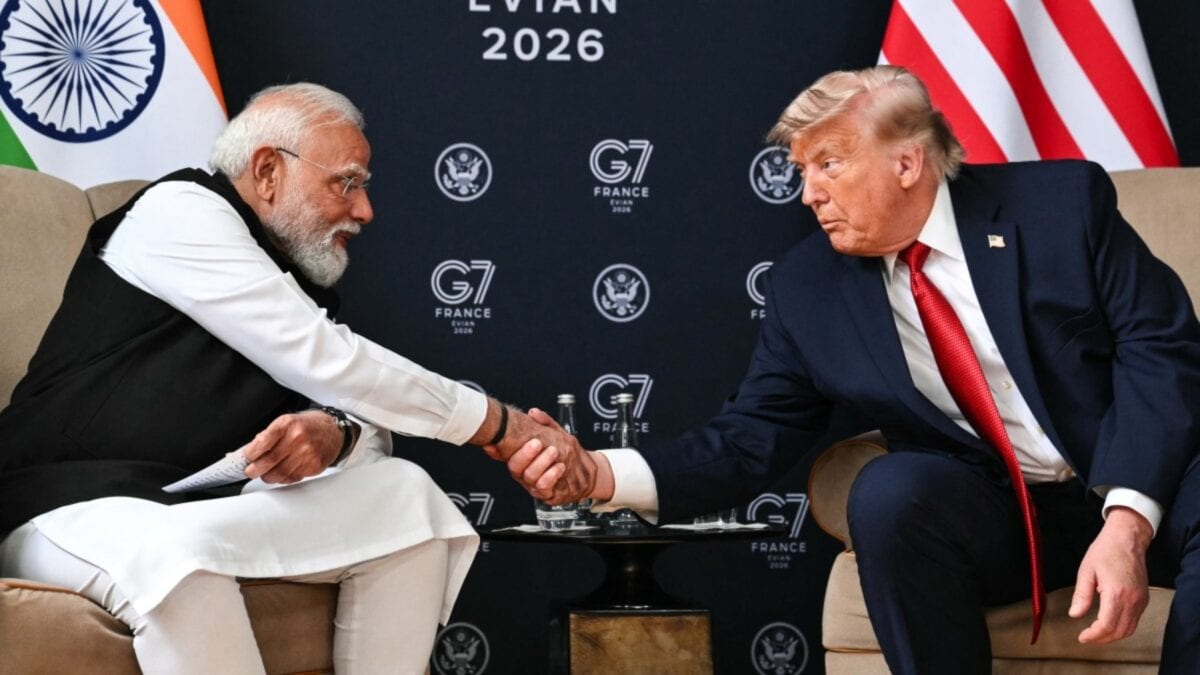
Former U.S. President Donald Trump has reignited a contentious assertion, claiming his threat of crippling tariffs single-handedly forged an India Pakistan truce during their military standoff last year. The pronouncements, made from Camp David, contradict India’s persistent denials of any external mediation in the high-stakes confrontation.
Speaking to journalists, Trump elaborated on his interventionist approach. “We ended the India-Pakistan (war),” he declared, referring to what he termed a “raging” conflict where “eleven planes were shot down.” He vividly recalled imposing a drastic 250 percent tariff threat on both nations. According to Trump, both India and Pakistan were “very angry” but ultimately capitulated. “A day later they called and they said, ‘We will not go to war,'” he recounted. This statement aligns with his broader narrative of having resolved numerous international conflicts throughout his tenure. He even cited Pakistan Prime Minister Shehbaz Sharif as acknowledging his supposed role in preventing a catastrophic escalation between the nuclear-armed neighbors.
India’s Stance on India Pakistan Truce Claims
New Delhi has consistently and vociferously rejected any notion of third-party involvement in de-escalating tensions. Indian authorities maintain that the mutual understanding to cease military operations arose exclusively from direct, high-level communication between the Directors General of Military Operations (DGMOs) of India and Pakistan. Both Prime Minister Narendra Modi and the Ministry of External Affairs have unequivocally stated India’s firm policy against outside mediation on bilateral issues with Pakistan. Furthermore, India has dismissed several operational specifics cited by Trump, particularly the claim of 11 aircraft shot down, as demonstrably inaccurate, thereby challenging the veracity of the former President’s narrative surrounding the India Pakistan truce.
The military action, codenamed Operation Sindoor, commenced on May 7 last year. It targeted terror infrastructure located in Pakistan and Pakistan-occupied Kashmir (PoK), a retaliatory measure following the April 22 Pahalgam terror attack. Hostilities were effectively paused on May 10, prompted by a formal request from Pakistan and subsequent direct dialogue between the two nations’ military command structures. This sequence of events, India asserts, confirms the indigenous nature of the de-escalation, devoid of any external pressure, least of all a tariff threat. Understanding the intricate dynamics of such diplomatic interventions is crucial for global stability.