
Spanish PM calls for urgent EU meeting after ‘selfish’ responses to Ceuta crisis
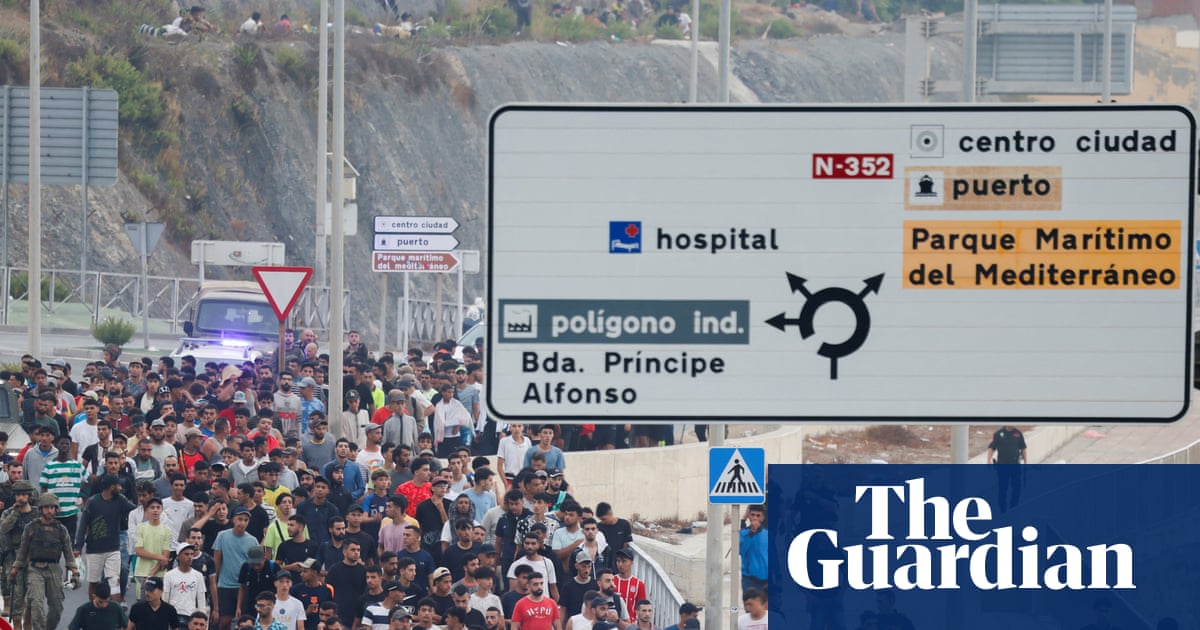
Spain’s Prime Minister, Pedro Sánchez, has issued a searing indictment of certain EU member states’ “selfish, polarising and unlawful reaction” to the recent Ceuta crisis, a humanitarian and political maelstrom sparked by a massive border crossing into the Spanish enclave. His impassioned plea for an urgent meeting of EU interior ministers underscores a profound fracture within the bloc regarding external border policy.
In a dramatic exodus, over 50,000 individuals poured into Ceuta from Morocco over just two days, Thursday and Friday. This unprecedented influx led to heartbreaking casualties; at least 67 people perished, some tragically drowning, others crushed in the desperate scramble to breach a treacherous breakwater barrier. While authorities confirm that over 48,000 individuals have since voluntarily returned to Moroccan territory, the incident has ignited a fierce political firestorm for Madrid and prompted calls from some EU counterparts for Spain’s suspension from the Schengen free-movement zone.
The Ceuta Crisis: A Test of European Solidarity
Sánchez minced no words in a pointed letter addressed to top EU officials, including European Commission President Ursula von der Leyen. He lauded the support shown by most nations but castigated those who chose to attack Spain. Such behavior, he argued, “driven by prejudice, fake news, ignorance or political interest – is … contrary to European law, humanitarian law, and the principles of solidarity that bind us together.” This bold statement reveals the depth of his frustration.
Italy, in particular, drew the Prime Minister’s ire, having announced a month-long suspension of its Schengen arrangements with Spain. This decision, astonishingly, came despite Ceuta and Melilla being subject to special Schengen rules explicitly designed to prevent onward movement into continental Europe. Italy’s foreign minister, Antonio Tajani, controversially linked the Ceuta crisis to a now-closed Spanish scheme to regularise the status of over a million undocumented migrants, lambasting it as a policy that incentivised human trafficking and was “profoundly wrong.”
Sánchez, in a sharp retort, cited Frontex data, asserting Spain’s borders were “one of the least porous external borders of the European Union,” registering half the irregular entries seen in Italy between 2021 and 2026. He unequivocally stated that the EU cannot tolerate “this kind of selfish, polarising and unlawful reaction,” demanding the swift convocation of a video conference for interior ministers.
As the immediate chaos subsided, with enhanced Spanish police and military presence ensuring a calmer Saturday morning and continued returns to Morocco, the underlying migratory pressures persist. Souleil Boyan, a 19-year-old from Senegal, articulated a common sentiment outside a Ceuta migrant centre: a desperate hope to reach Europe for work and a better life, lamenting the lack of opportunities back home.
While the Spanish government attributed the latest influx to “human-trafficking mafias” exploiting a recent Supreme Court ruling on summary returns, migration experts like Mauricio Valiente of the Spanish Refugee Aid Commission offer a more nuanced view. Valiente noted the unique, less organized nature of the Ceuta route compared to perilous Atlantic crossings, suggesting a simplistic link between the court ruling or organised crime and the surge is “completely unfounded.”
Senior EU officials are now gathering for a “political crisis response team” meeting, convened under Ireland’s presidency. France has already distanced itself from calls to suspend Spain from Schengen, emphasizing robust bilateral cooperation. As the continent grapples with the fallout from the latest cooperation within the bloc, the path forward for a unified and humane external border policy remains fraught with challenges.