
Trump says talks to end Iran war to begin Monday but Tehran says otherwise
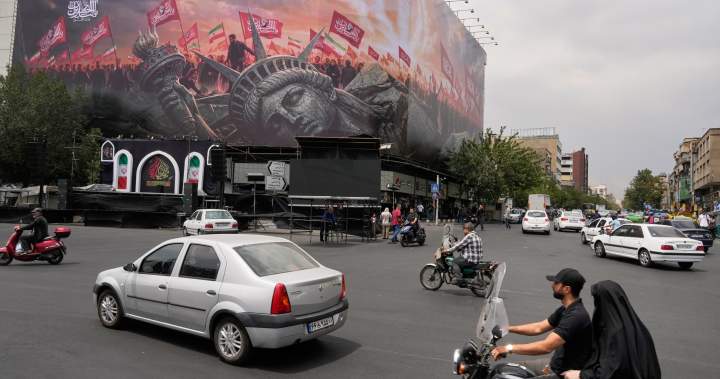
U.S. President Donald Trump, in a dramatic announcement, declared that new Iran War Talks are slated to commence this Monday, aiming to de-escalate the volatile five-month conflict. Yet, in a swift and contradictory statement, Iran’s state media promptly refuted any such direct negotiations with the United States currently taking place. This stark disagreement highlights the precarious diplomatic tightrope being walked amidst escalating regional tensions, which extend far beyond the Iranian border.
Trump’s declaration came after he claimed to have held back from unleashing potentially devastating strikes on Iran, citing appeals from key Gulf allies, including Qatar, Saudi Arabia, and the United Arab Emirates. He asserted that a plan was in motion for what he termed “the biggest attack since World War II,” but a last-minute shift saw him opt for diplomacy. “Now what we’re doing is we’re talking to them in the form of a negotiation. It begins tomorrow afternoon,” the President stated, though he offered no specifics on participants or the precise agenda for these crucial discussions.
Examining the Proposed Iran War Talks
The proposed talks, according to American officials, are designed not only to wind down the war but also to revitalize critical cargo traffic through the Strait of Hormuz. This essential global shipping lane, through which approximately a fifth of all traded oil and natural gas traversed prior to the conflict, has seen its flow severely disrupted. The President’s pattern of threatening massive military action only to subsequently pull back has become a defining characteristic of this conflict, keeping global markets perpetually on edge and sending commodity prices spiraling.
However, Tehran tells a markedly different story. Esmail Baghaei, an Iranian Foreign Ministry spokesperson, explicitly stated that his country is not engaged in negotiations with the U.S. Instead, he confirmed that ongoing discussions are solely with Oman, focusing exclusively on establishing a temporary route for secure transit through the strait. Data from the analytics platform Kpler revealed that nine vessels navigated the strait just last Sunday, with the majority utilizing an Iranian-controlled passage, underscoring the immediate need for agreed-upon navigation protocols.
Beyond the immediate question of Iran War Talks, the wider Middle East remains mired in deep instability. Israel recently struck the Gaza Strip, killing at least 17 people, including young children, according to local hospitals. This occurred mere days after a supposed disarmament deal between the U.S. and Hamas was announced. Concurrently, Iraq finds itself in a precarious position, balancing relations between the U.S. and Iran, a task made increasingly difficult since the U.S. and Israel entered into direct conflict with Iran in February. Iranian-backed Iraqi militia groups have continued drone strikes against American interests across Iraq, including within the Kurdish region, further complicating regional security efforts.
Moreover, the humanitarian situation in Gaza has become catastrophically dire. Scorching summer temperatures have transformed makeshift tents, housing hundreds of thousands of displaced Palestinians, into unbearable infernos. These flimsy plastic shelters trap heat, offering almost no relief or ventilation, forcing desperate families to seek solace outdoors. With severely limited access to potable water, electricity, and sanitation, these overcrowded camps are fertile ground for disease. Aid agencies like the Norwegian Refugee Council warn of heightened risks of dehydration, heatstroke, and widespread infections. The immediate future of these crucial Iran War Talks remains shrouded in uncertainty as global powers grapple with multifaceted crises.