
Why Is An Ahmedabad Youth On Hunger Strike In Abhijit Dipke’s Hometown Against Cockroach Janata Party?
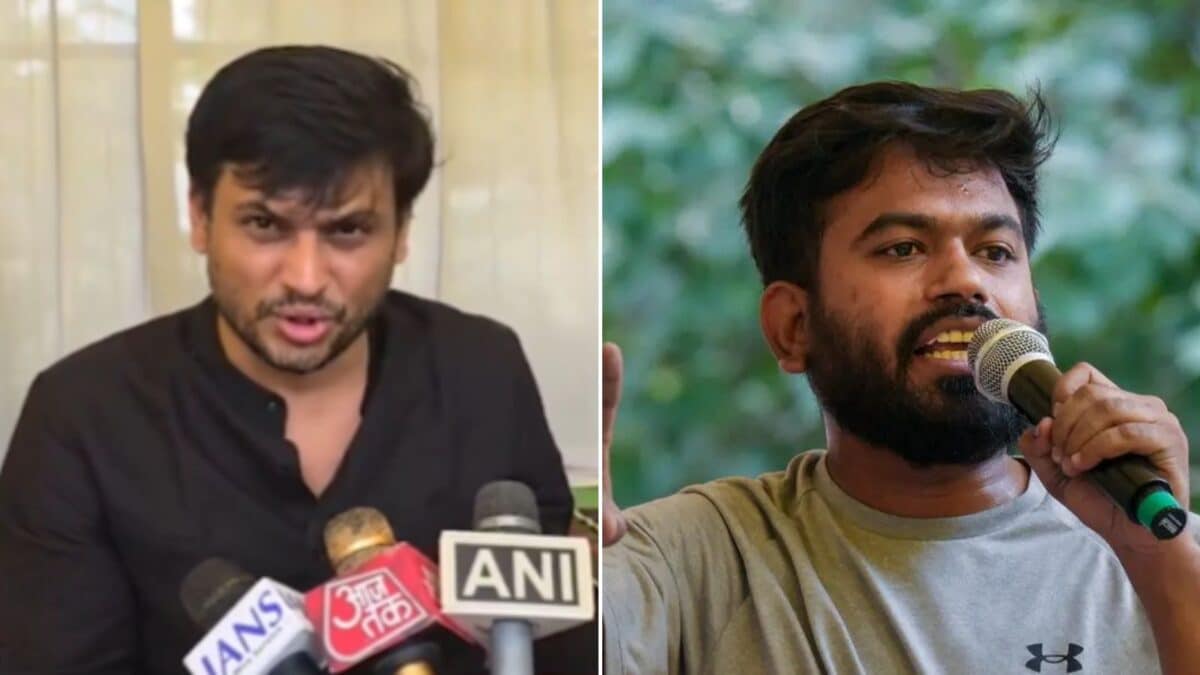
In a dramatic turn of events, a youth from Ahmedabad has embarked on an indefinite hunger strike in Maharashtra’s Chhatrapati Sambhajinagar, casting a harsh spotlight on the newly formed Cockroach Janata Party (CJP). The core allegation? Stark CJP favouritism in the recent appointments to its first National Working Committee. Manish Brahmbhatt, who asserts his prior involvement with the pivotal Jantar Mantar student movement, stands firm in his protest, demanding accountability.
Brahmbhatt’s grievances are sharp and clear: a significant number of dedicated volunteers and grassroots coordinators, instrumental in the campaign’s genesis, have reportedly been relegated to the sidelines. Meanwhile, he claims, key leadership roles were exclusively doled out to individuals closely aligned with CJP founder Abhijit Dipke. This alleged sidelining of dedicated workers has ignited a firestorm of discontent.
During his impassioned protest, Brahmbhatt recounted a frustrating experience at a recent CJP core committee meeting. Despite attending with fellow volunteers, they were purportedly denied entry or participation. “We remained there throughout the entire day, but nobody extended an invitation inside,” he lamented. He added that initial WhatsApp messages suggested they hadn’t reached the venue, and subsequent attempts to communicate with CJP representative Ashutosh went unanswered. Later, he learned that phones were confiscated during the meeting, creating an information vacuum. What a peculiar way to manage a “grassroots” movement!
Allegations of CJP Favouritism Mount
The discontent doesn’t end there. Brahmbhatt further alleged that his innovative nationwide public outreach concept, dubbed “Ek Reel Desh Ke Naam,” which aimed to empower citizens to highlight public issues via social media, was surreptitiously rebranded and launched by the CJP as “Kya Bolti Public.” He claims the organization did so without a shred of acknowledgment for its original proponent. Such actions, if true, underscore a troubling pattern within the party regarding CJP favouritism and intellectual property.
Joined by another CJP volunteer, Brahmbhatt escalated his protest on Thursday, staging a demonstration directly outside Dipke’s residence. Their collective voice demanded fair representation for the diligent coordinators who were the lifeblood of the Jantar Mantar student movement. It’s a bold move, confronting power directly at its doorstep.
This striking demonstration unfolds merely a day after the CJP unveiled its National Working Committee, forged during a two-day core committee meeting held, ironically, at Dipke’s home in Chhatrapati Sambhajinagar. The organization, despite these internal rifts, appointed its 30-year-old founder, Abhijit Dipke, as National Convener. Saurav Das, 27, and Ashutosh Ranka, 30, were named Co-Conveners, rounding out the core leadership.
In a public statement following the contentious meeting, CJP leaders asserted their commitment to maintaining the organization’s identity as a grassroots movement. They emphatically stated that a transformation into a full-fledged political party was not imminent. They also announced plans to establish State Coordination Committees, along with Lok Sabha and city-level units nationwide over the next six months, ratifying their inaugural national leadership team.
The newly minted leadership roster includes several other key figures: Ajinkya Shinde as National Organisation In-Charge, Deepak Baliyan as Organisation Co-In-Charge, Aafreen Nawaz as National Secretary, Vijay Reddi Mallangi as Media Lead, Ratna Singh as Legal Affairs Lead, Vaishnavi Gaur as Research and Policy Lead, Rohan Deshpande as Technology Lead, and Yogesh Ingale as Finance Lead. Leadership responsibilities have also been strategically assigned across India’s North, South, East, North-East, and West zones, painting a picture of comprehensive expansion.
Crucially, as of the time of this publication, the CJP has remained conspicuously silent on Brahmbhatt’s serious allegations of CJP favouritism. The unfolding drama within this nascent political force could profoundly impact its future trajectory in India’s political landscape. Only time will tell if these cries for fairness will truly resonate or be swallowed by the party machine.