
Small-scale projects offer hope for Gaza farmers rebuilding lives
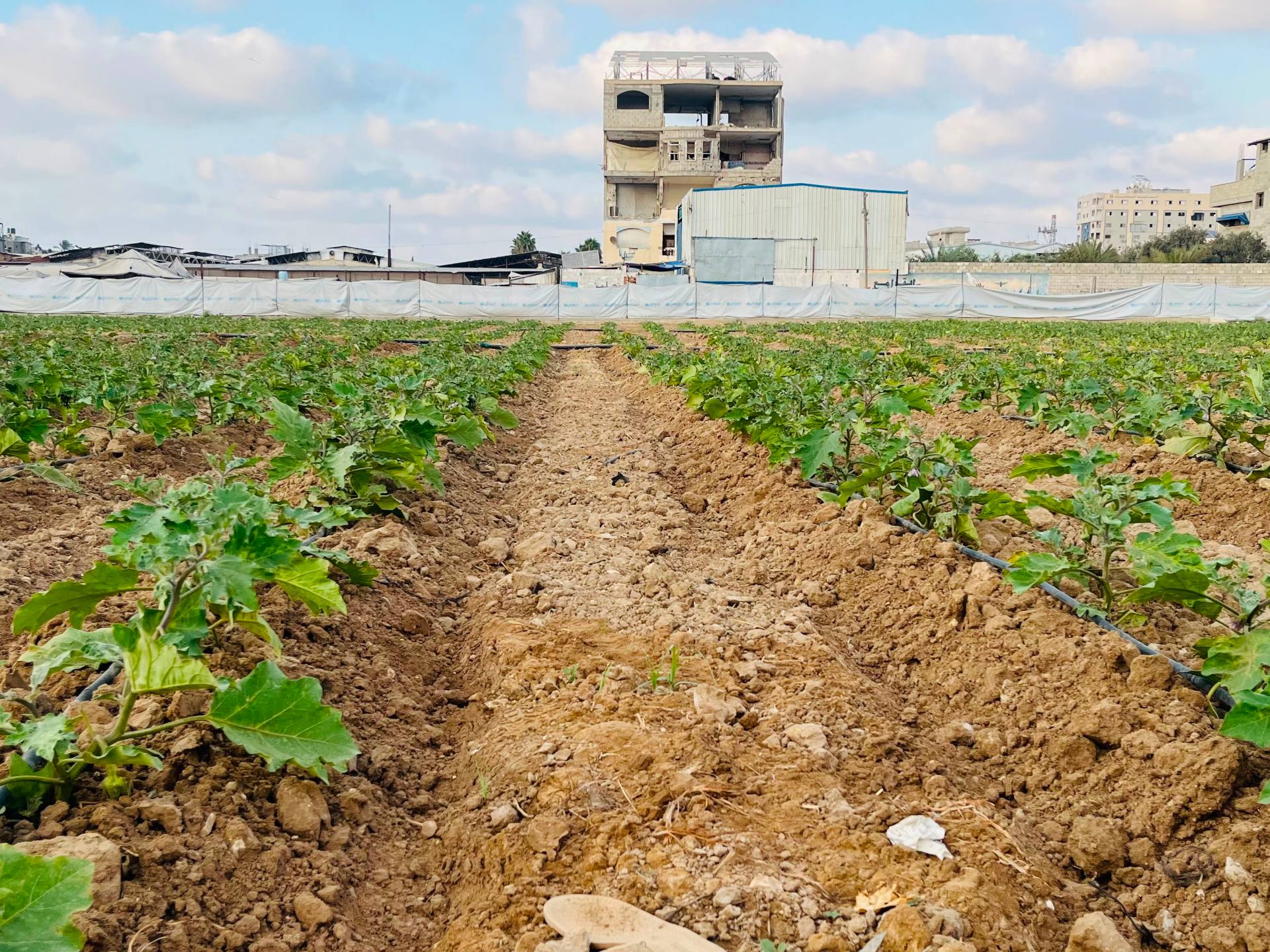
NUSEIRAT, Gaza Strip – In the heart of central Gaza’s Nuseirat refugee camp, Mohammad al-Halabi, a seasoned 50-year-old, meticulously tends to a minuscule 300-square-metre plot. Tomato and eggplant seedlings, fragile yet defiant, represent far more than just sustenance; they embody a desperate, resilient attempt by Gaza farmers to reclaim a semblance of their shattered livelihoods amidst widespread devastation.
Al-Halabi’s hands, once accustomed to working vast expanses of northern Gaza’s rich soil, now coax life from this rented patch. His family, including his four adult children, once relied entirely on a sprawling 40,000-square-metre farm where strawberries, tomatoes, flowers, and potatoes flourished. That land, his life’s work, was tragically bulldozed in February 2024. “The land is my life,” he states simply, reflecting a deep connection lost to the ravages of war, now covered in rubble and remnants of conflict.
The Immense Challenge Facing Gaza Farmers
Rehabilitation of his ancestral land, al-Halabi believes, will be a colossal undertaking, requiring resources and time currently unavailable. So, displaced and undeterred, he embraced this small Nuseirat plot. “Agriculture is my profession. Even after being displaced, I couldn’t leave it,” he explains. Though the yield is scant – a few kilograms barely enough for his family – the act of nurturing a growing plant offers profound hope. “When I see the plant growing and producing a fruit, I feel that I can still farm,” he shares.
The scale of agricultural destruction across Gaza is staggering, as detailed by the Government Media Office. A horrifying 87 percent of agricultural land has been obliterated. Over 8,700 wells, crucial for irrigation, lie ruined. Thousands of livestock and poultry farms are gone. Greenhouses, once symbols of modern farming, have suffered more than 87 percent damage. Annual vegetable and fruit production, once a robust 524,000 tonnes, has plummeted to an alarming 20,000 tonnes. The future of global food security remains a critical concern for many regions.
Naser Deeb, Director-General of Agricultural Extension at Gaza’s Ministry of Agriculture, underscores the multifaceted catastrophe. Farmland, water sources, irrigation networks, and vital facilities have been decimated. Returning to land, he cautions, does not equate to immediate productivity. “The soil needs to be rehabilitated, water sources and irrigation systems repaired, and seeds, fertilisers and equipment provided,” Deeb asserts. This complex web of issues severely impacts farming families and local markets, creating an acute shortage of fresh produce and obstructing efforts for farmers to regain financial independence.
Yet, amidst this devastation, a nascent spirit of rebuilding emerges through small-scale initiatives. Mohammad Abdul Naser Hassan al-Jadba, a 40-year-old from Gaza City’s Sheikh Ajleen, faced a unique challenge. His original farmland fell beyond the perilous “Yellow Line,” a boundary where Israeli forces operate, making access impossible and deadly. Refusing to succumb to despair, al-Jadba rented a plot in Deir el-Balah.
With crucial funding from a Belgian development fund, he constructed a greenhouse and established a nursery for tomatoes, eggplants, and peppers. What began as an act of survival has transformed into a viable income source, providing his family with approximately 3,000 shekels ($1,015) monthly. Crucially, his venture has also provided permanent employment for two previously jobless farmers. “This project was not just agricultural support,” al-Jadba reflects, “It was a real opportunity to return to work, regain my source of income and become self-reliant again.” These individual triumphs, though modest, offer vital glimmers of light for Gaza farmers struggling to carve out a future.