
From Women Empowerment To Education: CM Mann Highlights Punjab’s Accomplishments In 2026 On I-Day
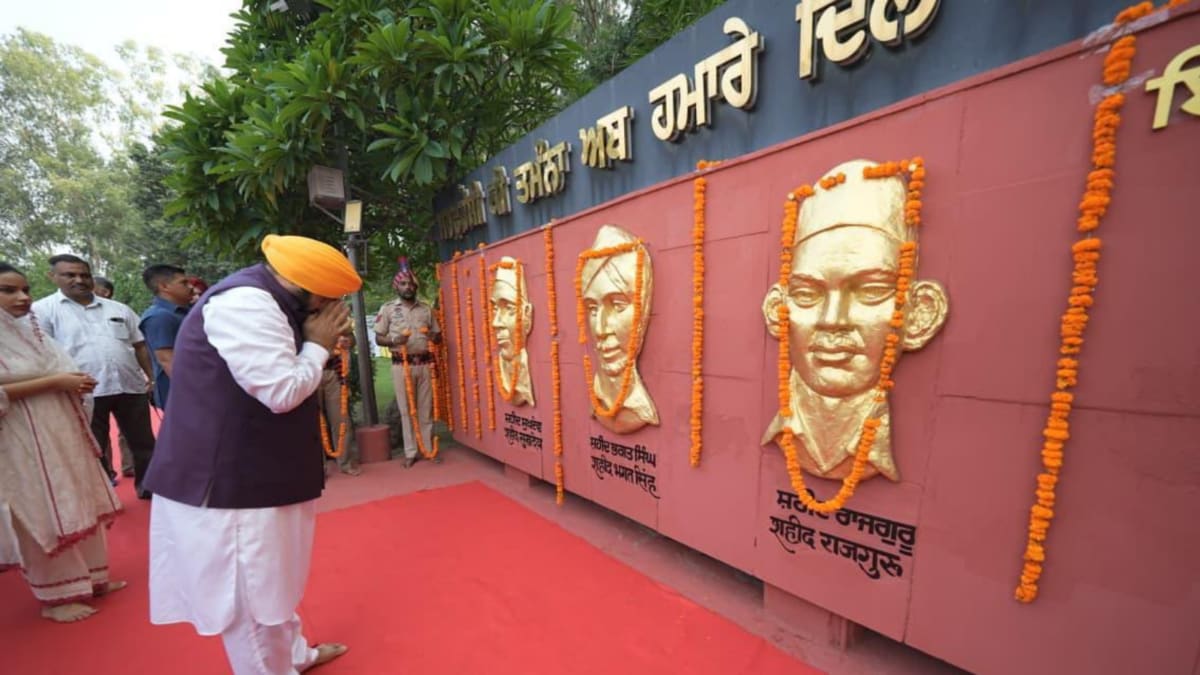
On the auspicious occasion of India’s 80th Independence Day in 2026, Punjab Chief Minister Bhagwant Mann delivered a compelling address at the Cantt Board Stadium, delineating a sweeping panorama of his government’s significant achievements. His speech underscored a monumental year for the state, specifically highlighting substantial Punjab accomplishments across various sectors, most notably women’s empowerment, education, and employment. The CM’s words painted a vivid picture of progress, aiming to uplift every citizen.
Mann unequivocally declared 2026 as the “year of freedom and empowerment” for women throughout Punjab. This bold pronouncement was buttressed by concrete figures from the Mawan Dheeyan Satkar Yojna, a flagship initiative designed to provide financial autonomy. Over 65 lakh women have already received crucial financial assistance, with a staggering ₹2,274 crore 42 lakh disbursed to their bank accounts. The Chief Minister urged the remaining eligible women to register, ensuring broader participation in this transformative scheme. This particular push for gender equality marks a critical step towards a more inclusive society. For those interested in understanding similar efforts, one might explore national welfare initiatives.
Transforming Education: A New Era for Punjab Accomplishments
The realm of education has witnessed nothing short of a revolution under Mann’s leadership. The statistics are truly eye-opening: an incredible 882 students from government schools successfully cleared the National Eligibility cum Entrance Test (NEET), a dramatic surge from merely 80 in 2021. Furthermore, 361 students triumphed in JEE Mains, with 64 advancing to clear JEE Advanced. This exceptional performance is no accident; it is the direct result of targeted efforts and strategic investments.
The government is actively nurturing talent by sending batches of principals and teachers for advanced training to esteemed institutions in Singapore, Finland, and Ahmedabad. Schools of Eminence, a pioneering program, are actively shaping young minds, transforming aspirations into tangible realities. Looking ahead, Punjab is poised to introduce an AI curriculum in all government schools, launching next month. The ambitious “Shiksha Kranti 2.0”, backed by a ₹3,500 crore budget from the World Bank, signifies the second phase of these widespread education reforms. Moreover, the state has unveiled the country’s first Digital Open University Policy-2026 and plans to establish a new university at Sri Anandpur Sahib.
Boosting Employment & Upholding Governance
Beyond education and women’s welfare, the administration has made remarkable strides in addressing the critical issue of employment. Over 69,000 government jobs have been extended to the youth, meticulously based on merit through a transparent ‘No Cash, No Farmaish’ system. This commitment to fairness and equity is paramount, ensuring that deserving candidates secure positions without undue influence. Additionally, the government’s comprehensive vision extends to expanding canal irrigation networks, significantly enhancing road safety, and vigorously combating drug trafficking. The state also continues to honor its brave hearts, providing a generous financial assistance of ₹1 crore to the families of soldiers who make the ultimate sacrifice. Such diverse Punjab accomplishments underscore a holistic approach to state development. CM Mann concluded by reaffirming his government’s unwavering dedication to preserving Punjab’s enduring peace, communal harmony, and brotherhood.