
Studies suggest public transit may improve health
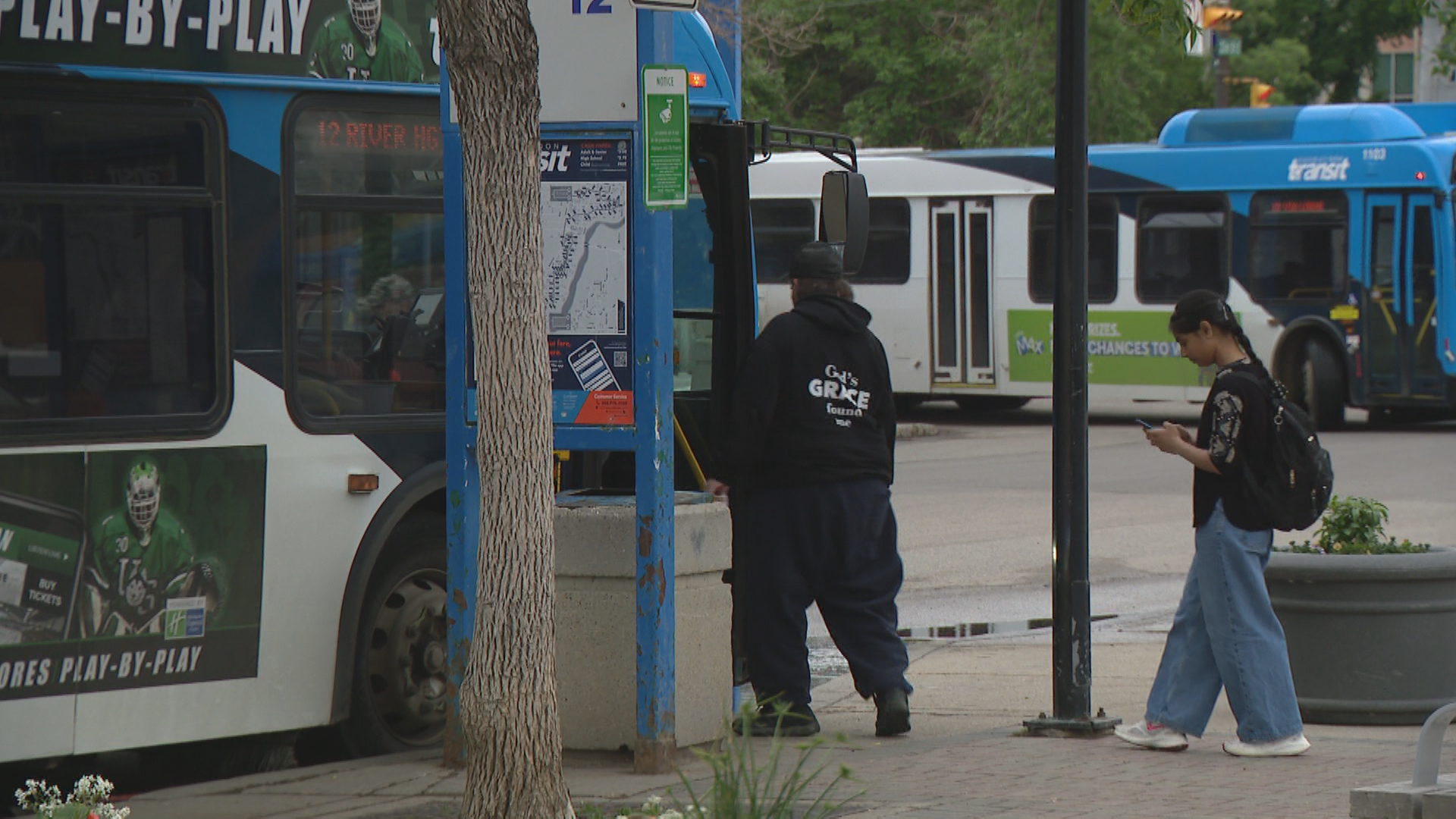
SASKATOON – In an era where urban planning constantly seeks innovative solutions to enhance quality of life, new research emanating from the University of Saskatchewan is shedding illuminating light on a critical, yet often overlooked, dimension: the profound impact of public transit health on community well-being. As Saskatoon’s ambitious Link Bus Rapid Transit project steadily progresses, aiming to revitalize urban mobility and boost ridership, scholars are delving deeper into the myriad ways public transportation shapes the physical and mental fabric of its users.
This pioneering investigation suggests that the humble bus or train journey transcends mere conveyance from point A to point B, evolving into a potent catalyst for improved health outcomes. Dr. Daniel Fuller, an Associate Professor in the Community Health Department at U-Sask and the driving force behind this initiative, articulates the core findings with clarity. “They tend to walk to the transit stations and walk to the bus and walk back home, which does contribute to their physical activity needs,” Fuller explains. This daily ritual of active commuting, often underestimated, aligns perfectly with global health guidelines on physical activity, helping individuals meet essential recommendations for daily movement that are frequently missed in car-centric lifestyles. Beyond the physical, Fuller notes, “The other thing we know is that sort of people’s well-being and social participation change.”
The INTERACT Study: Unpacking Public Transit Health
The research, part of the decade-long ‘INTERACT’ study, has recently secured renewed federal funding, underscoring the growing recognition of its societal relevance. Dr. Fuller’s aspirations for this project are far-reaching: he hopes it will fundamentally reshape how cities conceptualize, plan, and execute their transit systems. By providing concrete data on the health dividends of accessible public transport, the study offers urban planners and policymakers a powerful argument for prioritizing investment in robust transit infrastructure.
The benefits are not merely theoretical; they manifest in tangible improvements to people’s daily lives. Reduced sedentary behavior is a significant win, contributing to lower risks of chronic diseases associated with inactive lifestyles. Furthermore, the inherent social aspect of shared commutes, whether it’s a brief exchange with a fellow passenger or simply being amidst others, can combat feelings of isolation and foster a sense of belonging. As one transit rider with a bipolar illness eloquently put it, “it’s probably true because you get out in public and you’re able to get used to people instead of sitting at home and getting worse mentally.” This candid observation highlights the profound psychological impact of regular social exposure that transit inherently provides, helping individuals engage with the world beyond their immediate confines.
Navigating the Nuances: Safety and Social Connection
While the broader scientific consensus points towards the positive attributes of public transit health, the journalistic lens requires acknowledging the multifaceted realities faced by daily commuters. Opinions on public transit are as diverse as the populace itself, and recent concerns regarding safety on public transport lines in Saskatoon cannot be ignored. A transit rider downtown Saskatoon, for instance, described unsettling encounters: “Some people… sometimes going crazy. People are screaming and something smells very yucky.” These sentiments underscore the importance of ensuring that transit systems are not only efficient but also safe and pleasant environments for everyone. The true promise of public transit as a health enhancer can only be fully realized when these issues are proactively addressed, creating an inclusive and secure travel experience.
Despite these challenges, the inherent social dynamic of public transport remains a compelling aspect. Dr. Fuller aptly compares mobility within a city to discussing the weather – everyone has an opinion, and it often sparks conversation. This collective experience, for better or worse, binds people together, fostering a unique form of civic interaction. The ‘INTERACT’ study, by leveraging surveys and innovative app-based data collection, aims to meticulously track behavioral changes and gauge the shifts in individual well-being as transit systems evolve, offering insights into psychological well-being in urban environments.
Saskatoon’s Unique Social Fabric and Future Outlook
Intriguingly, the research has already unearthed a distinctive characteristic of Saskatoon’s urban environment. Compared to other participating cities in the INTERACT study, including Victoria, Vancouver, and Montreal, residents in Saskatoon report a demonstrably higher sense of community and social connectedness. This existing social capital could potentially amplify the positive effects of enhanced public transit. The Link BRT system, therefore, isn’t just about moving people more efficiently; it’s about leveraging and strengthening the city’s inherent community spirit, perhaps even paralleling the collective pride seen with local team’s successes that galvanize a city. This integration of improved accessibility with a robust sense of belonging can create a virtuous cycle, where better transit fosters stronger communities, and stronger communities, in turn, advocate for even better infrastructure.
The overarching goal for Dr. Fuller and his team is to understand precisely how systemic changes in transportation impact human behavior. Their hope is to encourage a broader spectrum of the populace to embrace the BRT Link system, thereby improving access to various locations, boosting physical activity levels, and ultimately, profoundly enhancing their well-being. This vision extends beyond Saskatoon, offering valuable lessons for urban centres worldwide grappling with similar challenges of growth, health, and sustainable development. The next phase of the INTERACT survey, slated for launch in the fall, promises to reveal even more nuanced insights into this vital intersection of urban mobility and public health.