
Mpox is back – and in new countries. How can this outbreak be contained?
New Surge in Mpox Outbreaks Alarms Global Health
A fresh and deeply concerning wave of Mpox outbreaks is sweeping across West Africa, casting a long shadow over global public health. This resurgence, notably marked by Guinea-Bissau’s first-ever reported cases, underscores a disturbing shift in the virus’s epidemiological landscape. The illness, formerly known as monkeypox, has re-emerged in the headlines not merely due to its presence but because of an alarming new characteristic: children, particularly those under four, appear disproportionately affected in these latest clusters. This development compels a critical examination of how this evolving pathogen transmits, its potential long-term impacts, and the urgent strategies required for containment.
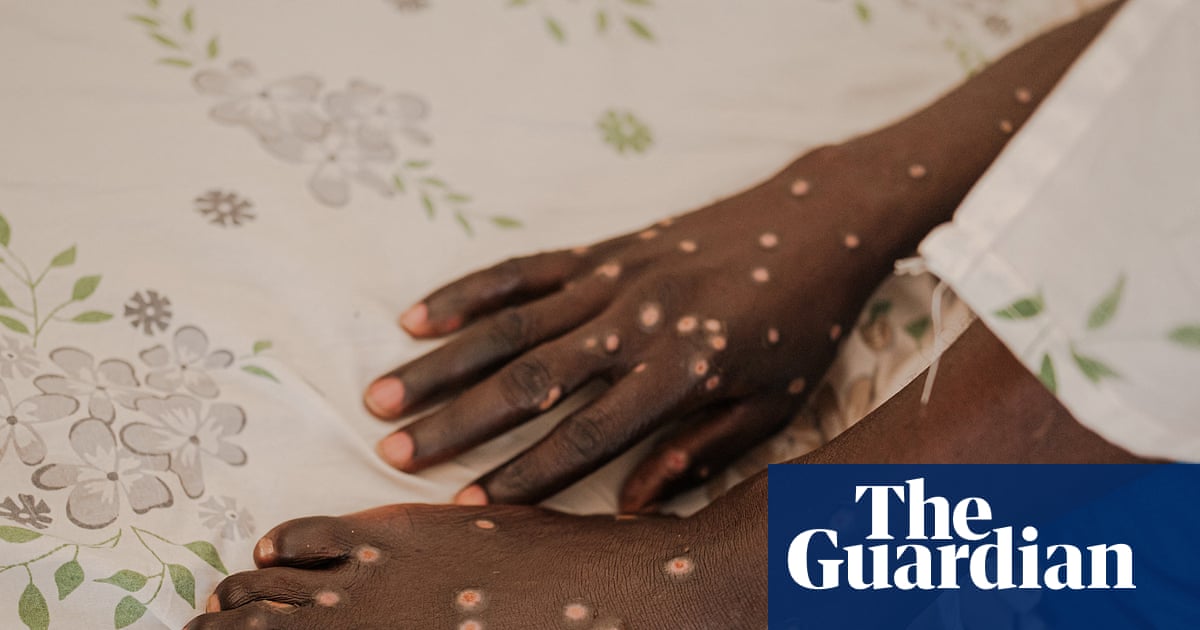
Since 2022, global health authorities have grappled with two significant public health emergencies related to mpox, resulting in nearly 190,000 lab-confirmed cases across 145 countries. This is a dramatic departure from its historical pattern, where outbreaks were typically smaller, contained primarily within a handful of Central and West African nations where the viral infection was known to be endemic. The virus, characterized by flu-like symptoms followed by a distinctive rash that progresses from raised spots to fluid-filled blisters and scabs, demands renewed global vigilance.
What Exactly is Mpox?
Mpox is an infectious disease with symptoms that often begin insidiously: fever, chills, profound muscle aches, and general malaise. These initial indicators quickly give way to the unmistakable cutaneous manifestations, a rash evolving across the body. The virus first came to scientific attention in 1958, discovered in captive monkeys, hence its original name. However, the World Health Organization (WHO) recommended changing the name to mpox in November 2022. This crucial decision was driven by widespread concerns that the term ‘monkeypox’ was inadvertently fostering racist and stigmatizing language, both online and within communities, hindering effective public health communication and response efforts.
Historically, mpox has been endemic to various parts of Africa, with outbreaks often tracing back to human consumption of meat from infected wild animals. Yet, recent years have witnessed an unsettling geographical expansion, marked by sustained chains of human-to-human transmission far beyond its traditional habitats. The Centers for Disease Control and Prevention (CDC) in Atlanta even suggested this month that mpox is on a trajectory to become endemic within the United States, signifying a profound shift in its global footprint.
The Unsettling Evolution: Why New Countries Are Affected
The virus broadly manifests in two main genetic lineages, or ‘clades.’ Clade I was historically associated with the Congo Basin, while Clade II was more prevalent in West Africa. A pivotal moment occurred with Clade II, which in 2022 appeared to undergo mutations that significantly enhanced its person-to-person transmission efficiency. This led to a major global outbreak, primarily spreading through close contact, particularly sexual contact, with men who have sex with men identified as a high-risk group during that period.
However, the narrative shifted dramatically in June 2024, when researchers raised critical alarm bells regarding a new, virulent variant of Clade I emerging in the Democratic Republic of the Congo (DRC). This variant also demonstrated an alarming capacity for easier human transmission, catalyzing another substantial international outbreak. So profound was its impact that the WHO declared it a public health emergency of international concern on August 14, 2024. As Professor Michael Marks of the London School of Hygiene & Tropical Medicine and University College London Hospital succinctly noted, the emergence of mpox in more West African nations is entirely expected. “Mpox spreads by close physical contact. This makes it suitable to spread in a variety of different contexts, such as in close sexual networks, as was seen during the 2022 global pandemic, or areas where many people are living closely together such as settings with refugees and internally displaced people, as was seen in the DRC outbreak over the last few years,” he explained, highlighting the multifactorial nature of its propagation.
Containing Past Mpox Outbreaks
The 2022 outbreak was initially declared a public health emergency in July of that year. Through intensive contact tracing and mass vaccination campaigns, its emergency status was successfully lifted in May 2023, after approximately 90,000 infections. Similarly, the 2024 outbreak’s international public health emergency status was formally lifted in September 2025. This decision, however, did not signify the disease’s eradication but rather a decline in case numbers and deaths, suggesting that global health officials believed the situation was better controlled. Yet, the possibility of future declarations looms large; genetic testing revealing new variants or surveillance indicating unusually rapid spread, increased severity, or higher fatality rates would undoubtedly prompt global health authorities to intervene once more. In regions like the DRC, which have faced another devastating health crisis with Ebola, the capacity for robust emergency response is frequently stretched thin, making swift action imperative.
The Worrying Turn in Guinea-Bissau
The current situation in Guinea-Bissau is particularly unsettling because it marks the country’s inaugural Mpox outbreaks. UNICEF has voiced profound concern over the demographics of the initial 46 suspected cases, with 23 being children under 15, and the majority of those being under the age of four. Dr. Aula Abbara, a senior lecturer at Imperial College London and an adviser to Médecins Sans Frontières UK, emphasized the gravity of this trend: “The concern about children is that they are at the highest risk of severe disease and death from mpox. Young children can become much sicker than healthy adults.”
She did, however, introduce a crucial nuance, suggesting that the apparent over-representation of children in initial data might be partially attributed to a reporting bias. In resource-constrained environments with fragile healthcare infrastructures like Guinea-Bissau, families are often more inclined to seek medical attention for a sick child than for an adult. Professor Marks further elaborated on this vulnerability, noting that children’s inherent close physical contact with parents and peers, coupled with potentially cramped living conditions, naturally amplifies the likelihood of transmission. The fact that confirmed cases in Guinea-Bissau do not appear to be linked through conventional epidemiological chains strongly suggests wider, unidentified community circulation of the virus.
Vaccines, Treatments, and the Path Forward
The World Health Organization recommends two primary vaccines for mpox, designed for high-risk individuals or those who have had close contact with a confirmed case to curb further transmission. The stark reality, however, is a profound disparity in vaccine availability. As Professor Marks pointedly observed, “The major challenge remains that supplies of vaccines are best in high-income countries but worst in low-income settings, where the need and conditions for mpox transmission are highest.”
In a promising development, a new global vaccine stockpile is slated for launch within weeks by a leading global health alliance. This initiative aims to facilitate the rapid deployment of vaccines to quell burgeoning outbreaks and incentivize manufacturers to ramp up production by providing a clear, sustained demand. While an antiviral treatment called tecovirimat has shown limited efficacy against mpox Clade I in trials conducted in the DRC, not significantly improving resolution more than a placebo, the question of its benefit for immunocompromised patients, such as those living with HIV, remains under active investigation. Crucially, that trial underscored the immense life-saving potential of good, supportive care.
Dr. Abbara reiterated that while vaccines are an indispensable tool, they are not a standalone solution for containing outbreaks. Early detection, rigorous contact tracing, comprehensive supportive care, and robust public health surveillance systems are not just important; they are absolutely essential. The persistent and evolving threat of mpox demands a synchronized, equitable, and comprehensive global response to protect the most vulnerable populations from this enduring infectious disease.