
Ford says world will always ‘call it Lake Ontario’ after Trump’s renaming
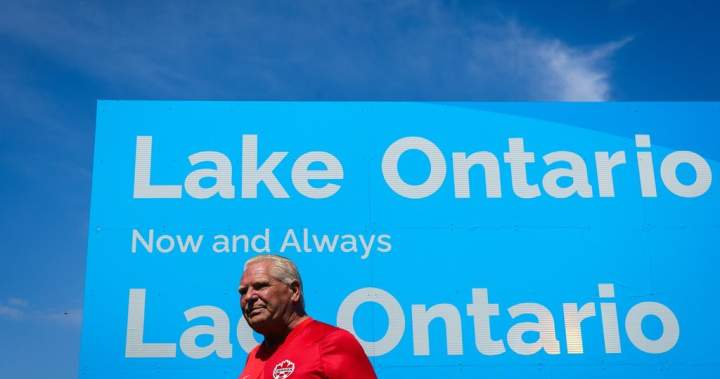
In an unusual geopolitical skirmish that transcended typical diplomatic exchanges, Ontario Premier Doug Ford delivered an unambiguous message to then-U.S. President Donald Trump: regardless of any executive order, the world would always know and refer to the majestic Great Lake by its historical designation. This robust declaration came as Trump unilaterally attempted to rename Lake Ontario to “Lake America,” igniting a firestorm of criticism and rallying a defiant Canadian stance on the sanctity of the Lake Ontario name.
The controversy unfolded rapidly after President Trump, amidst a period of strained U.S.-Canada trade relations, signed an executive order directing all U.S. federal government agencies to adopt the moniker “Lake America” for the vital waterway. This move, perceived by many as a provocative gesture, was framed by Trump as an assertion of American claims over the lake’s volume, security, economic activity, and environmental stewardship, despite its shared sovereignty. It was a peculiar assertion, given the well-established international boundaries and agreements governing the Great Lakes.
Sovereignty and the Enduring Lake Ontario Name
Premier Ford, unveiling a striking sign in Winona, Ontario, proudly emblazoned with the words “Lake Ontario,” made his position clear. “President Trump can call it whatever he wants, but I can tell you the rest of the world will always call it Lake Ontario,” Ford stated emphatically to a gathering of reporters. He emphasized the unified front from various U.S. governors and the unwavering resolve of Canadians. “We’re resilient and we’re strong Canadians, and we’re always going to protect our sovereignty, always, and we’ll never, ever back down,” he declared, underlining the deep national pride tied to Canada’s natural landmarks.
Echoing this sentiment, then-Prime Minister Mark Carney affirmed that the Lake Ontario name would remain “now and always.” Carney’s statement highlighted the profound historical roots of the name, noting its origins over four centuries ago from the Wendat word “Ontari’io,” meaning “the lake is beautiful, the lake is big.” This indigenous heritage underscores not just a name, but a cultural and linguistic legacy that predates modern geopolitical boundaries, lending significant weight to the Canadian refusal to acknowledge any unilateral alteration.
The move by the U.S. president was widely met with incredulity and derision, not only from north of the border but also within American political circles and by public mapping institutions. MapQuest, a widely used online mapping service, promptly announced its steadfast refusal to change the lake’s name on its platforms. Furthermore, American politicians from various states bordering the Great Lakes joined the chorus of disapproval, often with a touch of humor. Wisconsin Governor Tony Evers, a Democrat, playfully responded by signing a fast-food napkin to rename Lake Michigan as “Lake Wisconsin,” while Illinois Governor JB Pritzker humorously rebranded Trump Tower in Chicago. These light-hearted yet firm rebuttals underscored the widespread perception of Trump’s executive order as an unnecessary and ill-conceived piece of political theater.
The Broader Context: Trade Wars and International Relations
The attempt to rename the lake did not occur in a vacuum; it was inextricably linked to escalating trade tensions between Washington and Ottawa. In the weeks preceding the executive order, trade talks had faltered dramatically, leading to a tit-for-tat exchange of tariffs. Trump had frequently criticized Canada’s trade policies, despite maintaining that he “loved the country.” This particular action was seen by many as yet another tactic in a broader strategy to exert pressure on Canada during complex trade negotiations. The economic ramifications of such disputes were keenly felt, with Canadian companies reacting to U.S. tariffs with considerable concern, highlighting the real-world impact of these political maneuvers.
Democrats in the U.S. Congress were quick to lambast the president’s priorities. U.S. Senate Minority Leader Chuck Schumer articulated a sentiment shared by many critics, stating that Trump was prioritizing personal grievances over critical national issues. “Inflation increasing. The Iran war raging on with no end in sight. A trade war with Canada. And what does Trump want? To rename Lake Ontario,” Schumer wrote on social media, succinctly capturing the perceived disconnect between the administration’s actions and the pressing challenges facing Americans at the time. This renaming effort became a symbol of what many viewed as a distracted and arbitrary leadership style.
The episode served as a vivid reminder of the delicate balance in international relations and the symbolic power of established geographical nomenclature. While a name might seem a trivial matter, it represents identity, history, and sovereignty. The response from Canada and even dissenting American voices demonstrated a collective commitment to these principles. The Lake Ontario name, embedded in centuries of history and indigenous heritage, proved to be far more resilient than any presidential decree. The episode underscored that some things, particularly those defining shared waterways and national identities, are simply beyond the reach of unilateral executive action. For those who live along its shores and rely on its resources, it will forever remain Lake Ontario, a testament to enduring ties and resolute national spirit. The historical and scientific data regarding the Great Lakes is extensive, detailing their formation, ecosystems, and cultural significance to both nations. For more details on the geographical and historical context of these shared waterways, numerous resources are available.