
‘Aur Bhi Gham Hain Zamaane Main Siyaasat Ke Siva’: Why Sonam Wangchuk Is Skipping CJP’s Delhi Stir Today
Introduction & Key Takeaways
Education reformer and climate activist Sonam Wangchuk has officially confirmed he will not be joining the Cockroach Janta Party (CJP) in their upcoming demonstration in the national capital. This decision has sparked significant interest, as it represents a pivot from his previous high-profile involvement in national political movements. Wangchuk has made it clear that his focus remains on urgent environmental stability within the Ladakh region.
- Wangchuk is prioritizing critical seasonal preparations, including water security measures, over political involvement.
- The decision highlights a shift in his strategy, moving from national advocacy back to localized grassroots ecological work.
- The activist emphasized the necessity of non-violence and statesmanship for all youth participants involved in public discourse.
Background & Context (What Just Happened?)
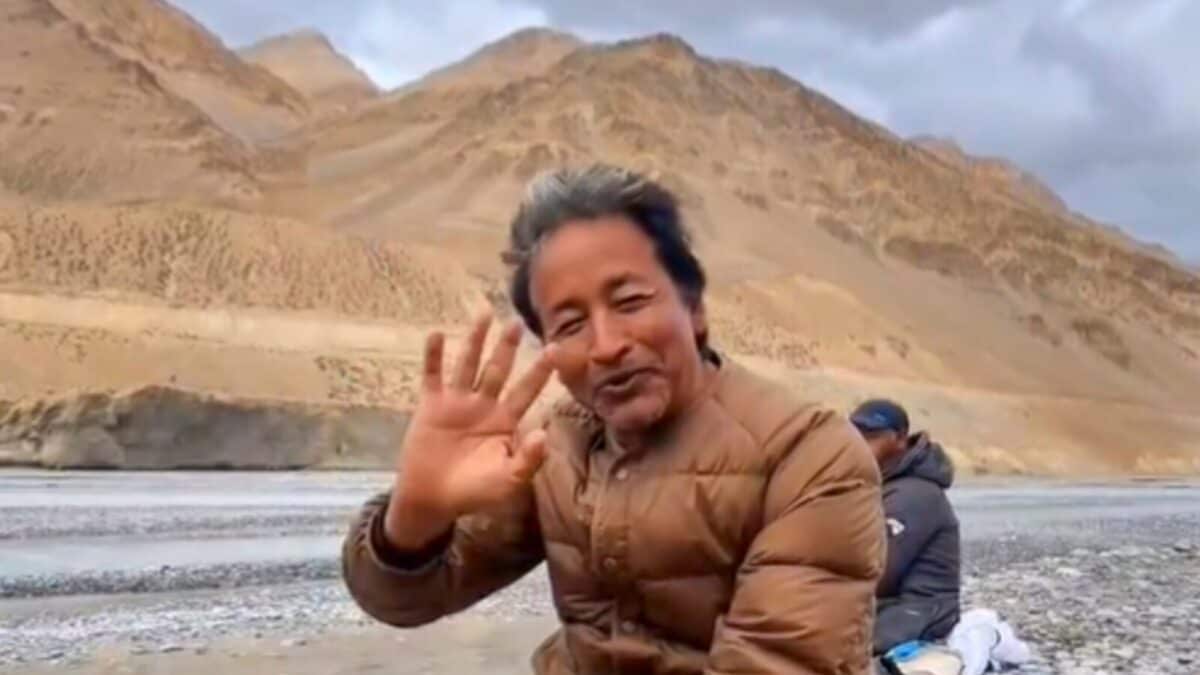
The announcement arrived via a digital statement where Sonam Wangchuk reaffirmed his presence in Ladakh. As winter approaches, the Himalayan region faces immediate and harsh climatic shifts that necessitate rapid logistical intervention. Wangchuk, known for his commitment to both social justice and environmental preservation, noted that his team is currently engaged in essential work to prepare high-altitude regions for the impending cold season.
Root Cause & Deep Dive Analysis
The departure from public protest stems from a deep-seated commitment to the ecological survival of Ladakh. While the CJP movement targets specific administrative concerns, Wangchuk argues that the environmental crisis facing the Himalayas represents a different, yet equally urgent, tier of national concern. By invoking poetic reflections from Faiz Ahmed Faiz, he suggested that the struggles of humanity extend far beyond the narrow scope of governance. This intellectual approach allows him to balance his identity as a reformer while remaining tethered to the physical science of survival, such as building artificial glaciers to secure water for local agricultural communities.
Strategic Implications & Future Impact
Wangchuk’s absence is not a complete withdrawal from advocacy, but rather a strategic realignment. His past participation in the NEET paper leak campaign, characterized by a 26-day hunger strike, elevated that cause to a national level. His current absence serves as a reminder of the fragility of the Himalayan ecosystem. If these artificial glaciers fail to materialize, or if glacial lake outbursts are not managed, the resulting water scarcity could lead to humanitarian crises that no amount of political legislation can reverse. Consequently, his decision signals to younger activists that nature-driven threats demand scientific rigor and long-term planning.
Conclusion & What to Watch Next
As the protest continues, all eyes will be on whether the movement maintains its non-violent ethos without the moral weight of figures like Wangchuk. For the activist himself, the focus is squarely on neutralizing over 200 high-risk glacial lakes. Observers should monitor whether his call for non-violence resonates with the younger generation during this period of political friction, or if the absence of seasoned leaders alters the trajectory of these demonstrations.