
CJP Delhi Protest LIVE: INDIA Bloc To Continue Campaign Against CEC; CJP’s Saurav Das, Ranka Detained
Introduction & Key Takeaways
The current political climate in India is witnessing a significant escalation as the CJP Delhi protest continues to occupy the national discourse. Opposition leaders, led by Congress figures, are intensifying their campaign against the Election Commission, while smaller political entities face direct state action. As authorities work to maintain order, the intersection of democratic dissent and legal proceduralism has become the focal point of the nation.
- The INDIA bloc continues its campaign, demanding the resignation of the Chief Election Commissioner over alleged electoral irregularities.
- The Cockroach Janata Party (CJP) faces heightened scrutiny, with prominent leaders recently detained by law enforcement.
- Procedural hurdles in the Supreme Court have complicated the opposition’s legal strategy regarding the SIR process.
- Authorities are actively managing public space, leading to confrontations at historically significant protest sites.
Background & Context (What Just Happened?)
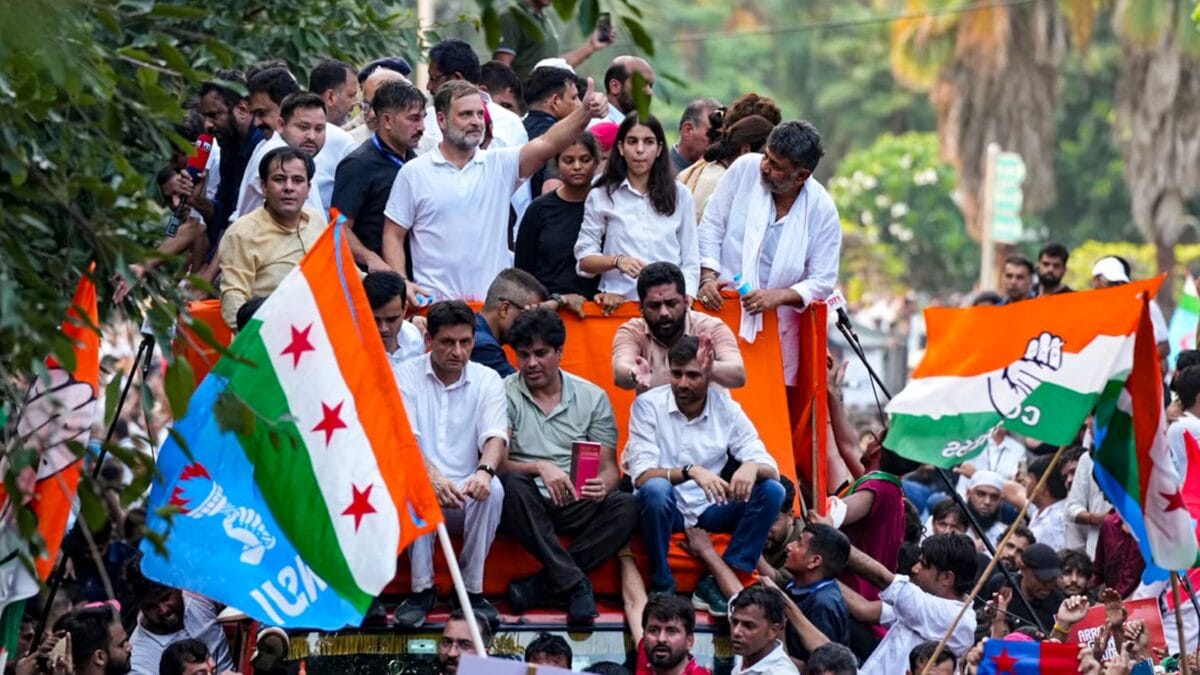
Tensions reached a boiling point this week when opposition leaders, including prominent figures like Rahul Gandhi, Mallikarjun Kharge, and Mamata Banerjee, initiated a ‘March for Democracy’ towards the Supreme Court. The march served as a physical manifestation of long-standing grievances regarding the integrity of recent electoral processes, specifically citing concerns over voter deletions and systemic irregularities. The demonstration was, however, halted by security forces roughly 600 meters from the court premises, forcing a shift in tactics towards a sit-in at Mandi House.
Parallel to these high-level political movements, the CJP Delhi protest has seen a more immediate, localized confrontation. CJP leaders such as Saurav Das and Ashutosh Ranka were detained by Delhi Police at the Jantar Mantar area. The situation at Jantar Mantar is particularly sensitive, as the site was recently de-notified as a designated venue for demonstrations, signaling a tightening of restrictions on public assembly.
Root Cause & Deep Dive Analysis (Why Did This Happen?)
The core of this conflict lies in a profound institutional crisis. The opposition claims that the current Election Commission oversight is compromised, directly impacting the fairness of democratic representation. This struggle for credibility is further exemplified by the legal path chosen by the INDIA bloc. After the Chief Justice of India, Surya Kant, declined to meet opposition delegations on the grounds that the matter remains sub judice, the attempt to file a joint petition was met with significant administrative resistance. The Supreme Court Registry identified 14 distinct defects, ranging from missing documentation to illegible identity verification, effectively stalling the judicial path of the protest.
Meanwhile, the state’s decision to de-notify protest sites reflects a strategy to manage urban congestion and potential civil unrest. This policy, while presented as a matter of public safety, is viewed by critics as an attempt to curb the visibility of anti-establishment sentiment. For more context on how political figures navigate such institutional scrutiny, you may look at how previous high-stakes encounters between the judiciary and political leadership have unfolded.
Strategic Implications & Future Impact (What Does This Mean Globally?)
The ongoing unrest in the capital highlights a volatile environment for Indian democratic norms. Globally, observers are tracking how India manages the right to dissent. When political parties, such as the CJP, are subjected to detention for utilizing public spaces, it sets a precedent that could invite international scrutiny. Furthermore, the reliance on digital information channels and the potential for mass mobilization are key themes in current political warfare, reminiscent of broader democratic challenges seen in emerging economies.
Conclusion & What to Watch Next
The situation remains fluid. As the INDIA bloc gathers at the residence of Rahul Gandhi to coordinate their next steps, the public expectation remains high. Whether the movement succeeds in compelling the resignation of the Chief Election Commissioner or remains stalled by administrative and legal barriers will define the immediate future of the opposition. Observers should continue to monitor the interaction between protest organizers and the police as the state continues to enforce new regulations on public spaces.