
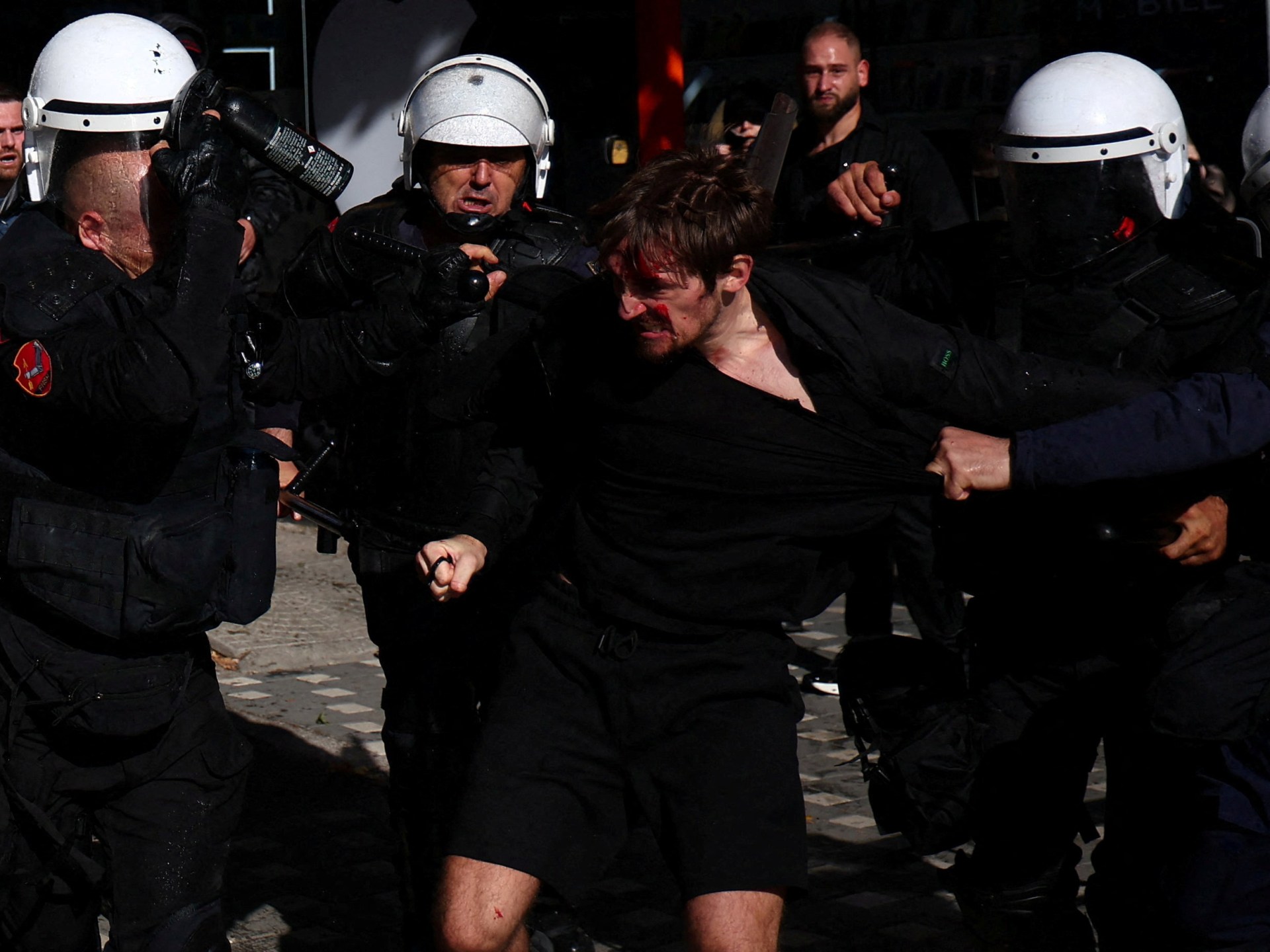
Photos: Student protest in Albania prompts violent clashes with police
Introduction & Key Takeaways
Recent developments in the Balkan nation of Albania have thrust the country into the international spotlight as a mass Albania student protest has devolved into violent clashes with riot police in the capital city, Tirana. What began as a platform for voicing grievances regarding university conditions and financial burdens has transformed into a broader display of public dissatisfaction with the current government. This explainer examines the structural causes of this unrest, the geopolitical backdrop of the Balkan youth movement, and what this implies for the administration of Prime Minister Edi Rama.
- Students are demanding an immediate overhaul of the education system, citing high costs and poor infrastructure.
- The demonstrations have escalated into direct confrontations involving property damage and the use of tear gas by authorities.
- There is a growing, palpable sentiment among the youth that the political system is unresponsive to economic inequality.
Background & Context: What Just Happened?
On Tuesday, the streets of Tirana became the site of intense political friction. Hundreds of students, frustrated by systemic stagnation, targeted the Education Ministry. The scene quickly shifted from a organized protest to a volatile standoff. Protesters utilized bricks and concrete blocks against government infrastructure, forcing law enforcement to deploy high-pressure water cannons and tear gas to regain control. The detention of several participants has only heightened tensions on the ground.
This unrest did not emerge in a vacuum. It follows a period of mounting frustration in the Balkans, where young people are increasingly vocal about the lack of opportunities, as seen in similar global movements focused on institutional reform. The demands reflect a deep-seated anxiety regarding the future of the nation, particularly concerning how political decisions impact their long-term economic prospects.
Root Cause & Deep Dive Analysis: Why Did This Happen?
The core drivers of this Albania student protest are multi-faceted. Economic pressures are the primary catalyst. Students argue that the cost of higher education is becoming unsustainable, while the quality of university facilities continues to deteriorate. Beyond the classroom, these young activists highlight a bleak employment landscape. Even for those who manage to graduate, the promise of a professional career is frequently undermined by a perceived lack of meritocracy in the labor market.
Societal inequality also plays a significant role. Many protesters feel that the wealth gap is widening, leaving them behind while a connected elite prospers. As noted by one participant, Luljeta Kola, the demand for a total system overhaul stems from a feeling of being systematically excluded from the benefits of modern governance. This is not merely a complaint about tuition fees, but a fundamental challenge to the current social contract.
As history shows, when youth frustration reaches a breaking point, the implications are often transformative. Similar to how past movements have sought to address structural inequities, these students are calling for a definitive change in leadership and policy. For further reading on the dynamics of modern activism and political agitation, one might consider how various societal movements have historically shaped policy trajectories in other democratic nations.
Strategic Implications & Future Impact: What Does This Mean Globally?
The Albania student protest serves as a cautionary tale for governments across Europe. As countries grapple with post-pandemic economic recovery and the integration of younger generations into the workforce, the potential for civil unrest remains high. The Balkan region is particularly sensitive, given its ambition for broader European integration and the pressure to meet high standards of democratic governance.
The government’s response, characterized by the Deputy Prime Minister’s condemnation of violence, signals a desire to maintain order. However, relying on police force to quell student activism often risks delegitimizing the government in the eyes of the public. If the administration fails to initiate substantive dialogue, they may find themselves facing sustained, cross-generational support for these protests.
Conclusion & What to Watch Next
Moving forward, the primary concern is whether the government will initiate a meaningful review of education policy to appease the movement, or if it will choose to deepen its security crackdown. Observers should monitor whether these protests expand beyond university campuses to include labor unions or opposition political factions. The stability of the Rama government may well depend on its ability to prove that it can listen to the voices of the next generation before the instability spreads further.