
Delhi’s Dussehra Twist: 30-Foot Cockroach Effigy To Go Up In Flames Alongside Ravan This Year
Introduction & Key Takeaways
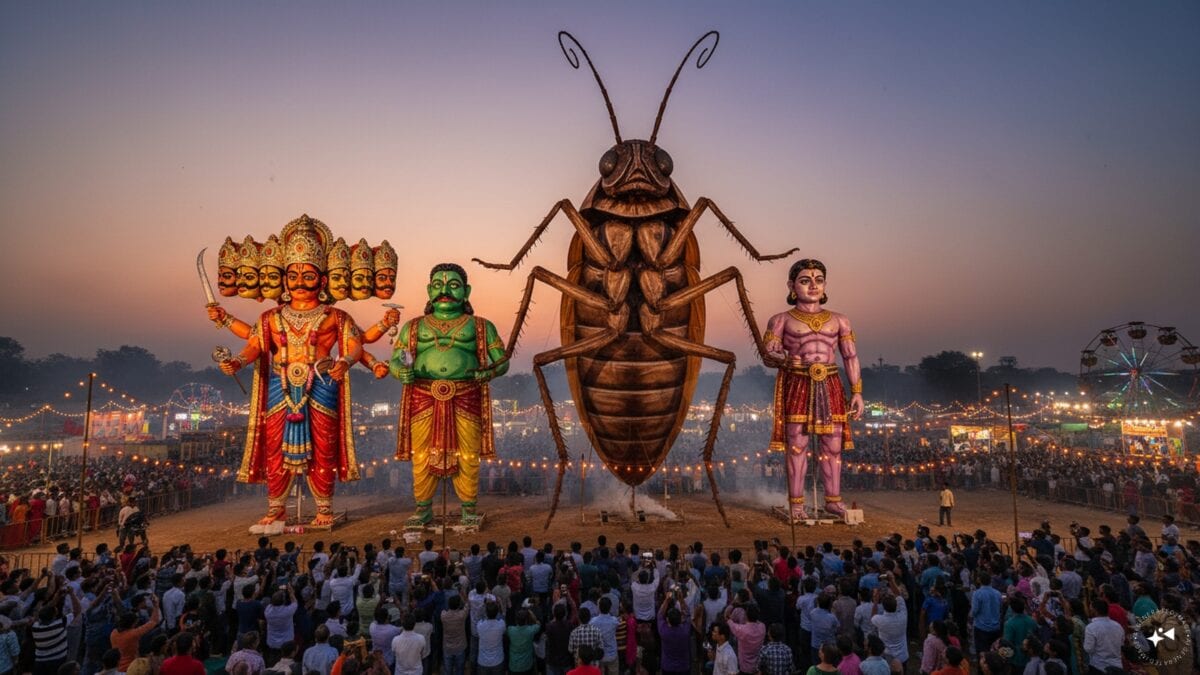
As Delhi prepares for the vibrant festivities of Dussehra, a unique and highly symbolic addition has sparked widespread conversation. A 30-foot cockroach effigy is set to be incinerated alongside the traditional figures of Ravan, Kumbhkaran, and Meghnad. This unusual spectacle is part of a broader cultural push to integrate modern civic messages into ancient traditions. The Delhi Dussehra event serves as a microcosm of how public spaces are increasingly used to communicate government policy and address evolving social tensions.
- The 30-foot effigy represents filth and lack of hygiene, directly promoting the Swachh Bharat and Swachh Delhi cleanliness initiatives.
- Organizers have officially classified the cockroach as a modern-day asura, or demon, to fit the thematic narrative of the victory of good over evil.
- The inclusion of this symbol coincides with intense political activity in the capital, specifically regarding the ongoing CJP Delhi protests.
Background & Context (What Just Happened?)
The decision to construct such a massive effigy was finalized by the Shree Keshav Ram Leela Committee in the Pitampura area. Typically, the Ramlila celebrations conclude with the burning of Ravan to signify the destruction of ego and malevolence. However, the committee chose to expand this tradition by creating a physical manifestation of societal “dirt.” By choosing an insect often associated with decay, the organizers are leveraging the public’s inherent aversion to filth to generate support for sanitation drives.
Root Cause & Deep Dive Analysis (Why Did This Happen?)
While the surface-level explanation is tied to the national cleanliness movement, political analysts point to the deeper optics of the situation. The naming of the political pressure group, the Cockroach Janta Party (CJP), provides a layer of irony to this choice. The CJP has been at the forefront of public demonstrations, particularly regarding the resignation of the Chief Election Commissioner and issues surrounding the Special Intensive Revision of electoral rolls. Although committee president and BJP MLA Ashok Goel has explicitly denied any political motivation, the proximity of this symbolic fire to the actual, ongoing political unrest in Delhi creates a complex cultural narrative. The effigy functions as both a sanitary mascot and a potential vehicle for broader societal critique, illustrating the intersection of performance art and political signaling in urban India.
Strategic Implications & Future Impact (What Does This Mean Globally?)
The use of public, religious, and cultural platforms for civic messaging is a growing global trend. In many nations, governments are realizing that traditional media is losing its grip on the younger demographic. Consequently, they are increasingly relying on localized events to transmit values or policy goals. The use of a, Dussehra, effigy to promote the Swachh Bharat agenda reflects a sophisticated understanding of cultural psychology. If successful, this trend could lead to more “thematic” effigies in upcoming years, potentially turning traditional festivals into mirrors for contemporary bureaucratic or political objectives. This shifts the role of the organizer from a mere religious facilitator to a strategic architect of public sentiment.
Conclusion & What to Watch Next
As the final day of the festivities approaches, all eyes will be on how the public reacts to the dual narrative of spiritual victory and civic cleanliness. The tension between the intended message of hygiene and the ongoing political protests by groups like the CJP remains a critical area to monitor. Future observations should focus on whether other committees across the country adopt similar unorthodox methods to promote government programs, or if this remains a singular, location-specific anomaly in the capital.