
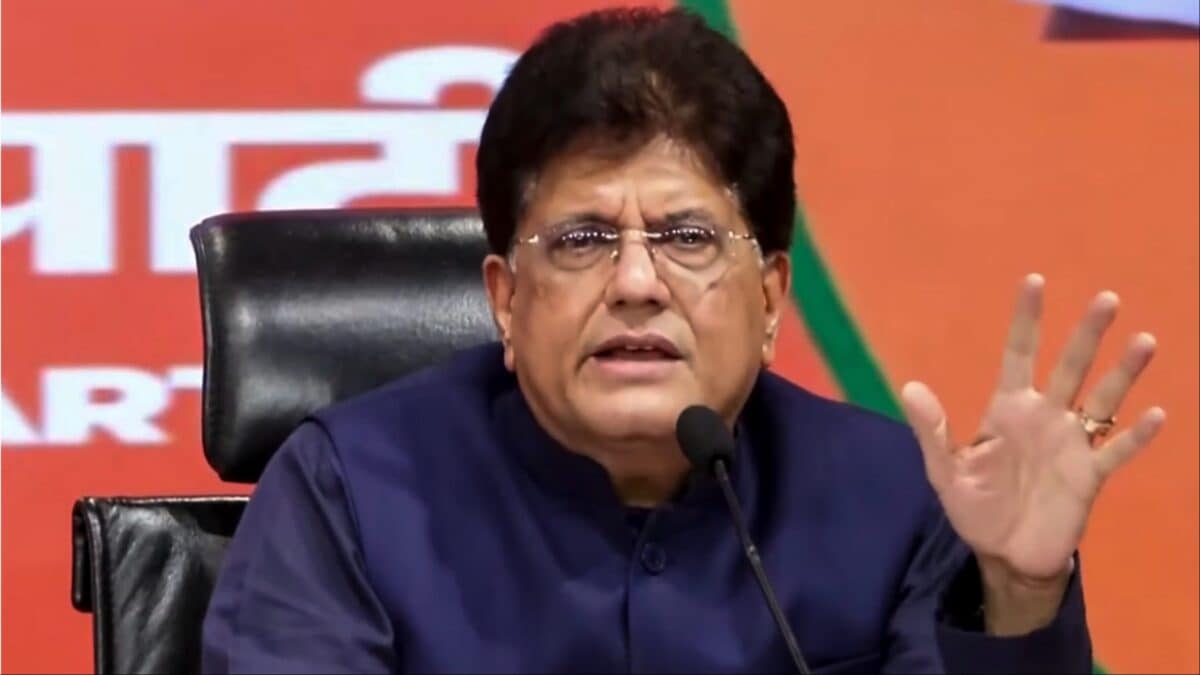
India-US Trade Deal: First Tranche Finalised, Legal Drafting Underway, Says Piyush Goyal
Introduction & Key Takeaways
The geopolitical and economic landscape is shifting as the India-US trade deal inches closer to reality. Union Commerce and Industry Minister Piyush Goyal recently confirmed that the first tranche of this bilateral agreement has been finalized and is currently undergoing the critical phase of legal drafting. This development marks a significant milestone in strengthening the strategic partnership between the two largest democracies in the world.
- The first tranche of the agreement is formally in the legal drafting stage.
- Operationalization depends on India securing a clear competitive advantage over peer nations.
- Government officials emphasize that India is positioning itself as a global manufacturing, innovation, and design hub rather than just a consumer market.
- Strategic focus remains on long-term growth and integrating into global value chains.
Background & Context (What Just Happened?)
The ongoing dialogue between New Delhi and Washington regarding trade has been characterized by meticulous negotiations aimed at balancing market access with domestic industrial protection. Minister Goyal’s announcement, made at the Centenary Conclave of the Shri Ram College of Commerce, underscores the government’s commitment to incrementalism. Rather than pushing for a monolithic, all-encompassing treaty, the approach focuses on modular tranches, allowing for greater flexibility and faster adjustments to volatile global market conditions.
This news surfaces as the global economic order faces multiple headwinds. For more context on how finance ministers are managing these broader uncertainties, one might look at how G20 leaders are navigating current geopolitical instability. The India-US trade negotiations are part of a larger strategy by India to formalize its economic footprint, as discussed in detail by experts regarding India’s technological imperatives.
Root Cause & Deep Dive Analysis (Why Did This Happen?)
The transition toward legal drafting represents the move from political posturing to technical execution. The primary hurdle for the India-US trade deal is not a lack of political will, but the complexity of regulatory alignment. Both nations possess highly intricate legal systems, and reconciling standards for digital trade, agricultural exports, and intellectual property requires exhaustive precision.
Minister Goyal’s insistence that operationalization must yield a “comparable or competitive advantage” reveals a shift in India’s trade philosophy. India is no longer seeking transactional deals that favor short-term imports. Instead, it is leveraging its demographic dividend and expanding middle class as bargaining chips to secure manufacturing footholds that will outlast political cycles. The delay in finalization is not a sign of stagnation, but rather a safeguard against unfavorable terms that could undermine domestic manufacturing initiatives.
Strategic Implications & Future Impact (What Does This Mean Globally?)
The global economy is witnessing a move toward friend-shoring, and an India-US partnership sits at the heart of this transition. By securing favorable access, India is positioning itself as an essential alternative to traditional supply chain hubs. If the first tranche succeeds in setting a transparent precedent for digital and goods trade, it will likely serve as a blueprint for India’s upcoming negotiations with eight other countries, potentially covering an additional 15 trillion dollars in global GDP.
Furthermore, the emphasis on innovation suggests that India aims to move up the value chain. This shift is meant to encourage foreign firms to establish R&D centers within Indian borders. If implemented correctly, this strategy will reduce India’s reliance on capital goods imports while increasing its export competitiveness in technology-heavy sectors.
Conclusion & What to Watch Next
As the legal teams in New Delhi and Washington work through the final contours of the deal, the global business community should watch for specific announcements regarding tariff structures and sector-specific exemptions. The ultimate success of the India-US trade deal will be judged by its ability to integrate India further into the global economy without sacrificing the nation’s push for self-reliance. Observers should look for signs of ratification in the coming months, as both sides will likely aim to finalize the first tranche before the window of administrative alignment narrows.