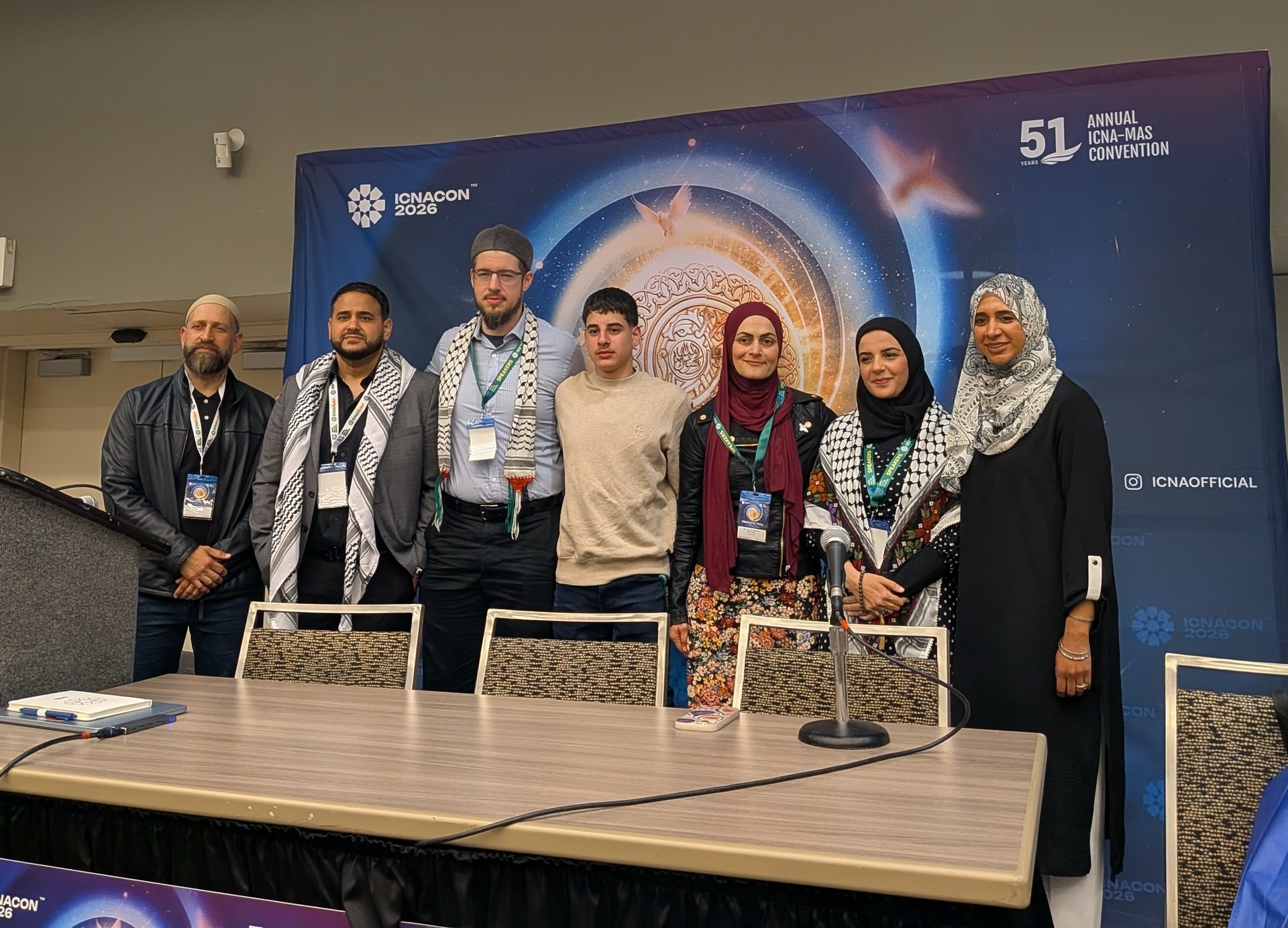
Baltimore, MD — A profound sorrow hangs heavy in the air, a collective grief echoing the recent horrific shooting at the Islamic Center of San Diego. Yet, amidst this somber atmosphere, a powerful resolve for Muslim American activism has erupted, transforming anguish into an urgent call to action at the annual Islamic Circle of North America (ICNA) conference. Over 25,000 Muslim Americans convened in Baltimore, not merely to mourn, but to forge a path forward, a collective stand against rising bigotry.
The conference, held over a poignant weekend, saw leaders underscore the imperative of translating sorrow into tangible efforts. Speakers revered the sheer courage of the three victims in San Diego—a security officer, a caretaker, and a neighbor—who heroically sacrificed their lives shielding others. “We owe them more than condolences. We owe them resolve,” declared Lena Masri, a legal advocate with the Council on American-Islamic Relations (CAIR). She meticulously recounted how Amin Abdullah exchanged fire, while Mansour Kaziha and Nadir Awad rushed to assist, summoning emergency services. Their bravery protected the physical sanctuary of the community; now, the focus shifts to safeguarding its civic liberties.
The Imperative for Muslim American Activism
The overarching theme resonated with an undeniable urgency: passivity is no longer an option. The Muslim American community, a vibrant tapestry of diverse voices, must draw upon its inherent strength to vigorously counter hatred and prejudice. A significant emphasis was placed on civic engagement: active voting, robust organizing, and generous donations to community institutions and aligned political candidates. Furthermore, attendees were galvanized to demand accountability from officials and persistently advocate for an end to ongoing injustices in Palestine.
“We owe Gaza more than grief. We owe Gaza advocacy that cannot be intimidated into silence,” Masri passionately asserted. This sentiment permeated the gathering, manifesting visibly through symbols of Palestine—watermelon emblazoned bags, keffiyeh-patterned scarves, and flags—seen throughout the bustling bazaar. Here, attendees inscribed heartfelt messages of solidarity on a tent destined for Gaza, an initiative spearheaded by the charity Life for Relief and Development (LIFE).
Advocates on various panels and podiums starkly illuminated the inextricable link between the alarming surge of anti-Muslim bigotry within the United States and the atrocities perpetrated in Gaza, the occupied West Bank, and Lebanon. Notably, some of the most strident proponents of Islamophobia in America also stand as unwavering supporters of Israel, including figures like right-wing commentator Laura Loomer and Congressman Randy Fine. These individuals, often allies of former President Donald Trump, have been implicated in an administration-led crackdown to deport critics of Israel who are non-citizen residents in the U.S.
Altaf Husain, a distinguished professor at the Howard University School of Social Work, observed that anti-Palestinian voices strategically seek to “scare” Muslims into silence, directly connecting this tactic to stifling criticism of Israel. However, the massive turnout at the ICNA conference demonstrably signals that the community remains undaunted. Following the San Diego tragedy, the community rallied, raising over $3.5 million for victims’ families and fortifying security measures around Muslim institutions, a testament to their unwavering spirit.
Saad Kazmi, president of ICNA, outlined the extensive security protocols for the event, involving internal guards, an external firm, and local law enforcement. He acknowledged the palpable anxiety stemming from rising Islamophobia and the previous administration’s immigration policies. Yet, Kazmi passionately urged Muslim Americans to proactively address these challenges, collaborating with “sensible” individuals across the political spectrum to conquer hate. “We are very thankful that we live in a country that is ruled by the Constitution and law,” he stated. Indeed, the San Diego shooting only solidified the community’s determination to champion and protect its inherent rights. Astonishingly, the Islamic center there never closed its doors after the assault. “If anything came out of this, it is that there are more attendees to the masjid, more people who believe that the way forward is to strengthen ourselves, strengthen our community and march on,” Kazmi affirmed, highlighting the escalating call for Muslim American activism.
The rhetoric, however, continues to intensify. Post-shooting, Loomer notoriously doubled down on her anti-Muslim vitriol, even calling for the deportation of all Muslims, branding them an “invasive species.” Troublingly, few Republicans have publicly disavowed her, despite her close ties to influential political circles. Concurrently, over 60 Congress members have joined the “Sharia-Free America Caucus,” a group designated a hate organization by CAIR. At the state level, certain governors and legislators have not only denigrated Islam but also pushed legislation penalizing pro-Palestinian activism. Texas and Florida, for instance, controversially labeled CAIR a “terrorist” group while enacting measures against “Sharia law,” widely regarded as anti-Muslim dog whistles.
Yet, amidst these challenges, legal victories offer a beacon of hope. In a landmark decision, a federal court blocked Florida Governor Ron DeSantis’s “terrorist” designation against CAIR earlier this year. Judge Mark Walker’s ruling powerfully stated that the executive order targeted the Muslim community as a whole. “It should be lost on no one that Defendant’s EO targets one of America’s largest Muslim civil rights organizations for indirect suppression of speech,” Walker penned. “Sadly, history teaches that it is often minority religious groups who find themselves in the crosshairs.” Panellists at the conference celebrated the US legal system but cautioned that rights are not self-defending. “You’ve got to imagine rights are a territory, and you have to occupy that territory,” explained Tom Facchine, a New Jersey imam. “If you do not actively occupy that territory, that territory will be taken from you.”
The poignant journey of Palestinian immigrant Leqaa Kordia vividly illustrated this struggle. Detained by immigration agents for over a year due to her activism against Israel’s devastating war in Gaza, she endured immense personal cost. Despite fighting ongoing deportation, Kordia delivered an impassioned address at the ICNA conference, declaring no regrets and urging attendees to remain politically engaged. “Speaking up, it comes with a cost… It cost me my health, my life, literally my freedom, and I’m living in uncertainty that tomorrow I’m going to be here, or I’m going to be deported,” she confessed. “It comes with a cost, but it’s worth it. It’s worth it because silence, it costs even way more than speaking.” This profound conviction underscores the enduring spirit of Muslim Americans across the nation, resolute in their quest for justice and equality.
About the Author