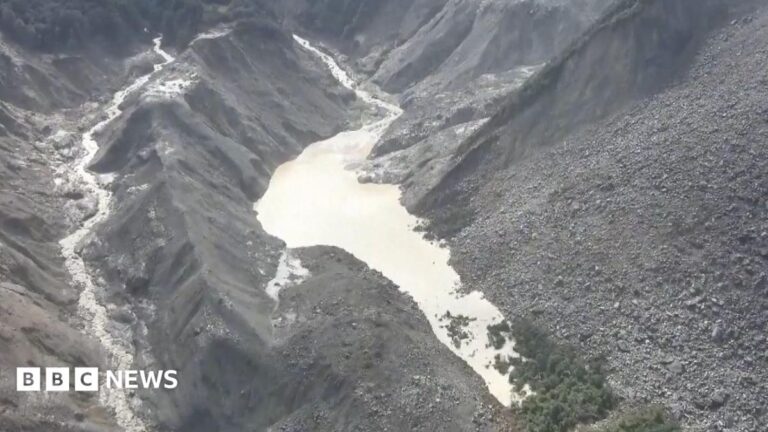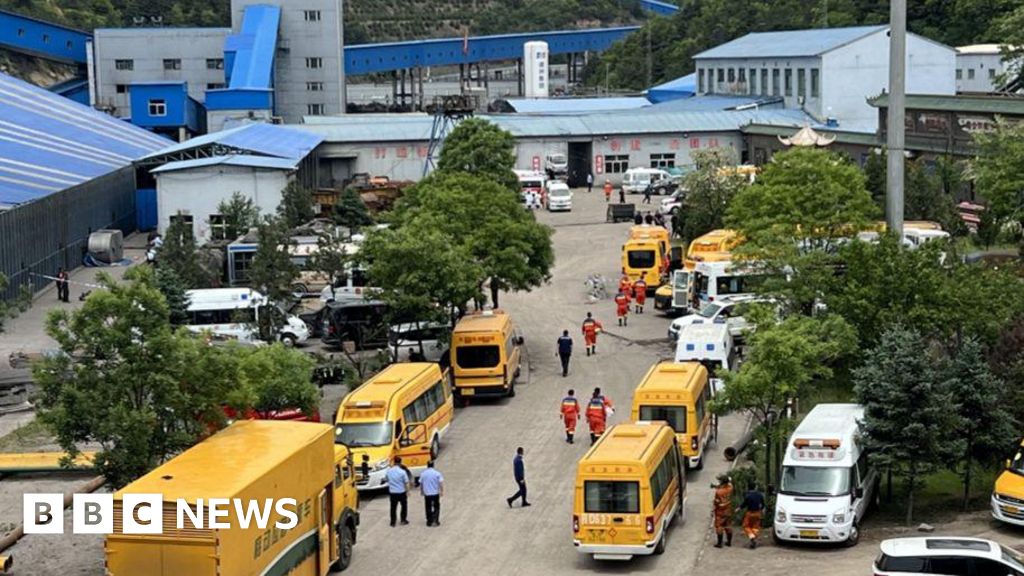
A horrific China mine explosion in the northern Shanxi province has tragically claimed the lives of at least 90 individuals, according to somber reports from state media. This devastating incident at the Liushenyu Coal Mine marks the nation’s gravest mining disaster since 2009, sending shockwaves through the global community.
The gas explosion, occurring on Friday evening at 19:29 local time, trapped scores of workers deep within the earth. A staggering 247 individuals were reportedly on duty when the blast ripped through the mine. Swift, albeit arduous, rescue operations managed to pull over 100 people to safety, with hundreds of emergency personnel rushing to the calamitous site.
Chinese President Xi Jinping immediately called for relentless efforts to treat the injured and locate any remaining survivors. The State Council has vowed a “rigorous” investigation, promising severe punishment for those found responsible for the calamity. Currently, 27 people remain hospitalized; one in critical condition, the others suffering from less severe injuries, primarily due to inhaling noxious gases.
One survivor, miner Wang Yong, recounted his terrifying ordeal to state media. “I smelled sulphur, the same smell you get from blasting. I shouted at people to run,” he vividly described, his words painting a chilling picture of chaos and collapse. “As we were running I could see people collapsing from the fumes. Then I blacked out too.” He eventually regained consciousness, waking a fellow miner, and together they navigated their way out of the suffocating darkness.
The Aftermath: Investigating the China Mine Explosion
Initial investigations reveal that some of the mine’s management team have been detained. While the exact cause of the explosion is still under wraps, state media confirmed that carbon monoxide levels—a deadly, odorless gas—had alarmingly “exceeded limits” within the mine. China’s Ministry of Emergency Management dispatched 345 personnel from six specialized rescue teams to aid the complex operation.
Rescuers have faced immense hurdles, including significant water accumulation near the blast zone, impeding access to critical areas. Furthermore, the provided mine blueprints were found to be woefully inconsistent with the actual underground conditions, adding layers of perilous complexity to an already desperate situation. This China mine explosion highlights a persistent struggle against the inherent dangers of deep-earth extraction.
Disturbingly, the Liushenyu mine itself was flagged in 2024 by the Chinese National Mine Safety Administration for “severe safety hazards.” Adding to this grim record, Tongzhou Group, the company operating the mine, reportedly received two administrative penalties in 2025 for safety breaches. Shanxi province, a vital artery of China’s energy sector, accounts for over a quarter of the nation’s total coal output.
This tragedy serves as a stark reminder of China’s turbulent history with mining safety, a sector that has seen significant reforms yet still suffers from deadly incidents. In the early 2000s, fatal accidents were all too common. While safety standards have tightened and a crackdown on illegal mines, particularly in Shanxi, has yielded progress, accidents, tragically, still occur. For more information on similar challenges faced by the industry, you can read about recent mining incidents.
Just last year, in 2023, a separate open-pit coal mine collapse in Inner Mongolia claimed 53 lives. And it was in 2009 when an explosion in Heilongjiang province tragically killed over 100 people. Despite intensified efforts to improve safety and a rapid embrace of renewable energy, the sheer scale of the nation’s coal operations means that tragic events like this China mine explosion remain a somber reality for a country that is the world’s biggest consumer of coal.
About the Author