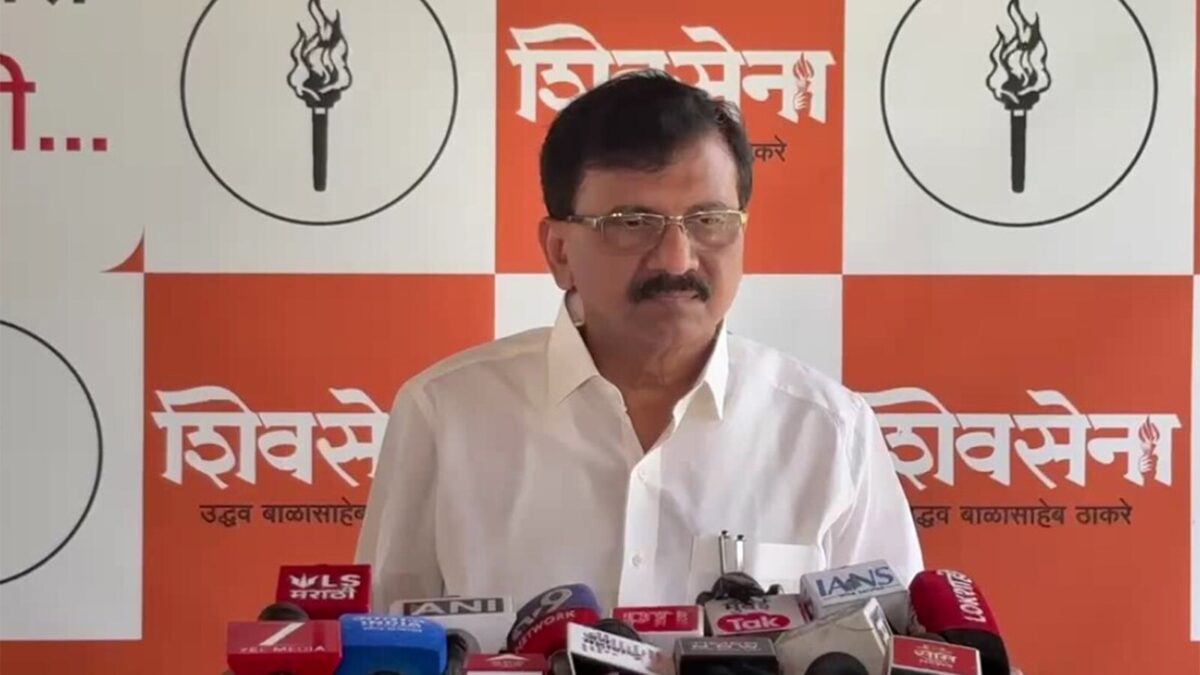
Shiv Sena (UBT) leader Sanjay Raut ignited a ferocious political firestorm this past Saturday with a shocking Sanjay Raut remark, comparing Prime Minister Narendra Modi to the much-maligned Mughal emperor Aurangzeb. This incendiary statement immediately drew a furious response from the Bharatiya Janata Party (BJP), leaving political observers aghast.
During a press conference, Raut launched a scathing attack on PM Modi, declaring, “Such an ‘aghori’ person has never been born in Indian politics. Such a cruel person has never been born.” He further elaborated, “This country has produced great leaders such as Jawaharlal Nehru, Indira Gandhi, Lal Bahadur Shastri, P V Narasimha Rao, Rajiv Gandhi, B R Ambedkar, and Bal Thackeray. Such great leaders were born from the soil of this nation.”
However, the most provocative part of his address came when he stated, “But when I look at the entire character of Narendra Modi, I am concerned. He comes from the same soil from which Aurangzeb was born. Aurangzeb was born in Gujarat, wasn’t he?” This direct correlation has reverberated through political circles, sparking widespread indignation.
Fallout from the Sanjay Raut Remark
The BJP wasted no time in condemning Raut’s comments, with party spokespersons calling the remarks “deranged” and “mad.” Such historical analogies in political discourse often carry significant weight, particularly when invoking figures like Aurangzeb, whose reign remains a complex and often contentious subject in Indian history. Learn more about the history of the Mughal Empire. This particular Sanjay Raut remark has clearly crossed a line for the ruling party, setting the stage for intensified verbal confrontations as the political climate heats up.
The ongoing verbal spat underscores the increasingly fractious nature of Indian politics, where historical comparisons are frequently weaponized to score political points. The Shiv Sena (UBT) leader’s choice of words in this Sanjay Raut remark ensures this controversy will persist, adding another layer to the already strained relationship between the allied parties turned adversaries.
About the Author