
Canadian manufacturing just saw largest monthly growth in 3 years: StatCan
Canada’s economy, after a challenging contraction in late 2025, is showing robust signs of recovery, primarily propelled by a remarkable surge in Canadian Manufacturing Growth. Statistics Canada revealed this week that the sector experienced its most significant monthly expansion in three years during February, signaling a promising shift for the nation’s economic landscape.
The overall Gross Domestic Product (GDP) saw a modest 0.1 percent increase in January, followed by a 0.2 percent rise in February. Based on current estimates, Statistics Canada projects Canada’s annualized GDP growth for the first quarter of 2026 to be 1.7 percent. This positive momentum is echoed by the Bank of Canada, which anticipates broader economic expansion over the coming years, citing a gradual resumption of growth in exports and business investment. For a comprehensive overview of Canada’s economic outlook, readers can explore the latest reports from Canada’s central bank.
A Closer Look at Canadian Manufacturing Growth
The manufacturing sector, which has navigated tariff challenges, roared back with an impressive 1.8 percent rise in February. This stellar performance marks its best showing since January 2023, largely fueled by a powerful 3.6 percent jump in durable-goods manufacturing. Within this crucial segment, machine manufacturing soared by an astounding 8.7 percent. Even the transportation equipment sector, which experienced a dip last month, clawed back with a solid 5.5 percent increase.
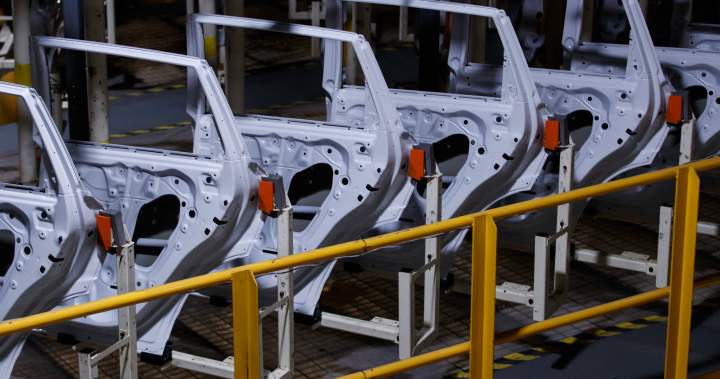
Canada’s auto sector, a vital component of the nation’s industrial might, showcased remarkable resilience. Motor vehicle manufacturing alone surged by 20.4 percent, complemented by a 4.2 percent rise in auto parts production. Notably, auto assembly plants in Ontario, the heart of Canada’s car manufacturing industry, significantly ramped up production in February.
Beyond manufacturing, other sectors displayed varied fortunes. The transportation and warehousing sector grew by 1.2 percent in February, with truck transportation recording its largest expansion since March 2021. Primary metal manufacturing, another sector previously impacted by tariffs, climbed 5.2 percent. Mining, quarrying, and oil and gas extraction edged up 0.4 percent, while the finance and insurance sector saw a modest 0.2 percent increase.
Conversely, some areas faced headwinds. Canada’s public sector declined by 0.3 percent in February, primarily due to a 0.5 percent drop in public administration. Education services experienced their first shrinkage in four months, falling by 0.5 percent. Additionally, the arts, entertainment, and recreation sector contracted by 2.5 percent, marking its steepest decline since the Omicron-induced shutdowns of January 2022. Despite these localized dips, the overall narrative remains one of cautious optimism, largely driven by the strong Canadian Manufacturing Growth.