
Dispersed At 1.30, Still Stuck At 4.15: Gurugram’s Waterlogging Trap School Buses, Kids Left With Just Biscuits
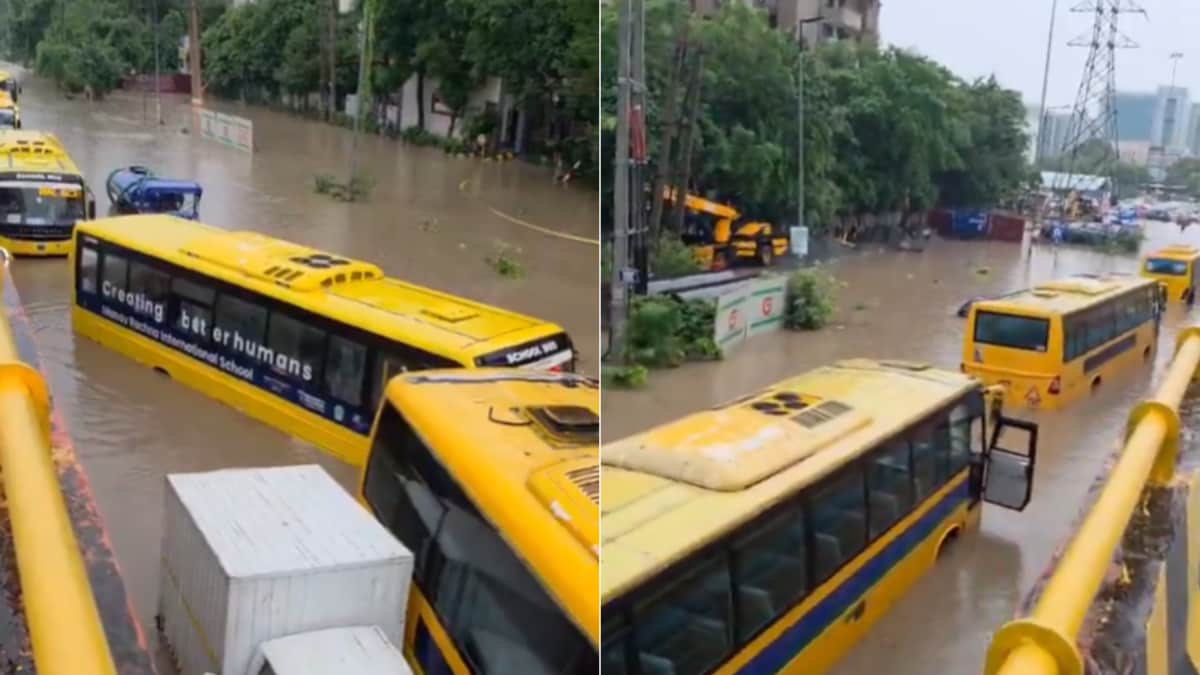
A Monday that promised ordinary school dismissals instead devolved into a harrowing ordeal for countless families in Gurugram, as the city once again found itself battling severe Gurugram waterlogging. Despite a stark red alert issued by the India Meteorological Department (IMD) warning of heavy rainfall, the urban infrastructure buckled, transforming key thoroughfares into impassable waterways. School buses, dispatched early in a well-intentioned but ultimately futile attempt to circumvent the anticipated deluge, became unwitting prisons for young children, some trapped for hours with little more than biscuits to quell their hunger and anxiety.
The scene unfolded dramatically across multiple critical junctures, particularly in Sector 47 and Subhash Chowk. What started as a precautionary early dispersal from institutions like GD Goenka School quickly escalated into a prolonged nightmare. Parents, anticipating their children’s prompt return, watched helplessly as the hours dragged on, their fears mounting with every unanswered call and every social media update showcasing the city’s aquatic transformation. It was a stark reminder of Gurugram’s vulnerability to heavy monsoon showers, a recurring narrative that frustrates residents and challenges the city’s self-proclaimed status as a ‘Millennium City’.
The Monsoon’s Grip: Unpacking the Gurugram Waterlogging Crisis
The sheer scale of the disruption was vividly captured in numerous social media posts, with one video by @MihikaShahh near Rail Vihar in Sector 47 showing knee-deep water engulfing roads, making vehicular movement impossible. This wasn’t merely a nuisance; it was a complete paralysis of daily life. Monika Bhardwaj, a parent, recounted the agonizing wait, explaining that her child’s bus had been attempting to navigate Subhash Chowk since 1:30 PM, still trapped in the gridlock well into the late afternoon, past 4:15 PM. For these children, some as young as five or six, the journey home extended for nearly three hours, a period of confinement made slightly more bearable by the distribution of biscuit packets – a small, yet telling, detail that underscores the unpreparedness for such an eventuality.
A Recurring Nightmare for the Millennium City
The decision to send students home early was a direct response to the IMD’s ominous red alert, a clear signal that exceptional weather conditions were expected. Yet, this very precaution ironically coincided with the heaviest downpours, trapping the buses in the deluge they sought to avoid. This paradox highlights a deeper systemic issue that plagues Gurugram: the perennial challenge of urban flooding. Every monsoon season brings with it a familiar pattern of inundated roads, stalled traffic, and commuter misery. The city, a rapidly expanding metropolis, struggles to cope with the challenges of rapid urbanization.
The economic ramifications of such widespread paralysis are substantial, ranging from lost productivity for commuters to the broader impact on businesses unable to operate effectively. But beyond the monetary cost, there is the immeasurable human cost – the stress, fear, and sheer exhaustion experienced by thousands. This incident, therefore, is not an isolated event but a poignant symptom of underlying infrastructural fragilities and often-delayed municipal responses.
Beyond the Puddles: Understanding Gurugram’s Infrastructure Woes
Why does Gurugram waterlogging remain such an intractable problem? Experts and residents point to a confluence of factors. Foremost among them is the city’s severely underdeveloped and often choked drainage system, which is simply inadequate to handle the intense, short bursts of rainfall characteristic of the monsoon. The relentless pace of construction and unchecked urbanisation, where concrete increasingly replaces natural soil, has drastically reduced the ground’s natural ability to absorb rainwater. This impermeable urban sprawl creates an exponential increase in surface runoff, overwhelming the existing drainage channels.
Furthermore, major drainage outlets are frequently clogged with an accumulation of waste, plastic debris, and construction materials, exacerbating the problem. Despite repeated promises and projects, a holistic and effective urban planning strategy, one that accounts for both growth and environmental resilience, remains elusive. These are not merely operational failures but often indicative of systemic failures in urban governance, which lead to widespread public frustration and calls for greater accountability.
The Human Cost and Call for Accountability
The immediate fallout on the children trapped in buses, enduring hunger and uncertainty, is particularly distressing. Such experiences can leave lasting impressions, fostering a sense of insecurity and anxiety about daily commutes. Parents are rightfully demanding a proactive and sustainable solution from local authorities, rather than reactive, last-minute advisories that often prove insufficient. The incident underscores the urgent need for robust infrastructure development and maintenance, capable of withstanding the increasing intensity of climatic events.
Moving forward, sustained investment in modernizing drainage systems, strict enforcement of waste management regulations, and integrated urban planning that respects natural water channels are paramount. Gurugram, like many other rapidly growing Indian cities, must prioritize resilience in its urban fabric. For information on how various urban centers are tackling urban planning complexities, one might look into broader governmental initiatives via bodies like the Ministry of Housing and Urban Affairs, Government of India.
Ultimately, the latest episode of Gurugram waterlogging serves as a potent reminder that rapid development must be harmonized with comprehensive infrastructural planning and environmental considerations. Until then, the city’s residents, particularly its most vulnerable — the schoolchildren — will continue to face the unpredictable wrath of the monsoon, turning routine commutes into unexpected odysseys of distress.