
Doval-Wang Yi Talks Held On Positive Note, Border De-escalation And Xi Jinping Visit Discussed: Sources
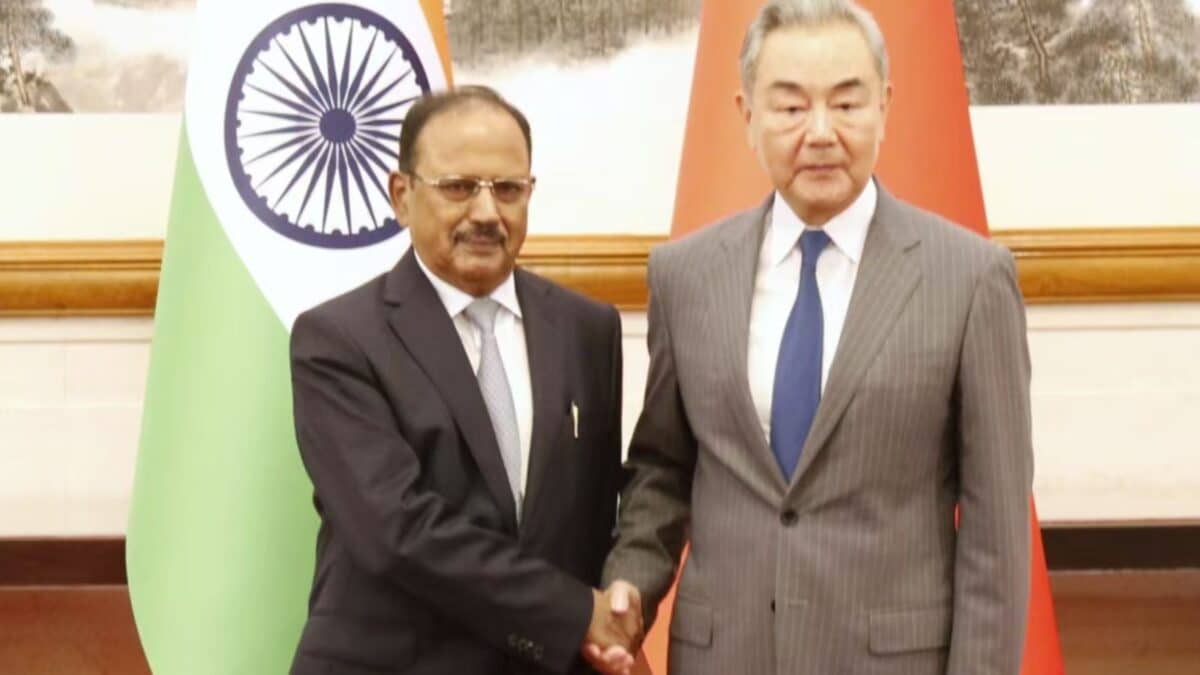
In a significant diplomatic development, India and China recently engaged in extensive high-level discussions, signaling a discernible, albeit cautious, step towards de-escalation along their contentious border. National Security Advisor (NSA) Ajit Doval and Chinese Foreign Minister Wang Yi held six hours of wide-ranging talks, which government sources characterized as positive and constructive. The focal points of these crucial India China Talks included border de-escalation, reaffirming the sanctity of the Line of Actual Control (LAC), fortifying bilateral relations, and laying the groundwork for Chinese President Xi Jinping’s anticipated visit to India.
Navigating the Intricacies of Border De-escalation
The 3,488-km undemarcated and often volatile frontier has historically been a flashpoint in India-China relations. The recent discussions thoroughly reviewed the prevailing stability across this vast expanse, scrutinizing the progress achieved under the Working Mechanism for Consultation & Coordination (WMCC). This mechanism serves as a critical forum for both nations to address border management issues and prevent the escalation of local frictions. Analysts suggest that the very duration and atmosphere of the talks—described as cordial and forward-looking—underscore a mutual desire to foster a more predictable and stable environment, departing from the tense stand-offs that have occasionally marred their recent past.
Both Doval and Wang Yi underscored the paramount importance of upholding the border’s sanctity and ensuring enduring peace and tranquility along the LAC. This commitment forms the bedrock upon which any broader improvements in bilateral ties must be built. The nuanced discussions went beyond immediate de-escalation tactics, delving into the long-term framework for resolving the enduring boundary question. The 2005 Agreement on Political Parameters and Guiding Principles for the Settlement of the India-China Boundary Question, alongside subsequent Special Representatives’ talks, provides the foundational blueprint for these complex negotiations.
Critically, the two nuclear-armed neighbors articulated a shared resolve to pursue a fair, reasonable, and mutually acceptable comprehensive solution to their territorial disputes. As a tangible step forward, they confirmed plans to convene the 26th round of Special Representatives’ talks in India during 2027. This consistent engagement, even amid disagreements, highlights a pragmatic approach to managing one of the world’s most sensitive borders. Such sustained dialogue is essential for preventing misunderstandings and ensuring that local incidents do not escalate into larger confrontations, a lesson painfully learned from past skirmishes along the LAC.
Key Outcomes from the India China Talks
While border issues invariably command significant attention, the recent India China Talks extended into other crucial dimensions of their bilateral relationship, illustrating a multifaceted diplomatic agenda. The Indian delegation expressed appreciation for China’s initiatives to enhance the quota of Indian pilgrims undertaking the revered Kailash-Manasarovar Yatra in the Tibet Autonomous Region. This spiritual journey, deeply significant for many Indians, serves as a poignant reminder of the cultural and historical links that transcend geopolitical complexities.
Furthermore, both sides celebrated the successful reopening of three designated border trading points. This resumption of economic activity along the frontier is a positive indicator, suggesting a willingness to foster cooperation in practical areas. India and China affirmed their collective commitment to invigorating exchanges and cooperation in sectors like border trade and pilgrimage. The overarching aim is to cultivate an ambiance conducive to sustained dialogue, peace, consultation, and cooperative ventures within the sensitive border regions. These efforts are often seen as confidence-building measures, laying the groundwork for more ambitious collaborative projects. Additionally, an agreement was reached to hold the next meeting of the India-China Expert-Level Mechanism on Trans-border Rivers in September, with a focus on hydrological data sharing and the renewal of relevant memoranda of understanding, essential for managing shared water resources.
Paving the Way for Xi Jinping’s India Visit
A pivotal outcome of these extensive discussions involved detailed preparations for Chinese President Xi Jinping’s impending visit to India. Sources close to the deliberations intimated that President Xi is expected to lead a substantial delegation, underscoring the profound significance both nations attach to this high-stakes engagement. Such a visit, particularly after periods of strained relations, would represent a powerful symbolic gesture, potentially unlocking new pathways for cooperation and signaling a renewed commitment to high-level diplomatic exchanges.
The positive atmosphere cultivated during the Doval-Wang Yi discussions is widely perceived as clearing significant diplomatic hurdles, effectively smoothing the path for President Xi Jinping’s landmark visit to India. This high-level interaction offers a unique opportunity for direct leadership engagement, which is often crucial in navigating the complexities of their unique relationship. It also allows for strategic alignment on global issues, demonstrating that despite bilateral challenges, both nations recognize the imperative of stable and predictable relations for regional and international stability.
Regional and Global Dimensions
Beyond the immediate bilateral concerns, the dialogue also expanded to encompass broader geopolitical developments. Notably, the evolving situation in Iran and related regional dynamics figured prominently in the discussions, according to government sources. This inclusion highlights the expanding scope of India China Talks, reflecting their roles as significant regional and global actors whose policies invariably intersect with wider international events. For instance, the Strait of Hormuz, a critical maritime choke point, directly impacts the energy security of both India and China, making developments in Iran a shared strategic concern. This capacity for discussing common global challenges, even amidst bilateral tensions, is a testament to the intricate and interdependent nature of modern geopolitics. The discussions reaffirmed mutual interests, the necessity of regional security, and the overarching goal of fostering stable and predictable relations between these two Asian giants, whose trajectory significantly influences the 21st-century global order. A historical perspective reveals the ebb and flow of this complex relationship, constantly shaped by strategic imperatives and shared aspirations.