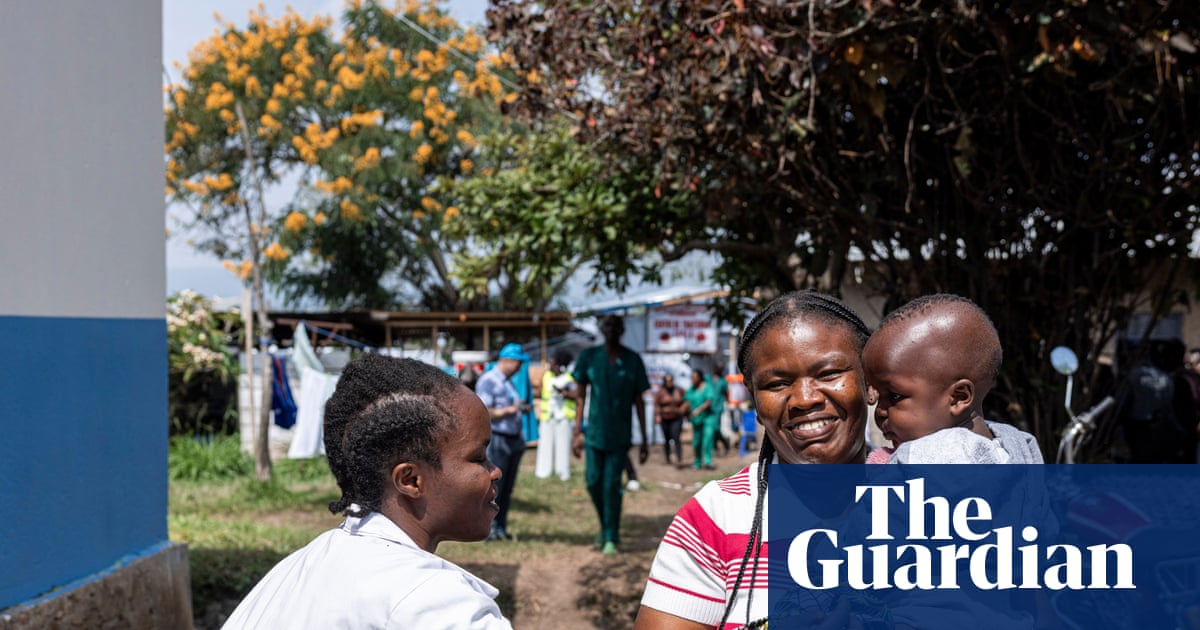
In a beacon of hope against a relentless foe, the Democratic Republic of Congo has embarked on a groundbreaking Ebola treatment trial. This urgent initiative, launched with astonishing speed, offers a glimmer of a future where medical teams battling the Bundibugyo strain may finally have approved therapies at their disposal, potentially drastically reducing mortality rates.
Scientists hail the swift initiation of this research as unprecedented. Patients were enrolled in Ituri province mere weeks after the World Health Organization (WHO) declared the outbreak a public health emergency of international concern on May 17th. Such prompt action underscores the gravity of the situation and the global scientific community’s commitment to combating this deadly disease.
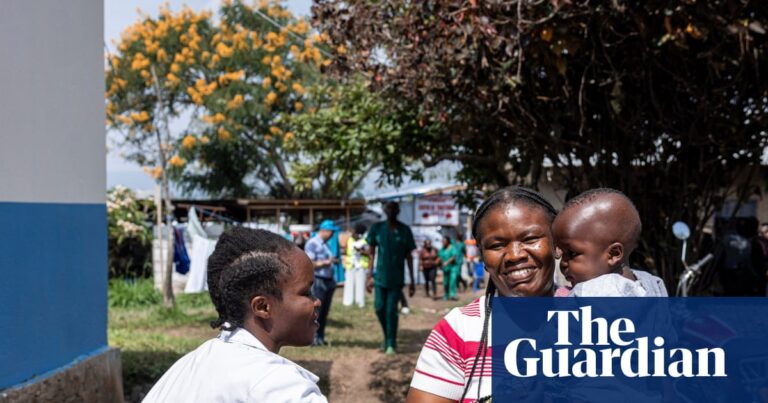
Yet, in Bunia, the beleaguered capital of Ituri, impatience runs deep. Residents like Neema Haba, a mother of three and banana vendor, voice the profound strain. “I hope these drug trials proceed quickly,” she stated, her voice heavy with the financial burden the outbreak imposes. “Financially, we are being driven to the brink, and nothing is going right. We are struggling to provide for our children.”
The statistics paint a grim picture: as of July 9th, 1,792 confirmed cases and 625 deaths have been attributed to the Bundibugyo strain. Crucially, no vaccine or approved treatment currently exists for this particular variant, which the WHO describes as still being in its “expansion phase.”
Challenges Facing the Ebola Treatment Trial
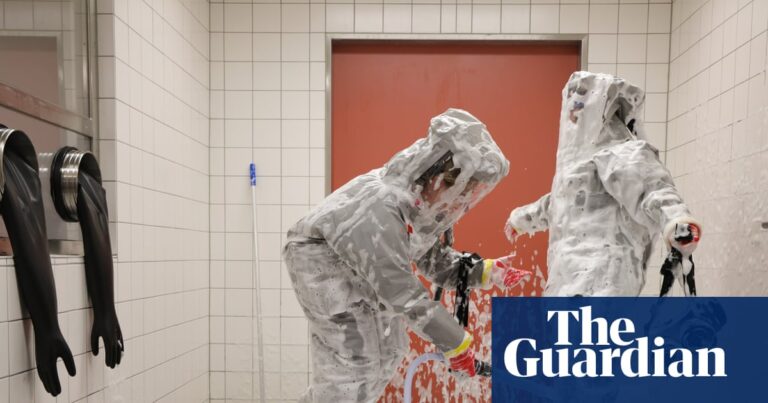
The immediate response hinges on foundational public health measures: identifying cases, isolating the afflicted, and meticulous contact tracing. While about 75% of known contacts are now being traced, myriad obstacles persist. Low community trust, exacerbated by a highly mobile population, severely hampers efforts. Adding to the turmoil, some frontline workers recently ceased operations, protesting a significant lack of pay.
The highly contagious nature of Ebola victims’ bodies demands safe, professional burial by specially trained teams. Ovide Maliabo, a driver for one such team in Rwampara, a mining town within Ituri, described the perilous conditions. He and his colleagues face intense community mistrust, barely escaping a lynching at one point. “It’s a shame that we aren’t being financially supported,” he lamented, highlighting the profound risks taken without due compensation.
Bahati John, the team head, recounted losing a tooth in a local attack. “Honestly, since we started working on 15 May, with all the insults we’ve had to put up with, we haven’t seen a single penny,” he stated. “We are the breadwinners of our families, and our families are suffering.” While DRC officials claim payments have been made, clarity on the full resumption of activities remains elusive. The closure of Bunia’s local airport further complicates matters, impeding the supply of essential banknotes and other vital resources.
Promising Drugs in the Ebola Treatment Trial
Against this backdrop of logistical hurdles and community angst, scientific endeavor shines as a beacon. The Partners treatment trial has commenced with two candidate drugs: remdesivir and MBP134. Patients are randomly assigned to receive either drug, a combination, or standard supportive care.
Remdesivir, an antiviral from Gilead Sciences, and MBP134, a monoclonal antibody developed by Mapp Biopharmaceutical, both show promise. MBP134 contains specially engineered immune proteins designed to neutralize the virus, while remdesivir acts to inhibit viral replication. Both are administered intravenously, with MBP134 as a single infusion and remdesivir over a 10-day course.
“These two drugs actually have been proven to work against the Bundibugyo virus in animal models,” explained Prof. Laurens Liesenborghs of the Institute of Tropical Medicine, Antwerp, deeply involved in the Ituri trial. “They showed great efficacy, but now we need to test it in humans. Basically, what we want to see is if they indeed can lower mortality.” The Bundibugyo strain, though less lethal than the Zaire strain, still claims about one in three of those infected.
Researchers are meticulously monitoring for a statistically significant drop in death rates among patients receiving the experimental drugs compared to those on standard care. Any improvement would be welcome, but a substantial, detectable difference is the ultimate goal. For context, similar trials for the Zaire strain’s Ebola cases saw mortality rates reduced from 50% to 35% with monoclonal antibodies.
The flexible design of this initial Ebola treatment trial allows for additional treatments to be integrated as they emerge. A definitive result will likely require between 700 and 1,000 enrolled patients. While one site is operational, rapid expansion to additional locations is planned, though a timeframe of several months is anticipated, contingent on the outbreak’s trajectory.
WHO officials confirm ample donations of remdesivir (from Gilead) and MBP134 (from the U.S. government) for 1,200 patients. Discussions are ongoing to ensure sufficient supplies remain available post-trial, should the treatments prove safe and effective. Notably, the trial is inclusive, enrolling patients of any age, including pregnant and breastfeeding women – populations that medical research often excludes them. Prof. Liesenborghs articulated the ethical imperative: “We always think of risk-benefit. Here the benefit is potentially very high because you offer a potentially life-saving treatment to someone who has a very high chance of dying.” Animal experiments also indicate no increased risk to pregnancies from these specific drugs, a crucial finding given Ebola’s propensity to cause miscarriages.
Prof. Amanda Rojek of the University of Oxford, international principal investigator for Partners, praised the rapid commencement: “It’s just fantastic we’ve managed to get started so quickly.” She attributed this success to robust scientific leadership within the DRC, a nation with a history of hosting major trials for Ebola and other diseases. Reflecting on the 2014-16 West African Ebola outbreak, where clinical trials took over a year to launch, Rojek highlighted the immense pride in the DRC team, led by the National Biomedical Research Institute (INRB), for achieving this feat in approximately six weeks.
The Partners trial, sponsored by the WHO with funding from the Wellcome Trust, FCDO, and UKRI, emphasizes simplicity in its design, echoing the successful Recovery trial during Covid. Prof. Yap Boum, head of emergency response with Africa CDC, while acknowledging the ongoing danger, offered a broader perspective: “What limits an outbreak is our capacity to provide care, our surveillance capacity and our ability to isolate people. These trials will enable us to access treatment, and when we treat people, it also sends a message to the community.”
This week, another trial is set to begin, investigating obeldesivir as a preventative measure for Bundibugyo contacts. Africa CDC indicates this trial requires approximately $18 million to proceed, with $6 million committed thus far. The relentless pursuit of effective therapies through the Ebola treatment trial and other research efforts remains the best hope for turning the tide against this devastating disease.
About the Author