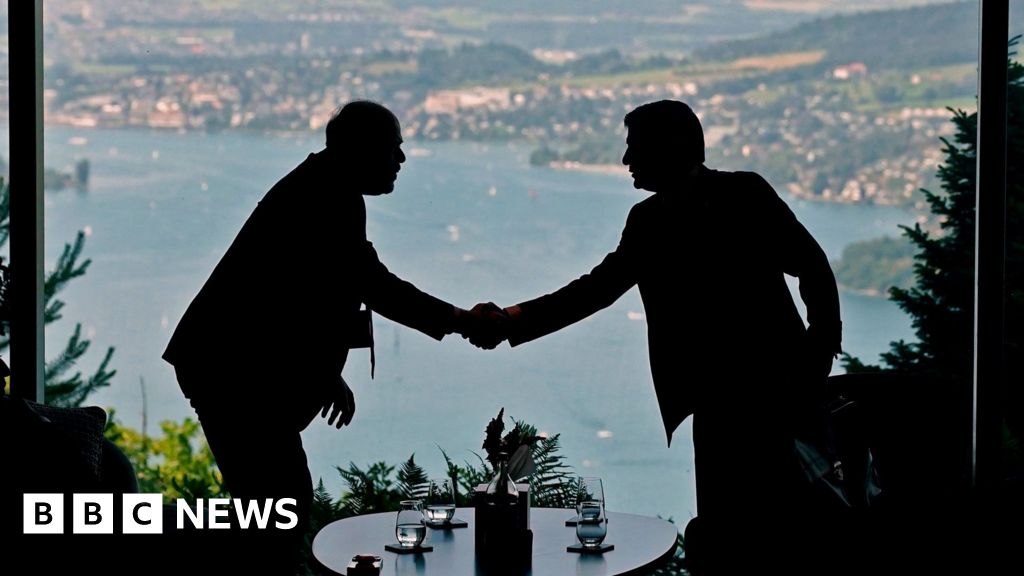
In a surprising turn of events, the initial round of high-stakes US-Iran talks has concluded with what mediators describe as “encouraging progress.” This pivotal development, announced early Monday by Qatar and Pakistan, ignites a glimmer of hope for a region long plagued by tension. Both nations, serving as crucial intermediaries, released a joint statement outlining a significant agreement.
A “High Level Committee” has reportedly charted “a roadmap towards reaching a final deal within 60 days.” Iran’s Foreign Minister, Seyed Abbas Araghchi, hailed “major progress” towards de-escalating the brutal conflict in Lebanon. Last week’s memorandum of understanding (MoU) laid the groundwork, committing to halt fighting on “all fronts”—including the deeply embattled Lebanon—and crucially, to reopen the Strait of Hormuz.
Araghchi, taking to social media, trumpeted the success of “Pakistani and Qatari mediation” in “delivering major progress to end Lebanon War.” He detailed immediate benefits for Iran: waived oil and petrochemical export restrictions, a lifted blockade, the release of certain frozen assets, and the launch of an extensive reconstruction and development plan. Iranian negotiators have since departed Switzerland, where the intensive discussions commenced on Sunday, though technical dialogues are slated to continue.
The mediators further confirmed the establishment of a dedicated “communication line.” This novel channel aims to “avoid incidents and miscommunication,” ensuring the safe passage of commercial vessels through the strategically vital Strait of Hormuz. Furthermore, a “de-confliction cell,” involving the US, Iran, and Lebanon, and facilitated by the mediating countries, has been agreed upon to cease military operations in Lebanon. Araghchi candidly called this the “first real test” of the nascent agreement.
Challenges Ahead for US-Iran Talks
Despite this diplomatic breakthrough, the path remains fraught with peril. A significant uptick in hostilities between Hezbollah and Israeli forces has marred southern Lebanon since the MoU’s signing. Israeli air strikes, according to the health ministry, have tragically claimed dozens of Lebanese lives, including women and children. A fragile ceasefire between Israel and Hezbollah was declared last Friday, yet sporadic clashes and air raids persisted, prompting Iran to temporarily declare the Strait of Hormuz closed—a claim largely disputed by maritime tracking data.
Former President Donald Trump, as talks unfolded in Lucerne, Switzerland, issued a stark warning, demanding Iran “immediately stop their highly paid PROXIES in Lebanon from causing trouble.” He even threatened to “hit Iran very hard again.” Iran’s lead negotiator, Mohammad Bagher Ghalibaf, retorted defiantly: “Don’t they think that if their threats had any effect, they wouldn’t be in this desperate situation today?… No matter how much they talk, it is we who take action.” Meanwhile, Israeli Prime Minister Benjamin Netanyahu has maintained that Israeli forces will remain in southern Lebanon as long as necessary for national security. Hezbollah’s leader, Naim Qassem, has, unsurprisingly, rejected any such presence.
Vice-President JD Vance, the US lead negotiator, speaking from the Swiss resort of Bürgenstock, conveyed Trump’s directive to “turn over a new leaf.” He articulated a clear proposition: should Iran’s leadership abandon its role as a “driver of regional instability” and its “nuclear weapons ambitions for the longer term,” the US is prepared to “fundamentally transform our relationship.” Iran, for its part, steadfastly asserts its nuclear program is exclusively peaceful.
The initial agreement, inked just last week, outlined Iran’s responsibility to reopen the Strait of Hormuz, a critical maritime artery through which a staggering 20% of the world’s oil and natural gas flows. Concurrently, the US committed to lifting its military blockade on Iranian ports. A monumental $300 billion (£224 billion) reconstruction plan for Iran is also part of the pact, alongside the US terminating “all types of sanctions.” However, the contentious issue of Iran’s nuclear program looms large, still awaiting negotiation. For a deeper understanding of global diplomatic strategies, one might consult the resources available on the official United States Department of State website.
This initial progress in US-Iran talks offers a tentative blueprint for de-escalation, but the complex layers of regional conflict and deeply entrenched mistrust demand continuous, meticulous engagement. The coming 60 days will undoubtedly test the resolve of all parties involved to transform encouraging words into enduring peace.
About the Author