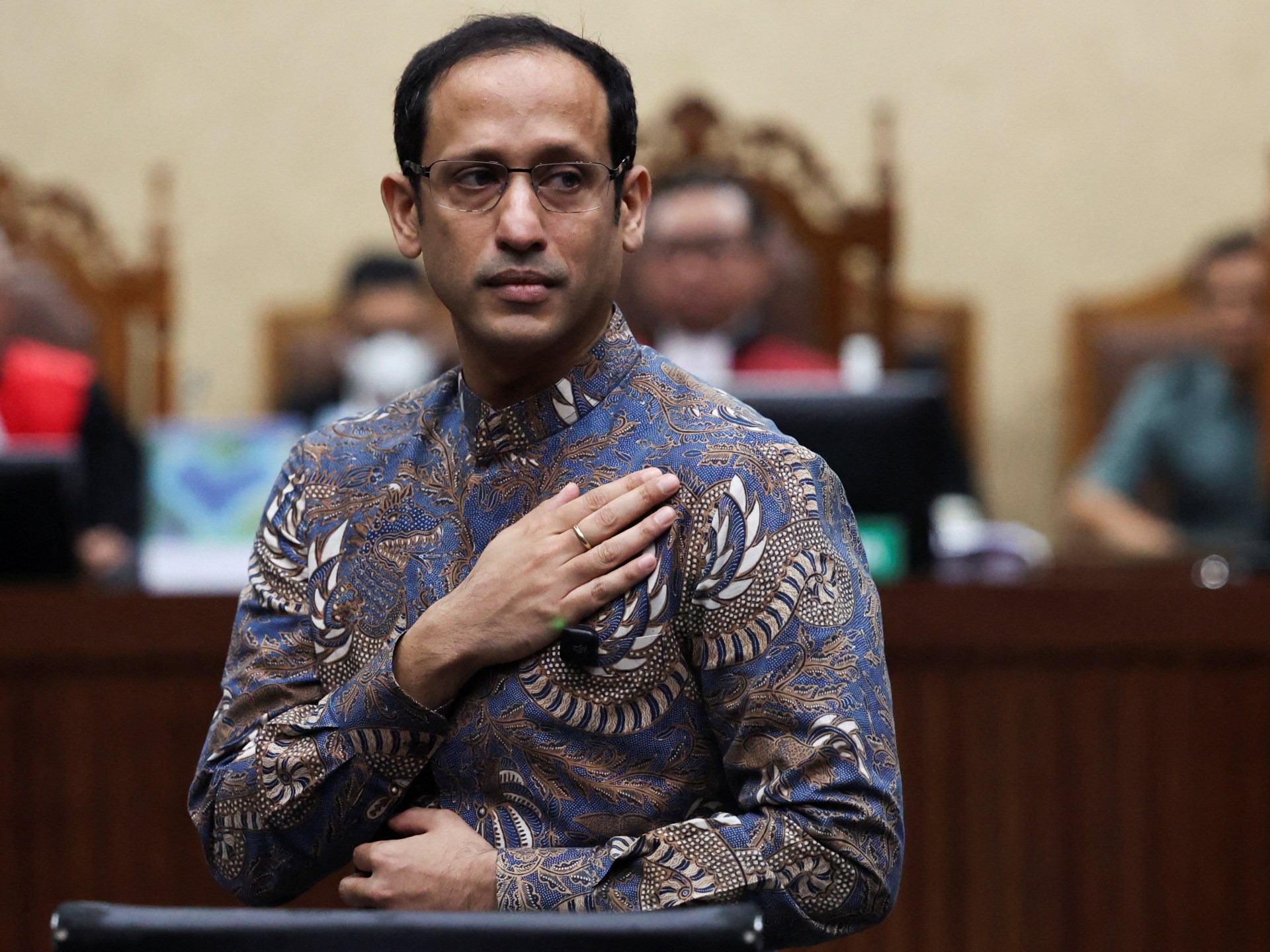
A staggering verdict has rocked Indonesia’s political landscape: Nadiem Makarim, the charismatic co-founder of ride-hailing giant Gojek and former education minister, has been handed a decade-long prison sentence. This shocking development culminates a high-profile case centered on Nadiem Makarim corruption allegations that have captivated the nation.
Judges at the Jakarta anti-corruption court, following intense deliberations, found Makarim guilty of malfeasance. Specifically, the charges stemmed from the procurement of Chromebook laptops intended for schools during the tumultuous COVID-19 pandemic. The court declared him responsible for a colossal $120 million in state losses due to abuse of authority, though notably cleared him of directly enriching himself.
The Fallout of Nadiem Makarim Corruption Allegations
This ruling represents a dramatic fall from grace for the 41-year-old Ivy League-educated entrepreneur. Once hailed as a beacon of Indonesia’s burgeoning startup ecosystem, his journey from tech mogul to government minister and now convicted felon underscores the nation’s relentless fight against graft. Beyond the prison term, Makarim faces substantial financial penalties: a Rp1 billion ($55,850) fine and a staggering Rp809 billion (over $45 million) in restitution. Failure to pay could lead to even more time behind bars.
Makarim, who founded Gojek in 2010 and steered it from a nascent operation with just 20 motorcycle drivers to a dominant ride-hailing and delivery platform, entered public service in 2019. He served as one of Indonesia’s youngest cabinet ministers, overseeing the education portfolio until 2024. Prosecutors argued that his decision to purchase Google’s ChromeOS-based laptops was suspiciously linked to the US tech giant’s prior investment in Gojek, implying a conflict of interest. Makarim vehemently denied all wrongdoing throughout the proceedings, steadfastly maintaining his innocence. “The judges couldn’t even look me in the eye,” he reportedly stated, also asserting his inability to pay the astronomical restitution.
He has consistently framed the procurement as a cost-saving measure, labelling the entire case an “investigative error.” In his defence, Makarim asserted, “Experts and factual witnesses have stated: there is no element of state loss, no element of violation of the law, no element of self-enrichment, enrichment of another person or company, and no malicious intent or bad intentions.” Despite these protests, and a prosecutorial request for an even lengthier 18-year sentence and $313 million in restitution, the court delivered its damning verdict. Google, for its part, was not charged and maintains its innocence in the matter. GoTo Group, the entity formed by the 2021 merger of Gojek and Tokopedia, clarified that Makarim had no decision-making role within the company since his resignation in 2019.
The former minister, whose own father served on Indonesia’s anti-corruption body’s ethics committee, had previously stated his motivation for joining the government was to encourage other professionals into public service. His conviction serves as a stark reminder of the rigorous scrutiny facing public officials and the nation’s commitment to upholding its national legal processes. This severe penalty in the Nadiem Makarim corruption case sends an unequivocal message across Indonesia’s corridors of power: accountability spares no one, regardless of past achievements or public stature.
About the Author