The recent reported rescue of a US F-15 fighter pilot downed over Iran thrusts into the spotlight the extraordinary world of combat rescue missions, a critical component of military operations. While a search operation continues for a second crew member deep inside hostile territory, this incident, if fully confirmed, would mark yet another chapter in the storied history of America’s highly specialized combat search-and-rescue (CSAR) efforts.
These missions, universally acknowledged as some of the most intricate and time-sensitive tasks undertaken by US and allied militaries, demand unparalleled precision and bravery. Often, elite Air Force units are pre-positioned near potential flashpoints, ready to deploy at a moment’s notice.
The Anatomy of Combat Rescue Missions
Simply put, CSAR missions are meticulously planned military operations. Their primary objective: to locate, assist, and extract personnel in dire straits – be it a downed pilot or isolated troops. Crucially, these aren’t your typical search-and-rescue efforts, which usually unfold in benign environments following disasters. Instead, CSAR operates amidst hostile or hotly contested zones, frequently deep within enemy lines.
Such operations are inherently a race against the clock. Adversary forces are simultaneously scrambling to pinpoint the same personnel CSAR teams are striving to retrieve, intensifying the peril. Modern combat rescue missions frequently involve a sophisticated orchestration of helicopters, supported by vital aerial refueling aircraft, with additional military assets poised to provide suppressive fire or patrol the surrounding airspace. Intriguingly, recent verified footage from Iran appeared to show US military helicopters, along with at least one refueling aircraft, operating over Khuzestan province, hinting at the complexity of such current endeavors.
A Legacy Forged in Fire: The History of CSAR
The genesis of airborne wartime rescue missions dates back to the nascent days of World War One, when daring pilots made impromptu landings in France to pull comrades from harm’s way. The US military’s specialized pararescue units trace their lineage to a remarkable 1943 mission in then-Burma, where two combat surgeons parachuted in to aid wounded soldiers. A year later, the world witnessed its first helicopter rescue, as a US lieutenant extracted four soldiers from behind Japanese lines – an event detailed by Smithsonian’s Air & Space Magazine, marking the first operational use of a helicopter in combat.
Formal search-and-rescue units emerged post-WWII, but modern CSAR truly solidified during the tumultuous Vietnam War. That era saw a vast expansion in the scope and complexity of missions, including the infamous Bat 21 operation, which incurred significant losses. The harrowing experiences of Vietnam refined the tactics and procedures that now form the bedrock of contemporary rescue operations. From the earliest impromptu landings in World War One to the complex, multi-asset operations of today, the evolution of combat rescue missions reflects an unwavering commitment.
The Unyielding Spirit of Combat Rescue Missions: US Air Force Pararescuemen
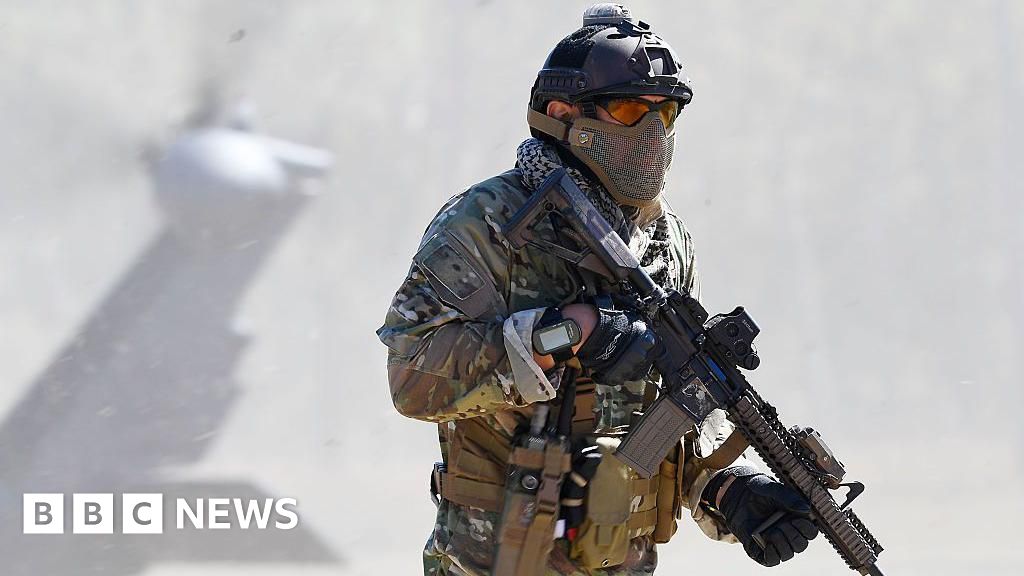
While various branches of the US military possess limited CSAR capabilities, the monumental task of locating and rescuing military personnel primarily falls upon the US Air Force. This critical work is spearheaded by its revered pararescuemen, an integral part of the broader special operations community.
Their motto, "These Things We Do, That Others May Live," encapsulates a profound promise to every service member: you will not be abandoned. These individuals are not merely combatants; they are highly trained paramedics, enduring what is widely considered one of the most brutal selection and training pipelines in the entire US military. This approximately two-year crucible encompasses parachute and dive training, basic underwater demolition, survival, resistance, and escape (SERE) training, and a comprehensive civilian paramedic course. They also receive advanced instruction in battlefield medicine, complex recovery operations, and weaponry. Historically, over 80% of aspiring pararescuemen fail to complete the rigorous course, a testament to its extreme demands. On the ground, these teams are led by specialized Combat Rescue Officers, who are themselves fully trained pararescue operators, responsible for the meticulous planning, coordination, and execution of these life-or-death recovery missions. The very existence of these highly specialized units underscores a solemn military promise: no service member will be left behind, a principle that drives every single combat rescue mission.
Notable Recent Engagements
Pararescue teams saw extensive deployment throughout the wars in Iraq and Afghanistan, executing thousands of missions to retrieve wounded or isolated US and allied troops. A poignant example from 2005 involved the recovery of a US Navy SEAL who, after his team was ambushed and annihilated, sought refuge in an Afghan village – an incident later immortalized in the film "Lone Survivor."
Missions to rescue downed US pilots have become increasingly rare in recent decades, but the historical record is punctuated by remarkable successes. In 1999, pararescuemen successfully located and recovered the pilot of an F-117 stealth fighter shot down over Serbia. Perhaps most famously, in a widely publicized 1995 incident in Bosnia, US pilot Scott O’Grady was dramatically rescued in a joint Air Force and Marine Corps CSAR mission after surviving six days behind enemy lines, exemplifying the unwavering commitment to leave no one behind.
About the Author