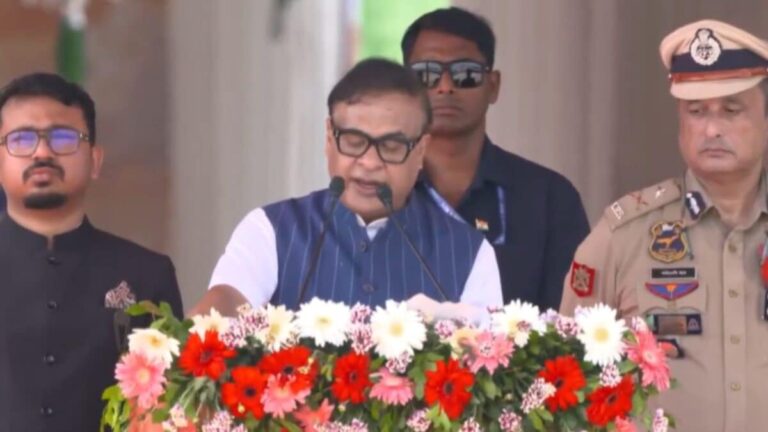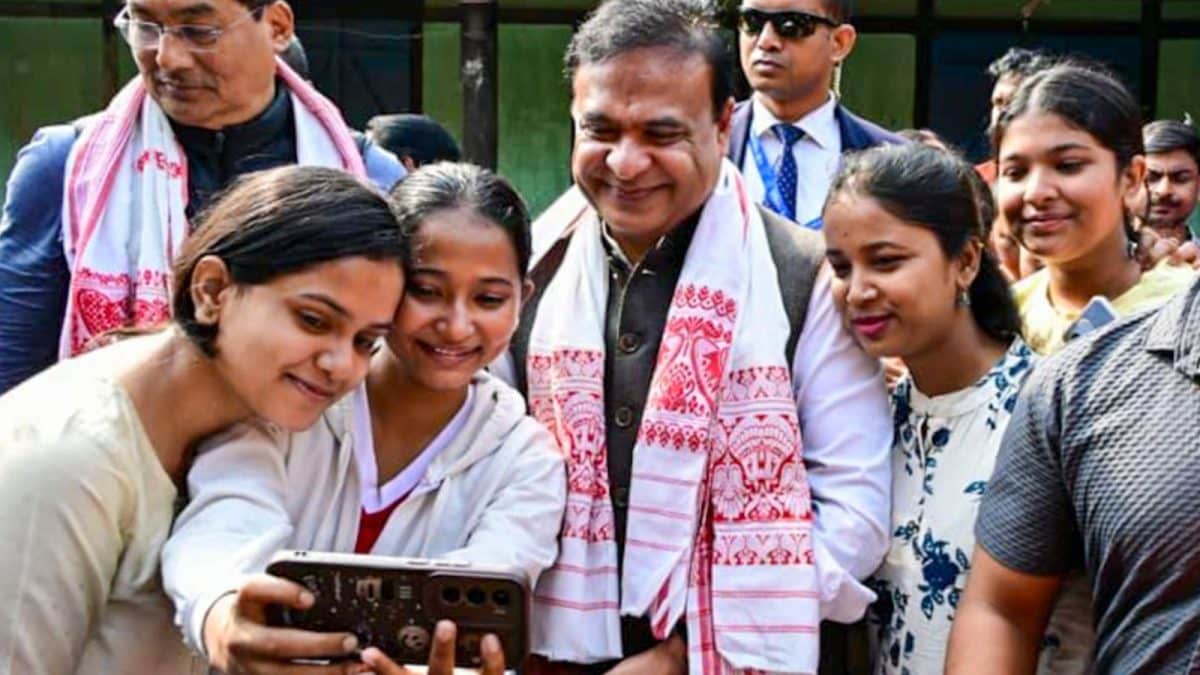
As the political temperature in Assam reaches a fever pitch, all eyes are locked on one crucial battleground: Jalukbari. This constituency, long considered an impenetrable fortress for Chief Minister Himanta Biswa Sarma, faces a fresh, searing test as voters head to the polls on April 9. Indeed, the outcome of the Jalukbari election isn’t just about a single seat; it’s a profound referendum on Sarma’s enduring legacy and the very “Himanta model” of governance.
After weeks of relentless, high-octane campaigning, the electoral arena in this semi-urban stronghold within the Kamrup district has transformed into a theatre of intense political drama. Sarma, a formidable political titan who first seized this seat in 2001, is now striving for an unprecedented sixth consecutive term. Yet, unlike previous contests that felt like mere formalities, this time, the opposition Congress has launched an aggressive, multi-pronged offensive, aiming squarely at the core of Sarma’s political dominion.
The Contenders: A New Face in the Jalukbari Election
For a quarter-century, the very name Jalukbari has been inextricably linked with Sarma’s meteoric rise. His initial victory in 2001 against veteran Asom Gana Parishad leader Bhrigu Kumar Phukan laid the foundation for what many believed to be an unassailable base. The statistics from the 2021 election vividly illustrate this dominance: Sarma garnered an astonishing 78.4 percent of the vote, securing a victory margin exceeding 100,000 votes. This time, however, the challenge comes from 34-year-old graduate Bidisha Neog, a Congress candidate who embodies “new energy” against the 57-year-old seasoned incumbent.
While Sarma’s campaign often exudes an aura of coronation, Neog has meticulously crafted a strategy rooted in grassroots engagement and a sharp ideological stance. She has relentlessly chipped away at the Chief Minister’s colossal lead, spotlighting local grievances and broader allegations of corruption plaguing the state. The intensity of this Jalukbari election has seen the Congress party escalate its fight, even petitioning the central election body’s directives for the cancellation of Sarma’s candidature, citing claims of “undisclosed assets” belonging to his family.
Sarma has vehemently dismissed these allegations as nothing more than political theatrics. The opposition’s narrative has specifically zeroed in on his wife, Riniki Bhuyan Sharma, accusing her in the campaign’s waning hours of possessing “multiple passports, properties in Dubai, and assets in shell companies”—assets they contend were conspicuously absent from the Chief Minister’s official poll affidavit. Sarma, who declared assets exceeding Rs 35 lakh when filing his nomination papers, has not shied away from retaliating. He has, in turn, accused Assam Congress chief Gaurav Gogoi of having dubious links with Pakistan’s Inter-Services Intelligence (ISI). This furious exchange of accusations and promises has transformed the contest in Jalukbari into a microcosm of the “politics of hate” and “family corruption” debates reverberating throughout Assam.
The ‘Himanta Model’ and the Opposition’s Gambit
Across the wider political tapestry of Assam, the BJP-led NDA—a formidable alliance comprising the BJP, Asom Gana Parishad (AGP), and Bodoland People’s Front (BPF)—is strategically relying on a powerful cocktail of cultural identity preservation and assertive welfare initiatives to secure an unprecedented third consecutive term. Sarma has vigorously reinforced the narrative of “securing the identity of Assam,” framing the electoral choice as a stark dichotomy between “indigenous continuity” and the spectre of “external threats.” This approach is underpinned by his often-aggressive rhetoric concerning “Miyan” (Bengali-speaking Muslim) voters, a calculated manoeuvre designed to consolidate the “indigenous” Hindu and diverse ethnic vote banks.
Hand in hand with this identity-centric politics is a profound emphasis on “social engineering.” The BJP has proudly showcased its alleged success in dramatically reducing child marriage by an asserted 84 percent. Furthermore, the party has pledged the implementation of a Uniform Civil Code (UCC) to explicitly prohibit polygamy—a move overtly aimed at garnering widespread support from women voters across all community lines. On the crucial development front, the state government consistently highlights its array of welfare schemes, encompassing vital initiatives such as granting land ownership rights to diligent tea garden workers, providing essential financial aid for promising girl students, and introducing various impactful empowerment programmes specifically tailored for women.
In stark contrast, the Congress-led Asom Sonmilito Morcha, an alliance including the Raijor Dal, Assam Jatiya Parishad, and a coalition of Left parties, is meticulously honing its focus on mounting anti-incumbency sentiment, decrying what it labels “lopsided development,” and condemning a perceived betrayal of social justice. Perhaps the most poignant and emotionally charged instrument in the opposition’s formidable arsenal is the haunting memory of the late, beloved singer Zubeen Garg, who tragically passed away in Singapore in September 2025. The opposition has elevated “justice for Garg” into a central, emotionally resonant political issue, skillfully tapping into the profound emotional and cultural fabric that binds the Assamese people.
By solemnly vowing to thoroughly investigate the circumstances surrounding Garg’s untimely death and unequivocally ensuring the lasting protection of his cherished legacy, the Congress aims to forge a powerful connection with the “indigenous” sentiment—a demographic that the BJP has traditionally and confidently claimed as its own. The grand old party has further bolstered its inclusive vision by promising a comprehensive health insurance scheme for all citizens, extending crucial cash assistance to women, and guaranteeing fundamental land rights for indigenous communities, thereby striving to present a distinctly more “inclusive” alternative to the BJP’s prevailing welfare model in this critical Jalukbari election.
About the Author