
Last night, I was Spanish, and so were millions around the world
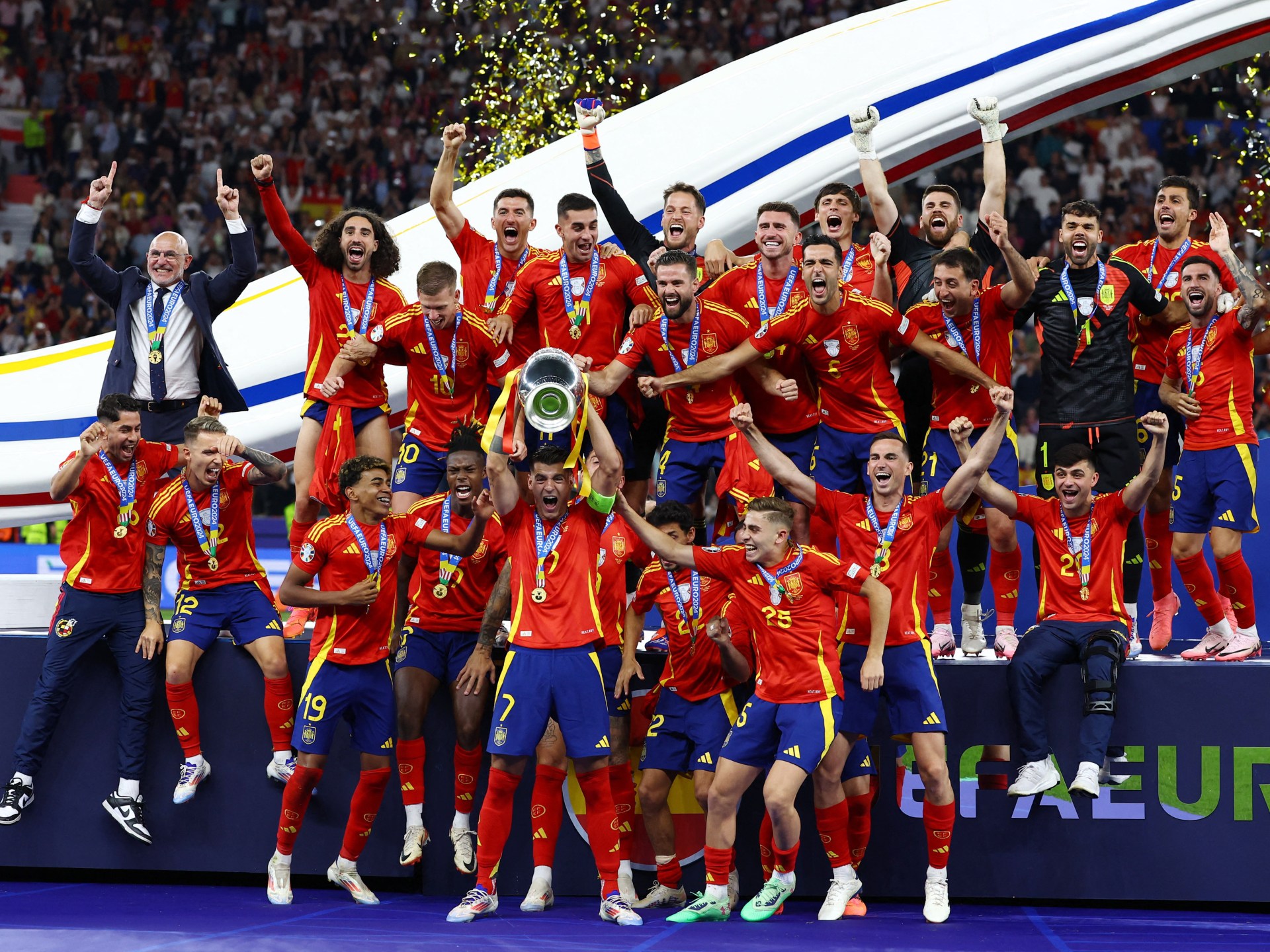
Last night, as millions across the globe watched, Spain clinched a monumental victory in the World Cup. It was a moment of sporting glory, yet for countless observers, the jubilation surrounding Spain’s World Cup triumph was intricately woven with thoughts of Gaza.
Ordinarily, choosing a side in a World Cup final — especially without national ties — is a delightfully simple affair. One might pick based on aesthetics, a preferred player, or even jersey colours. But these are hardly ordinary times. The unfolding tragedy in Gaza has fundamentally altered our perception of the world, serving as a stark moral lens through which we scrutinize not only governments and leaders but also institutions, media, corporations, and public figures. We’ve witnessed a disconcerting silence from entities once held in high regard, an almost elaborate dance of equivocation when confronted with horrors they would elsewhere condemn unequivocally.
The Moral Prism: Spain’s World Cup and Global Conscience
This is precisely why, last night, I found myself fiercely rooting for Spain. While a football team is distinct from its government, and Spanish players aren’t accountable for Prime Minister Pedro Sánchez’s policies, sport has never truly existed in an apolitical vacuum. We bring our histories, our identities, our sympathies, and yes, our moral judgments to the field. Our choice of victor often transcends mere statistics.
For many with a conscience, Spain has emerged as a beacon. Amidst a Western political establishment often entangled in moral and linguistic contortions regarding Gaza, Spain has conspicuously charted its own course. Sánchez’s government has spoken with remarkable clarity, a stark contrast to many of its Western allies. Spain courageously recognized the State of Palestine, and Sánchez has openly labeled the events in Gaza as genocide. Furthermore, his administration has moved to solidify an arms embargo against Israel. One need not endorse every policy to appreciate the profound significance of such a stance; moral courage shines brightest when a position carries inherent risk.
A deeply affecting moment also unfolded when Lamine Yamal, one of football’s most promising young talents, proudly waved the Palestinian flag during Barcelona’s La Liga celebrations. This seemingly small gesture, set against the vast backdrop of Palestinian suffering, held immense symbolic power. In a world where powerful institutions strive to render Palestine invisible, Yamal, at the zenith of his burgeoning career, celebrated his team’s success while holding aloft the flag of a people the world is repeatedly urged to forget. And last night, draped in the colours of Spain, he became a World Cup champion.
Conversely, Argentina, a nation of rich footballing heritage led by arguably the greatest player of his era, also found its narrative entwined with Gaza for some viewers. An image of Lionel Messi at the Western Wall in occupied East Jerusalem, though dating back to 2013, resurfaced, imbued with new meaning by the current catastrophe. Images, after all, evolve beyond their original context. This stood in stark relief against Yamal’s defiant gesture.
Beyond Messi, the politics of Argentinian President Javier Milei loom large. Milei has openly embraced former US President Donald Trump and declared himself “the most Zionist president in the world.” This aligns him with a specific global stance at a time when Palestinians in Gaza endure unimaginable devastation. While Argentinian players are not responsible for their president’s politics, and the nation cannot be reduced to one leader, these political realities inevitably colour the emotional experience for many watching the game.
Further cementing this pattern was a recent vote in the UN General Assembly on reparatory justice for the transatlantic trafficking and enslavement of Africans. One hundred and twenty-three nations voted in favour, fifty-two abstained, and only three countries globally voted against it: the United States, Israel, and Argentina. This extraordinary alignment on an issue of profound historical injustice and the demand for redress reveals a disquieting pattern. When victims of historical injustice seek recognition and accountability, the same governments frequently find reasons to stand on the opposing side. To understand more about these international dynamics, one might consult various reports on the broader geopolitical landscape.
So, yes, I watched a football match. I admired Messi’s undeniable brilliance and marvelled at Argentina’s rich footballing history. But my heart, last night, was with Spain. And Spain won. This outcome speaks volumes about how Gaza has irrevocably reshaped our moral topography. Nations once perceived as distant now feel intimately close because they dared to speak when others remained silent. Governments we seldom considered now command our respect, having refused to avert their gaze during a moment of profound moral reckoning.
Sometimes, this moral geography spills into the most unexpected arenas. Last night, it spilled onto a football pitch. Millions celebrated Spain’s World Cup victory, some for their love of the sport, others for Lamine Yamal, or simply because their team had triumphed. But many also celebrated in solidarity with the Palestinian people.
A World Cup cannot deliver justice to Palestine; Spain’s victory will not feed a child in Gaza, rebuild a home, or resurrect the fallen. We must never conflate symbolism with tangible justice. Yet, humanity thrives partly through symbols. And last night, for some of us, the iconic red shirt of Spain bore a weight and meaning it was never originally intended to carry.
When Lamine Yamal and his teammates lifted that coveted trophy, I celebrated alongside them. Not because football possesses the power to change the horrors in Gaza, but because Gaza has fundamentally altered the very way I perceive, and experience, even a simple game of football.