
‘Facebook, Instagram Form Of Addiction’: RSS Chief Mohan Bhagwat Warns Against Social Media Obsession
Introduction & Key Takeaways
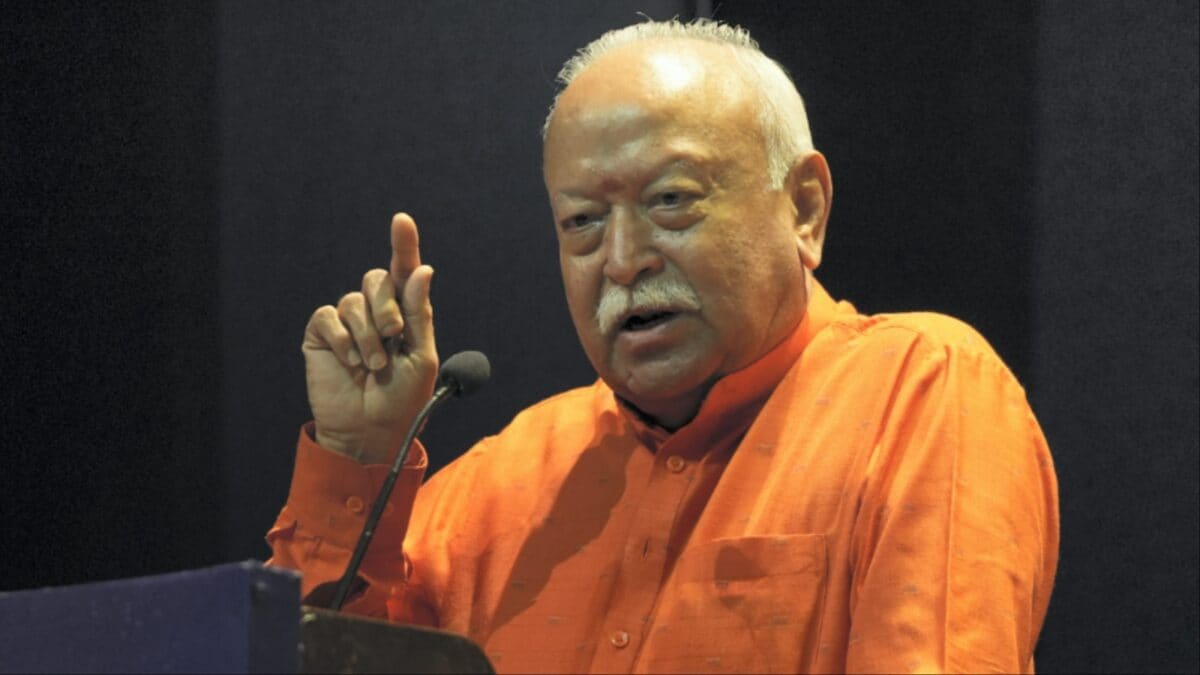
In an increasingly digitized world, the conversation surrounding mental health and civic responsibility has taken center stage. Recently, Rashtriya Swayamsevak Sangh (RSS) chief Mohan Bhagwat voiced strong concerns regarding the pervasive nature of modern technology, specifically highlighting how digital platforms like Facebook and Instagram form a dangerous social media addiction. Bhagwat, speaking at the Maru Ninad-2026 event in Rajasthan, argued that this constant tethering to digital screens creates a profound disconnect between individuals and their immediate reality.
- Digital dependence acts as a form of sensory and intellectual numbing.
- The RSS chief advocates for a return to community-centric, grassroots leadership.
- Unity is portrayed as the ultimate antidote to both internal discord and external exploitation.
- Geopolitical awareness must be balanced with personal discipline to prevent societal fragmentation.
Background & Context
The discourse on digital consumption is not new, yet it remains critically relevant. As billions transition their social lives to online networks, the behavioral implications are becoming clearer. Mohan Bhagwat addressed the concluding ceremony of the Ghosh Shivir with a message that transcended simple technological critique, framing digital habits as a parallel to more traditional forms of substance reliance. By categorizing high-frequency usage of social media alongside habits like excessive consumption of tea or coffee, he challenged his audience to evaluate their daily routines through the lens of self-awareness and mental acuity.
Root Cause & Deep Dive Analysis
Why has social media addiction become such a focal point for institutional leaders? From a behavioral psychology perspective, these platforms are engineered to exploit neurochemical reward loops. When Bhagwat speaks of “weakening awareness,” he refers to the degradation of the individual’s capacity to engage in deep, uninterrupted thought. This mirrors broader concerns regarding the collapse of traditional social cohesion, an issue that Delhi University initiatives have also grappled with in different, though related, institutional contexts.
Bhagwat extended his critique to include the lingering effects of colonial-era educational structures. He suggested that by dismantling traditional learning methods, the British era imposed a model that prioritized individual utility over collective national consciousness. This, he argues, has left the modern Indian citizen more susceptible to external influence and identity-based division, echoing the classic colonial strategy of divide and rule.
Strategic Implications & Future Impact
The geopolitical implications of a fragmented society are severe. Bhagwat articulated a belief that certain global entities view a fragmented India as an opportunity for manipulation. By exploiting smaller identities, whether based on caste, linguistic differences, or regional affiliation, these external forces aim to neutralize India’s emergence as a dominant global power. The social media addiction described by the RSS chief is therefore not merely a personal health issue, but a national security vulnerability. If the youth are perpetually distracted and polarized by algorithmic content, the ability to maintain a unified national front diminishes significantly.
To combat this, he proposes a return to grassroots organizational strength. He suggests that every village and neighborhood must cultivate a core of 25 to 100 selfless individuals. This vision relies on the historical analogy of the Mahabharata, where the sheer military might of the Kauravas failed due to internal fragmentation, whereas the unified Pandavas succeeded. This suggests that in the 21st century, unity is the primary strategic asset for any nation seeking to protect its sovereignty in a volatile global climate.
Conclusion & What to Watch Next
As the conversation matures, it is evident that the pushback against unchecked digital growth will gain momentum. Watching the evolution of this discourse, we must observe whether grassroots movements adopt these strategies to build local resilience. Will digital detox programs become part of larger civic movements? Furthermore, the focus on ‘selfless leadership’ indicates that the RSS is doubling down on human capital as the most effective tool to counter modern psychological and geopolitical challenges. The path forward appears to favor those who can balance modern integration with the rigorous preservation of internal stability and traditional character-building.