
Masked group seen on B.C. First Nation land are ‘cowards,’ officials say
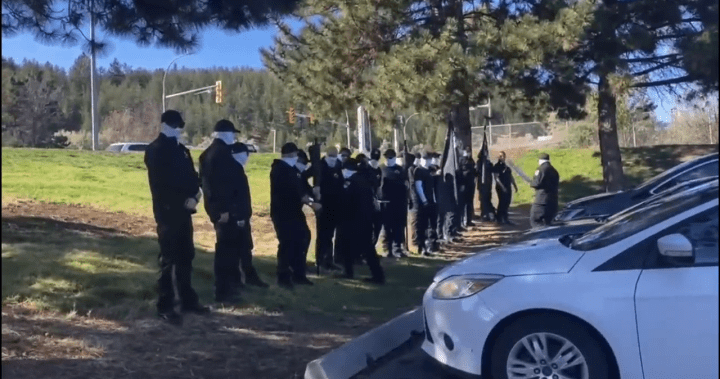
A disturbing display of hate has sent shockwaves through the community of Tk̓emlúps te Secwépemc in the British Columbia interior. A masked group, reportedly linked to an organization known as the Second Sons of Canada, appeared on the First Nation’s land this past Sunday. This incident of white nationalist provocation has drawn swift, widespread condemnation from government leaders and Indigenous advocates alike, occurring mere days before the National Day for Truth and Reconciliation.
Kukpi7 Chief Rosanne Casimir reported that several individuals, cloaked in black clothing and wearing face coverings to obscure their identities, descended upon the community grounds during the morning hours. While official confirmation regarding the identities of the participants is still pending, the visual nature of the protest was clearly designed to unsettle residents. The group displayed a banner bearing the inflammatory phrase ‘got bones,’ a cruel and direct mockery of the tragic history surrounding the former residential school system.
Confronting the Reality of White Nationalist Intimidation
The RCMP has launched an active investigation into the occurrence. Superintendent Jeff Pelley stated that the use of masks and the specific message on the banner represent a calculated attempt to intimidate and divide the community. By hiding their faces, the individuals sought to avoid public accountability for their actions. The authorities are currently calling for public assistance, encouraging anyone with photos or video evidence to come forward to assist in the ongoing inquiry into this act of hate.
The location of the demonstration is particularly sensitive. As detailed in a previous report on this evolving situation, the First Nation discovered over 200 potential unmarked burials on the grounds of the former residential school in 2021. This discovery remains a central point of trauma and memory for the community, making the presence of a white nationalist group not just a political disturbance, but a targeted attack on survivors and their families.
Prime Minister Mark Carney took to social media to denounce the display as both cowardly and abhorrent. He emphasized that such actions have no place within Canadian society, especially as the nation prepares to observe a day dedicated to reconciling with the devastating legacy of the residential school system. The incident serves as a grim reminder that the work of healing is far from finished, and that denialism remains a dangerous force that seeks to undermine progress.
Widespread Condemnation and the Call for Education
Political leaders across the spectrum have united in their rejection of the rhetoric used by the group. BC NDP Leader David Eby labeled the incident a disgusting display, noting that it stands in stark contrast to the values of British Columbia. He challenged the participants for their cowardice, suggesting that if they truly believed in their message, they would not feel the need to hide behind masks. Similarly, BC Conservative interim leader Lorne Doerkson echoed these sentiments, expressing deep disgust and calling upon law enforcement to do everything possible to prevent such events from recurring.
Wade Grant, a Liberal MP and member of the Musqueam Nation, underscored the need for continued education to bridge the gap between Indigenous and non-Indigenous populations. He argued that residential school denialism actively reopening wounds that families have spent generations attempting to heal is unacceptable. For further context on how Indigenous communities navigate these complexities and the importance of public records, one may consult historical records on the Canadian system to understand the depth of the trauma being mocked.
The incident at Tk̓emlúps te Secwépemc acts as a litmus test for the province’s commitment to truth and reconciliation. While the actions of this white nationalist group were intended to incite fear, they have instead triggered an overwhelming show of solidarity. Communities are being reminded that the path forward requires not just policies, but a shared responsibility to challenge intolerance in all its forms. As the investigation continues, local authorities and community leaders remain focused on safety, healing, and ensuring that such displays of hatred do not silence the voices of those who have bravely shared their truths.
For those struggling with the impact of these events, support remains available. The Indian Residential Schools Crisis Line offers 24-hour assistance for those experiencing distress related to residential school history, while the Hope for Wellness Help Line continues to provide culturally competent counseling for Indigenous Peoples across the country.