
Mysuru Dasara: Elephants Lose Insurance, Handler Cover Jumps 10-Fold To Rs 20 Lakh. Here’s Why
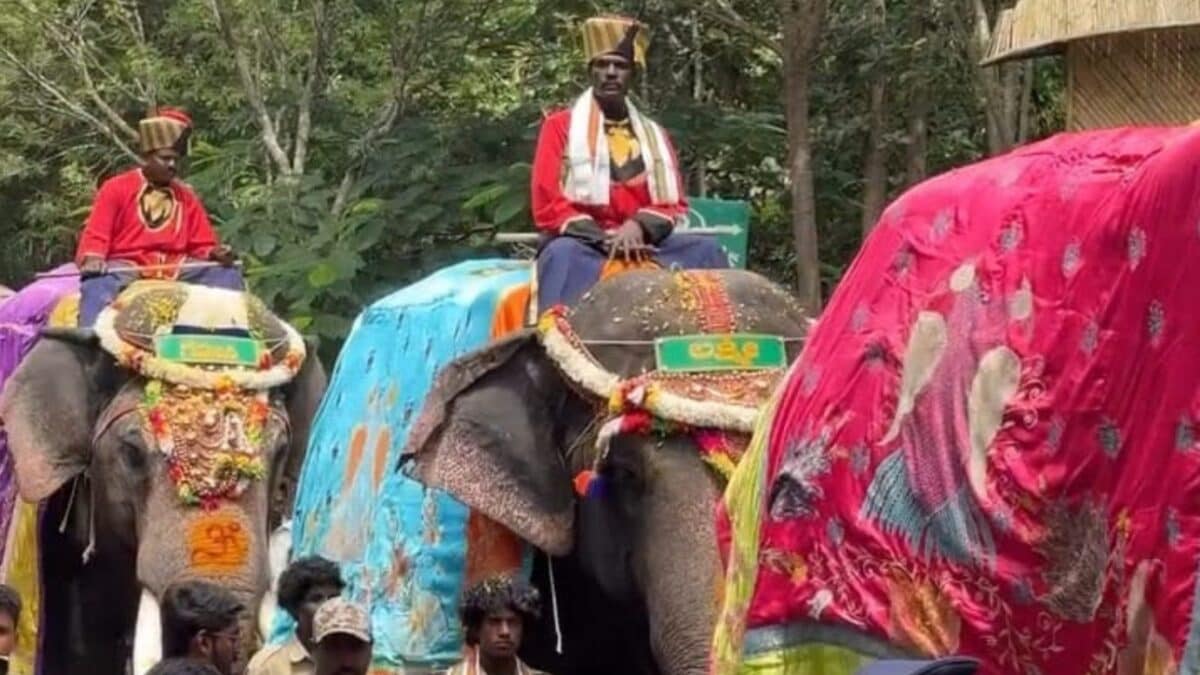
MYSURU, India – In a striking departure from decades of tradition, Mysuru’s revered Dasara Elephants, the very heart of the city’s iconic annual festival, will participate in the 2026 celebrations without individual insurance coverage. This unprecedented decision by the Karnataka Forest Department has sent ripples through conservation and administrative circles, even as the safety net for the dedicated personnel accompanying these majestic creatures has dramatically increased, with handler accident cover jumping ten-fold to a substantial ₹20 lakh per person.
The famed Dasara festival, a vibrant spectacle deeply embedded in Karnataka’s cultural fabric, culminates in the grand ‘Jumbu Savari’ procession, where decorated elephants carry the idol of Goddess Chamundeshwari. For generations, these gentle giants have been meticulously insured against unforeseen circumstances throughout their arduous journey from forest camps, their training, and their pivotal role in the processions. However, the administrative landscape has shifted, prompting a fundamental re-evaluation of policy.
Shifting Sands: The New Policy for Dasara Elephants
The genesis of this significant policy overhaul lies in a nuanced administrative quandary: if a government-owned elephant were to suffer an incident, who precisely should be the beneficiary of the insurance payout? This question, seemingly straightforward, proved to be a labyrinthine challenge during deliberations for this year’s insurance policy. Senior officials within the Forest Department reportedly concluded that it would be fundamentally incongruous and administratively awkward for a government department to claim monetary compensation for its own assets. Consequently, the long-standing practice of insuring the elephants themselves was, for the first time, jettisoned.
This decision regarding the Dasara Elephants sets a curious precedent, inviting a broader discourse on the valuation and protection of state-owned living assets. It perhaps mirrors, in a different sphere, the urgent administrative responses required during crises and natural disasters, where governments grapple with immense responsibilities for public safety and asset management. For instance, the challenges faced during the aftermath of a monumental catastrophe like the Nepal Glacier Collapse highlight the complexities of state intervention and protective measures.
A Decades-Old Practice Reimagined
The move represents a stark deviation from established norms. In 2025, for example, all 14 participating elephants were covered, alongside their mahouts (trainers), kavadis (assistants), support staff, and public property, under a comprehensive policy valued at ₹2.04 crore. Each human participant received an accident cover of ₹2 lakh, and a hefty ₹50 lakh was allocated for compensation should an elephant cause loss of life or damage to public property.
Tracing back further, records reveal a consistent commitment to insuring these magnificent animals. In 2023, the 14 Dasara elephants had a combined insurance cover of ₹68 lakh, with male elephants insured for ₹5 lakh each and females for ₹4.5 lakh. The total insurance package for that year, encompassing staff and public liability, stood at ₹1.98 crore. Even in 2019, ₹40 lakh was specifically earmarked for the insurance of the 14 Dasara jumbos, underscoring a historical dedication to their welfare through financial protection.
Enhanced Human Safety and Public Protection
While the focus has shifted away from the elephants themselves, the revised policy demonstrates a robust commitment to the human element of the festival. A total of 39 personnel, including 12 Mahouts, 12 Kavadis, 10 special Mahouts, a Deputy Conservator of Forests (DCF), two Range Forest Officers (RFOs), a veterinarian, an assistant, and various support staff, are now covered. Each individual is insured for an impressive ₹20 lakh – a monumental ten-fold increase from the ₹2 lakh cover provided last year. This elevates the total personal accident cover to a staggering ₹7.8 crore, reflecting a profound emphasis on the well-being of those who dedicate their lives to these animals and the festival.
Dr. IB Prabhu Gowda, DCF (Wildlife), Mysuru Division, confirmed the scope of this new policy to News18, stating, “From August 25 to October 22, all 39 personnel working with the Dasara Elephants squad will be covered under personal accident insurance, with each person insured for Rs. 20 lakh.” This policy period meticulously spans from the elephants’ departure from their forest abodes to the day after the Jumbu Savari on October 21.
Furthermore, public protection has also seen a significant boost. In the unfortunate event that a Dasara elephant causes an accident resulting in injury, fatality, or damage to third-party property, the insurance cover has been judiciously doubled from ₹50 lakh to a comprehensive ₹1 crore. The Forest Department has diligently paid a premium of ₹22,308 for the staff accident cover and an additional ₹5,900 for the enhanced public liability coverage, bringing the total premium to ₹28,208. The cumulative insurance protection for Dasara 2026 now stands at a remarkable ₹8.80 crore, quadrupling last year’s ₹2.04 crore, despite the lack of direct insurance for the animal protagonists themselves. This change signals a clear administrative priority: ensuring the utmost safety for human lives and property surrounding the ancient festival of Dasara.