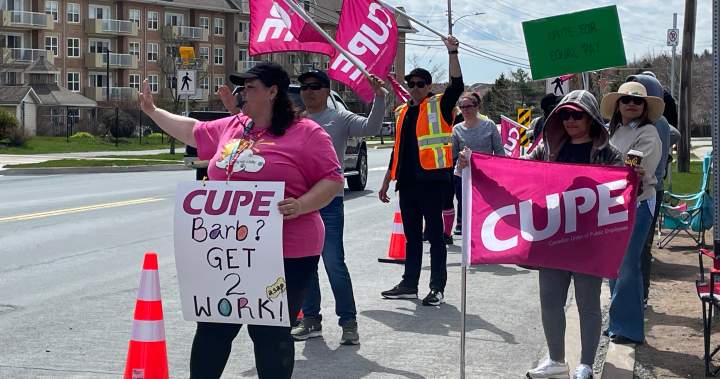
The month-long long-term care strike in Nova Scotia has escalated dramatically, with the provincial government publicly expressing its profound disappointment and frustration. Seniors and Long-Term Care Minister Barbara Adams revealed late Saturday that the Canadian Union of Public Employees (CUPE) had declined multiple opportunities to return to the bargaining table, further entrenching a dispute now well into its second month.
Government’s Plea Amidst the Long-Term Care Strike
Adams’s letter outlined a comprehensive proposal previously presented to CUPE on May 7, a package she suggested the union might not have fully shared with its members. “We were disappointed that despite offering CUPE leadership to meet Friday, Saturday and Sunday, they would not find the time to come back to the table until next week,” Minister Adams lamented. This stance, according to the province, is baffling given the gravity of the situation.
The rejected offer, designed to address core worker concerns, includes substantial wage increases of 12 to 24 percent over the first four years, with retroactive pay dating back to 2023. Furthermore, the proposal enhances evening and weekend premiums and grants access to a defined benefit pension plan. A new element, according to Adams, would see an additional $2 per hour for employees earning under $23 per hour starting in 2027, alongside an across-the-board 1.5 percent increase for all workers in the same year. This comprehensive package aims to provide significant improvements for those dedicated individuals providing essential care.
Despite these concessions, CUPE’s long-term care co-ordinator, Kim Cail, earlier told Global News that the union had walked away from the May 7 meeting because the province had brought “nothing new” to the table. “Unfortunately they came to the table Thursday night (May 7) with the same old offer that they had been providing us since last August,” Cail stated, painting a starkly different picture of the negotiations. This impasse demonstrates a critical disconnect between the two parties.
A Call for Democratic Process
A central point of contention for Minister Adams is CUPE’s alleged refusal to put the revised offer to a membership vote. She explicitly stated that this decision constitutes “a major obstacle to resolution” and implored CUPE leadership to allow its members to consider the proposal. The government’s perspective is that workers should have the final say on such a pivotal offer, especially as the long-term care strike drags on, affecting vital services across the province.
While both sides assert that essential services at long-term care homes continue, they acknowledge a reduced capacity. This means residents are receiving a limited range of support, a worrying consequence of the protracted labour dispute. The resolution of this situation, which impacts some of Nova Scotia’s most vulnerable citizens, requires earnest engagement from all parties involved, upholding the principles of federal labor standards and fair representation.
About the Author